Environmental Engineering
 The suds that go down the drain can be harmful to wildlife. In this New York Times article, Professor Karl Linden offers tips on how to clean clothes and support nature.
 Across the US, schools have begun measuring air quality en masse. Professor Mark Hernandez is helping to interpret the data.
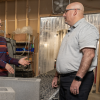 CU Boulder faculty developed an eco-friendly cement that emits little to no carbon dioxide and recycles 95 percent of its water. In 2021, they commercialized it as Prometheus Materials. The company produces bio-concrete using blue-green algae, mimicking natural processes that form seashells and coral reefs.
 Early research shows viruses can hijack and kill bacteria in oil and gas wastewater — and potentially offer big savings to the industry — but it’s not a cure-all, says Professor Joe Ryan.
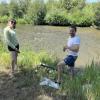 A team led by Environmental Engineering Professor Evan Thomas received a $650,000 NSF Convergence Accelerator grant to measure and mitigate pollution in Colorado's Cache la Poudre and Yampa Rivers through new sensor technology, monitoring and a voluntary carbon credits trading system with industry.
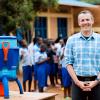 Professor Evan Thomas is leading a CEAE team that, along with others, won a $160 million,10-year NSF Colorado-Wyoming Climate Resilience Engine to develop and commercialize climate-resilient technologies for monitoring, mitigating and adapting to climate impacts across the region and country.
 In this episode of the American Lung Association Podcast, Professor Mark Hernandez speaks about the harmful impact of pollutants such as mold, toxic chemicals and asbestos on respiratory health, particularly in a school setting.
 Mark Hernandez, SJ Archuleta Professor in the Department of Civil, Environmental, and Architectural Engineering, is co-leading a $2.2 million CDC-funded project with researchers at CU Anschutz to investigate the impact of classroom air purifiers on reducing student absenteeism.