


News
 In this Q&A, Amy Javernick-Will, the new associate dean for faculty advancement, discusses the meaningful ways she has felt welcomed into the College of Engineering leadership.
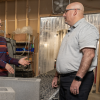 CU Boulder faculty developed an eco-friendly cement that emits little to no carbon dioxide and recycles 95 percent of its water. In 2021, they commercialized it as Prometheus Materials. The company produces bio-concrete using blue-green algae, mimicking natural processes that form seashells and coral reefs.
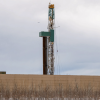 Early research shows viruses can hijack and kill bacteria in oil and gas wastewater — and potentially offer big savings to the industry — but it’s not a cure-all, says Professor Joe Ryan.
 When wildfires move into urban areas and burn artificial structures, toxic metals, including copper, lead, and zinc from building and car ash, can leach into streams and rivers, threatening water security and the health of aquatic organisms, says Lauren Magliozzi, a biogeochemist in the Department of Civil, Environmental and Architectural Engineering.
 Kyri Baker, an associate professor in the Department of Civil, Environmental and Architectural Engineering, emphasizes the need for grid upgrades to maintain reliability amidst extreme weather.
 CEAE remembers former faculty member Hari Rajaram, known for his intellect, humility and warmth, who passed away in July 2024 at 59.
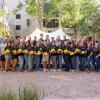 The program prepares students for careers in engineering by providing financial aid, internships and professional development.
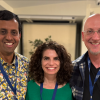 CEAE's Amy Javernick-Will received the Pathfinder Award for her research improving disaster response in resource-limited communities.
 CU Boulder received $750,000 from NOAA to improve Colorado River drought monitoring, led by CEAE and CIRES scientists and researchers.
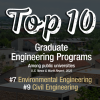 CU Boulder's environmental engineering graduate program ranked 7th nationwide among its public university peers, while the civil engineering graduate program ranked 9th.