Research
 SPUR student Joshua Smith joined researchers in the Shields Lab to develop microrobots that actively deliver drugs to the lungs—an innovative approach that could transform treatment for acute respiratory distress syndrome.
 Researchers and scientists at CU Boulder have developed a method to build and control tiny custom micro-robots.
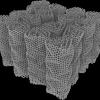 Materials researchers are getting a big boost from a new database created by a team of researchers led by Professor Hendrik Heinz. The initiative, now available online to all researchers, is a database containing over 2,000 carbon nanotube stress-strain curves and failure properties.
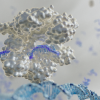 Researchers develop new way to identify genetic changes that help oxygen producing microbes survive in extreme environments.
 Assistant Professor Ankur Gupta’s research on diffusiophoresis, where smaller particles move through a fluid, dragging larger particles with them, helps explain how this process may create clear biological patterns in nature, such as those seen on fish or a tiger's stripes.
 Students from the Department of Chemical and Biological Engineering presented their research as part of the competitive NC State University Future Leaders in Chemical Engineering symposium this past October. Three students from the department were recognized as awardees.
 COVID-19 vaccines are just the beginning for mRNA-based therapies; enabling a patient’s body to make almost any given protein could revolutionize care for other viruses, like HIV, as well as various cancers and genetic disorders. However, because mRNA molecules are very fragile, they require extremely low temperatures for storage and transportation. The logistical challenges and expense of maintaining these temperatures must be overcome before mRNA therapies can become truly widespread.
 The Shields Lab has received an NIH Exploratory/Developmental Research Grant Award (R21) to develop a specialized pipette to isolate and prepare fungal biomarkers for study.
 Researchers from the Department of Chemical and Biological Engineering and the Materials Science and Engineering Program are among the authors of “Polymer inhibitors enable >900 cm2 dynamic windows based on reversible metal electrodeposition with high solar modulation” which appeared in the April issue of the highly prestigious science journal Nature Energy.