

Research
 CU Boulder researchers and partners at MIT, Harvard and Columbia are working to recreate the human liver’s complex structure in the lab. With support from a $25 million ARPA-H grant, the team aims to develop 3D-printed, transplantable liver tissue made from human cells that the body won’t reject. Professor Jason Burdick's lab at CU’s BioFrontiers Institute will lead the 3D printing component of the project.
 Researchers and scientists at CU Boulder develop hydrogel platform that mimics human tissue.
 research highlighting how a population of immune cells can weaken the body's response to inection was published in the journal of leukocyte biology.
 Professor Michael D. McGehee and his team are advancing tandem solar cells—pairing silicon with a high-efficiency material called perovskite—that could significantly improve the economics of renewable energy. While the technology shows great promise, making perovskites durable enough for commercial use remains a key challenge. In October 2025, just as the research was gaining momentum, the Trump administration abruptly terminated the team’s federal grant.
 Assistant Professor Wyatt Shields along with other researchers have developed a safer, targeted way to deliver an ovarian cancer drug using immune cell–carried particles, supported by $300,000 in Gates Institute funding to advance it toward clinical use.
 Meet the department's newest faculty, Assistant Professors Cody Ritt and Antonio Del Rio Flores.
 CU researchers have created shape-shifting microparticles that change their shape in response to environmental factors for self-directed propulsion and navigation.
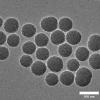 A CU Boulder team has invented a sound-wave technique that softens dense tumors so chemotherapy can penetrate more deeply. The discovery could boost treatment effectiveness and make cancer therapies safer for patients.
 Researches developed a polymer coating that is nearly impermeable to gases which could help prevent corosion in solar panels and slow aging of packaged food.
 A new CU Boulder study published in the Proceedings of the National Academy of Sciences reveals how electric fields control nanoparticle movement through porous materials, enabling independent control of speed and direction. This finding could advance nanorobot technologies for applications like tumor detection, drug delivery and environmental cleanup of toxic chemicals.