

Colloquia
 Eric Perramond Environmental Science and Southwest Studies Professor, Colorado CollegeAbstractIn the American West, water adjudication lawsuits are adversarial, expensive, and lengthy. Unsettled Waters is the first detailed study of
 Virginia Iglesias Research Scientist Earth LabAbstractSocio-environmental dynamics are driven by top-down changes in climate and bottom-up positive (destabilizing) and negative (stabilizing) biophysical feedbacks involving disturbance and biotic
 Book presentation by Aaron Bobrow-Strain, Author and Professor of Politics at Whitman College. This event is co-sponsored by the Department of Geography, Latin American Studies Center, and the Department of Sociology.Book TitleThe Death
 Max Boykoff Director, Center for Science and Technology Policy (CIRES) Associate Professor, Environmental Studies, University of Colorado Boulder.Abstract:Conversations about climate change at the science-policy interface and in our lives have
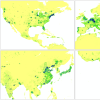 Jing Gao Assistant Professor of Geospatial Data Science Affiliated with the Department of Geography and the Data Science Institute University of DelawareAbstract:Over the 21st century global environmental change may pose critical challenges
 Henry Lovejoy Assistant Professor, Department of History University of Colorado BoulderAbstract: While scholars have amassed large amounts of data related to the transatlantic slave trade, a more pressing question lingers: Where did those 12.7
 Sharon Bywater-Reyes Department of Earth and Atmospheric Science University of Northern ColoradoAbstract: The strength of interactions between plants and river processes is dependent on plant traits such as stem density, plant frontal area, and
 April 26 is the last colloquium of the semester. It features three different graduating PhD students doing short presentations of their theses.Spaces of Diaspora Policy by Aaron Malone This paper
 Earth’s “critical zone”, the zone of the planet from treetops to base of groundwater, is critical because it is a sensitive region, open to impacts from human activities, while providing water necessary for human consumption
 Colloquium is co-sponsored by the Center for Asian Studies40 years ago, upon announcing the “Reform and Opening-up” of China, the Communist Party called for “social forces” to “subsidize and fill gaps in state services”. This,