

Human and Social Geography Track
Human and Social Geography in Action


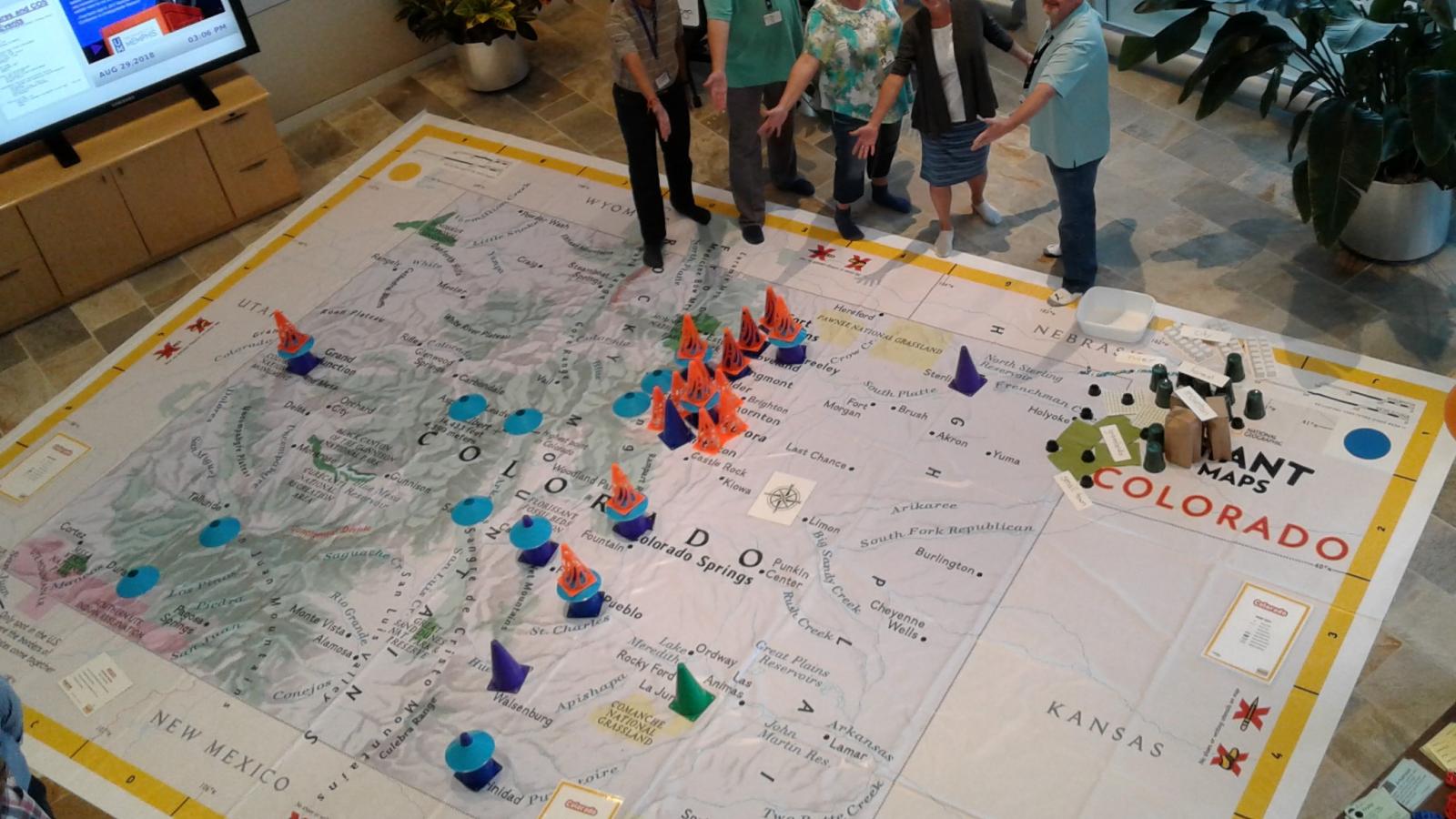


Population, economics, public health, politics and culture, urban housing and development, geographies of justice, regional geography, political ecology, conservation practices, climate change action, resource management, and natural hazards
Human geography first and foremost involves the study of human beings--more specifically, of the organization of human activity and of spatial patterns as they affect and, in turn, respond to the world about us. The processes under study derive from distinct, but interactive, substructures: pursuit of livelihood (economic), social interaction (socio-political), and historical inertia and meaning (cultural). The products are change, conflict, diffusion, differentiation, and repetition in the human organization of the land. These same human processes will interact with biophysical processes, (e.g., air quality or plant introductions) to shape humanized landscapes and regional character. Human geographers typically investigate problems associated with locational strategies and human decisions. Such problems cut through subjects as diverse as analysis of regional markets, racial segregation in cities, migration flows, hazardous sites, international development, medieval landscape patterns, or formulation of impact statements.
Courses in this Concentration
Lower Division
- GEOG 1100: Colorado Geographies: Environment, Society and Change in the Centennial State
- GEOG 1200: Climate Change Geographies: Science, Impacts, and Action
- GEOG 1972: Sustainable Futures, Environment & Society
- GEOG 2053: Mapping a Our World
- GEOG 2092: Advanced Human Geography
- GEOG 2112: Sounds Travels: Musical Geographies
- GEOG 2212: Location, Location, Location: Introduction to Affordable Housing and Urban Development Geographies
- GEOG 2552: Healthy Places, Toxic Spaces: Geographies of Wellbeing, Risk, and Care
- GEOG 2692: Foundations in Public Health
Methods
- GEOG 3023: Statistics and Geographic Data
- GEOG 3930: Internship (case-by-case)
- GEOG 4023: Advanced Quantitative Methods for Spatial Data
- GEOG 4173: Research Seminar
- GEOG 4722: Field Methods in Human Geography
- GEOG 4603: GIS in the Social and Natural Sciences
Upper Division Electives (organize by sub-categories):
Environment, Society, and Sustainability
- GEOG 3022: Climate Politics & Policy
- GEOG 3251: Mountain Geosystems
- GEOG 3402: Natural Hazards
- GEOG 3412: Conservation Practice and Resource Management
- GEOG 3422: Political Ecology
- GEOG 3742: Place, Power, and Contemporary Culture
- GEOG 3782: Environmentalism, Race, and Justice
- GEOG 4022: Climate Action Planning: Reducing CU Boulder's Emissions
- GEOG 4501: Water Issues in the American West
- GEOG 4812: Political Ecology of Latin America
Geographies of Justice
- GEOG 3672: Who Runs the World? Sex, Power, and Gender in Geography
- GEOG 3682: International Development: Economics, Power, and Place
- GEOG 3742: Power, Place, and Contemporary Culture
- GEOG 3782: Environmentalism, Race, and Justice
- GEOG 4112: Development and Social Wellbeing: Understanding Policy and Practice with Fieldwork in India
- GEOG 4292: Migration, Immigrant Adaptation, and Development
- GEOG 4302: Latinx Geographies
- GEOG 4712: Political Geography
- GEOG 4772: Food & Power
Housing/Urban Development
- GEOG 3612: Reimagining Cities: Spaces of Power, Privilege, and Possibility
- GEOG 3622: Cities of the Global South
- GEOG 3662: Economic Geography
- GEOG 4602: Global Perspectives on Urban Resilience and Sustainability Planning
Public Health
- GEOG 3692: Introduction to Global Public Health
- GEOG 4292: Migration, Immigration Adaptation, & Development
- GEOG 4542: Public Health Capstone Research Methods: Environmental Interventions to the Mental Health Epidemic
- GEOG 4692: Climate Change and Health
GEOG 4693: GIS and Public Health - GEOG 4792: Human Health and the Environment
- GEOG 4852: Health and Medical Geography
Regional Geography
- GEOG 3812: Mexico, Central America, and the Caribbean
- GEOG 3822: China's Diverse Geographies: Environment, Society, Politics
- GEOG 3832: Love & War Geographies: Imperialism, Militarism, and Development in South Asia
- GEOG 3862: Global Africa: Environment, Development, and Culture
- GEOG 3882: Geography of the Former Soviet Union