

Energy
 Improving energy storage is key to the renewable grid. Here’s how CU Engineering is getting us there
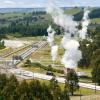 A major question looms over Colorado’s energy future: why does geothermal energy, a renewable resource, remain virtually untapped? CU Boulder researchers will examine the technological and social barriers that have held back geothermal development in the state.
 Evan Sharafuddin, a first-year electrical engineering PhD student, has been selected as the recipient of the Dwight E. and Jessica D. Ryland Graduate Fellowship for the 2025-26 academic year who is pursuing wind turbine control research.
 Co-organized by Professor Mike Toney, the 2025 Front Range Electrochemistry Workshop (FREW) broadly addressed electrochemical science, with this year’s focus on batteries reflecting their growing importance to everything from electric vehicles to renewable energy infrastructure.
 Luca Corradini, associate professor in the Department of Electrical, Computer and Energy Engineering, is advancing energy technologies at CU Boulder thanks to a $1.5 million award from the U.S. Department of Energy’s Advanced Research Projects Agency-Energy.
 Alireza Doostan is leading a major effort for real-time data compression for supercomputer research. A professor in the Ann and H.J. Smead Department of Aerospace Engineering Sciences at the University of Colorado Boulder, Doostan is the
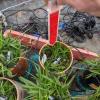 From July 2023 to June 2024, CU Boulder helped to launch 35 new companies based on research at the university. The new businesses are embracing technologies from the worlds of healthcare, agriculture, clean energy and more. Here’s a look at how engineers and scientists, with the help of the university’s commercialization arm Venture Partners, seek to use discoveries from the lab to make a difference in peoples’ lives.
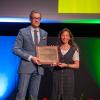 Lucy Pao was honored by the IEEE Control Systems Society for advancing research in wind turbine control systems. Her IEEE Transactions on Control Systems Technology Outstanding Paper Award recognized the work with her former PhD student Michael N. Sinner, now a researcher at NREL and collaborators from ForWind – Center for Wind Energy Research in Germany.
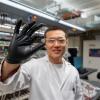 CU Boulder researchers are exploring the use of sodium-ion batteries as an alternative to lithium-based energy storage.