

Fast but error-prone: AI assists in solving a decades-old fluid mechanics problem in five weeks
Image caption: Illustration of how a particle's shape influences the flow patterns around it.
An AI assistant helped University of Colorado Boulder researchers solve a mathematical problem that had challenged their lab for a year and a half, though it made subtle errors along the way. The breakthrough could improve how scientists study nanoparticles—tiny particles about 1,000 times thinner than a human hair— but reveals both the promise and the limitations of AI as a scientific research partner.
The new study, published in the Journal of Fluid Mechanics, details the solution to a decades-old fluid mechanics problem and explains how researchers combined AI with human expertise to reach the answer.
The research was led by Ankur Gupta, an assistant professor of chemical and biological engineering, and his graduate student, Arkava Ganguly, who spent a year and a half working on the problem. With help from Anthropic’s Claude AI, they discovered that changing a nanoparticle’s shape, such as by stretching it from a circle to a football shape, changes how fast it moves in an electric field, while adding finer features, such as bumps or ripples, does not.
Persistent puzzle
The paper focuses on electrophoresis, the movement of charged particles in an electric field. More than a century ago, the Polish physicist Marian Smoluchowski showed that the speed of particles is typically independent of its size and shape. Scientists have since made some progress in explaining what happens when particles become so small that those characteristics begin to matter, but a generalized understanding was still lacking.

“We had made some inroads but we were stuck,” Gupta said. There's been a lot of buzz around AI, so we decided to give it a shot. We set up the problem, but we were curious whether AI could handle the long, detail-intensive algebra required to solve it.”
With Claude doing the algebra and the team verifying every step, they had a solution in five weeks.
Promise and perils
The researchers found that Claude was especially good at handling repetitive, time-consuming tasks, such as carrying out lengthy calculations, writing computer code and creating publication-quality figures. But they still had to frame the problems, choose the mathematical approach and interpret the results.
“It was a shift in the scientific process,” Ganguly said. “Instead of spending most of our time doing the math or writing code from scratch, we spent it debugging and stress testing Claude’s work to make sure its conclusions made sense.”
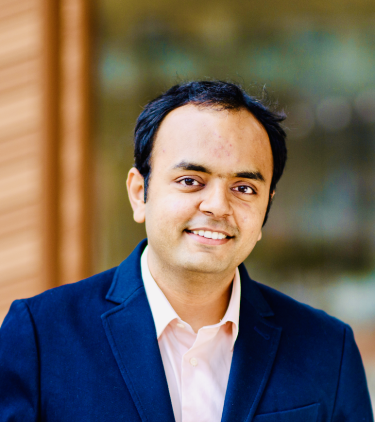
Assistant Professor Ankur Gupta
As the work progressed, Claude’s mistakes became increasingly difficult to detect, the researchers said. It made subtle mathematical errors that appeared correct, or adjusted its reasoning to match expected results, producing answers that seemed self-consistent but were wrong. In some cases, the results, including graphs, appeared valid until the researchers carefully checked every step.
“Validating the results became increasingly demanding since we trusted Claude’s results much less than we would trust our own work,” Ganguly said.
Also, when preparing a blog post to accompany the manuscript, the researchers asked Claude to help draft the "mistakes" section. In response, Claude fabricated three plausible-sounding errors that never occurred.
“Scientists must carefully check AI-generated work against primary sources, their own calculations and their understanding of how the science should behave,” Gupta said. “Relying on it too much can spread those mistakes throughout a project. AI will certainly open up problems that were not accessible before. But speed should not come at the cost of accuracy.
“This was our experience on one problem. It shouldn’t be seen as a verdict on AI in science.”