

Research
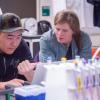 Twelve faculty members within the College of Engineering and Applied Science received CAREER Awards from the National Science Foundation in 2021. The total shows an impressive trend with the college earning five awards in 2019 and seven in 2020, said Associate Dean for Research Massimo Ruzzene.
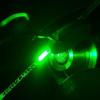 The Shields Lab has received an NIH Exploratory/Developmental Research Grant Award (R21) to develop a specialized pipette to isolate and prepare fungal biomarkers for study.
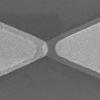 Devices are potential game changers in the world of renewable energy. Working rectennas could, theoretically, harvest the heat coming from factory smokestacks or bakery ovens that would otherwise go to waste.
 The popular Research Support Office Webinar Series will continue in fall 2021, once again giving researchers in the college a chance to engage directly with researchers and program managers from various funding agencies.
 Pawel Sawicki, a PhD candidate in the Ann and H.J. Smead Department of Aerospace Engineering Sciences at CU Boulder, is the lead author on a paper that recently won the AIAA Thermophysics Best Student Paper award at SciTech 2021.
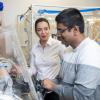 Marina Vance – an assistant in the Paul M. Rady Department of Mechanical Engineering and the Environmental Engineering Program – was recently awarded an NSF CAREER Award to understand how aerosol particles transform as they move between indoor and outdoor environments and what the implications of that process are.
 Sidney D’Mello, Associate Professor at the Institute of Cognitive Science and the Department of Computer Science at CU Boulder, describes how his unique combination of education and research experiences led to his leading-edge work at the NSF National Institute for Student-Agent Teaming, which is reimagining the role of artificial intelligence in the classroom to better serve both students and teachers.
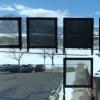 Researchers from the Department of Chemical and Biological Engineering and the Materials Science and Engineering Program are among the authors of “Polymer inhibitors enable >900 cm2 dynamic windows based on reversible metal electrodeposition with high solar modulation” which appeared in the April issue of the highly prestigious science journal Nature Energy.
 Results come from a new mathematical study led by researchers at two University of Colorado campuses, who explore what it might take for the state to safely shed mask mandates, limits on indoor dining and a range of other restrictions.
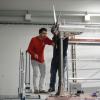 Misha Sinner, a PhD candidate in the Department of Electrical, Computer and Energy Engineering, presented a paper at the International Federation of Automatic Control World Congress in July 2020 on wind turbine control.