

Research
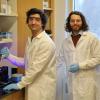 CU Engineering has named the inaugural recipients of its Innovation and Entrepreneurship Fellows program, which supports faculty, postdoctoral researchers and graduate students in bringing research to market. The fellows, selected for their work in fields like robotics, biomedical devices and advanced materials, receive funding, mentorship and entrepreneurial support to accelerate commercialization.
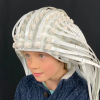 Associate Research Professor Svenja Knappe is apart of a team of physicists and engineers studying quantum technology. In a novel study, the group has discovered a new way to measure the orientation of magnetic fields using atoms. Their findings could one day lead to the creation of new quantum sensors that can map the activity of the human brain or even help airplanes navigate the globe.
 Kate Starbird is now an associate professor at the University of Washington in the Department of Human Centered Design & Engineering.
 CU Boulder’s Living Materials Laboratory contributed to groundbreaking research showing how engineered microbes can create bioglass microlenses, paving the way for advanced imaging technologies in medicine and materials science.
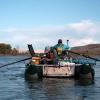 Professor Michael Gooseff and collaborators are gathering the first-ever continuous, long-term water quality sample of the Colorado River's upper basin.
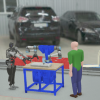 Computer scientist Nikolaus Correll and his lab have been awarded $1.8 million by the U.S. Department of Energy Advanced Research Projects Agency-Energy (ARPA-E) to help establish a circular supply chain for domestic electric vehicle (EV) batteries.
 In June, NASA astronauts Butch Wilmore and Suni Williams boarded the International Space Station (ISS), expecting a week-long stay in orbit. Now, they won’t return to Earth until February after a series of technical issues plagued the Boeing
 That ordinary smartphone in your pocket could be a powerful tool for investigating outer space.In a new study, researchers at Google and CU Boulder have transformed millions of Android phones across the globe into a fleet of nimble scientific
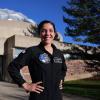 Sarah Gillis (AeroEngr’17) is a lead space operations engineer and astronaut trainer at SpaceX with literal out-of-this-world experience.The University of Colorado Boulder alumna recently returned from a five-day orbital mission aboard Polaris Dawn,
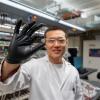 CU Boulder researchers are exploring the use of sodium-ion batteries as an alternative to lithium-based energy storage.