

Environment
 Associate Professor Ben Livneh, who’s also the director of the Western Water Assessment (WWA) at the Cooperative Institute for Research in Environmental Sciences (CIRES), shares insights on what this “snow drought” means for water availability, how it compares to past trends and what may lie ahead as Colorado approaches peak snowpack season.
 Dunphy's research involves studying interactions at the atomic level to design more efficient catalysts for polymer upcycling, an innovative approach for converting plastic wastes into valuable products, such as jet fuels.
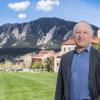 Karl Linden was presented with the CU system’s highest faculty honor, Distinguished Professor, on Feb. 6. A pioneer in ultraviolet water treatment and a dedicated educator and mentor, he has advanced both water quality innovation and student success.
 CU Boulder researchers have developed a laser-based imaging method called stimulated Raman scattering to improve the performance of desalination plants by allowing real-time detection of membrane fouling. The advance could help make desalination more efficient and reliable as global demand for clean water rises.
 Evan Thomas, a professor and director of the Mortenson Center in Global Engineering & Resilience, has been awarded a career honor from the International Water Association for work that has reshaped how safe drinking water is delivered in some of the world’s most vulnerable regions.
Read more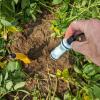 Soil is comprised of an intricate network of bacteria and other microbes that humans depend on, but this complex environmental system is constantly shifting, making it difficult for scientists to measure. Associate Professor Gregory Whiting and his team of researchers are developing reliable, inexpensive and easy-to-deploy sensors that monitor soil in real time to help farmers optimize their use of fertilizers, reduce greenhouse gas emissions and save money in the process.
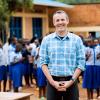 Evan Thomas, director of CU Boulder’s Mortenson Center in Global Engineering and Resilience, is pioneering climate-financed clean water programs that have brought safe drinking water to over 5 million people in Africa. Using carbon credits to fund long-term maintenance and real-time water quality monitoring, the center aims to reach 3 million more people by 2030.
 Rising senior in the Paul M. Rady Department of Mechanical Engineering Alex Hansen spent his summer break in CU Boulder’s Summer Program for Undergraduate Research (SPUR) studying the consequences of methane emissions. His work analyzing data gathered from unique methane detection sensors can one day help researchers address the methane crisis at some of the world's most prevalent methane emissions sites.
 The study, led by civil engineering PhD student Daniel Donado-Quintero, shows that setting carbon benchmarks can encourage asphalt producers to lower emissions—for example by using more recycled materials or optimizing production processes—supporting Colorado’s Buy Clean Act and CDOT’s efforts to reduce embodied carbon.
 The tiny particles could potentially help enhance drug distribution in human organs, improving the drug’s overall effectiveness or aid in removing pollutants from contaminated environments.