

Environmental Engineering
 Associate Research Professor Daniel Knight and Professor Michael Hannigan are leading an outreach program that connects CU Boulder students with rural high schools to introduce hands-on engineering experiences in the classroom. The initiative, known as the Science and Engineering Inquiry Collaborative (SCENIC), serves 12 schools and nearly 700 high school students across rural Colorado each year, turning local questions about air and soil quality into real-world research projects.
 A first-of-its-kind study, led by Professor Daven Henze and collaborators at Cardiff University in the United Kingdom, assesses how health benefits of aggressive climate policy travel across international borders. The researchers say that ambitious climate action to improve global air quality could save up to 1.32 million lives per year by 2040.
 Researchers at the McMurdo Dry Valleys Long-Term Ecological Research Program have spent more than three decades studying ecosystems in one of the world’s most hostile environments.
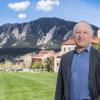 Karl Linden was presented with the CU system’s highest faculty honor, Distinguished Professor, on Feb. 6. A pioneer in ultraviolet water treatment and a dedicated educator and mentor, he has advanced both water quality innovation and student success.
 Environmental engineering student Darwin Hanson (EnvEngr'26) pushed beyond her environmental intern role at Langan Engineering, taking on diverse projects from site assessments to geotechnical fieldwork to broaden her skills and experience.
 Evan Thomas, a professor and director of the Mortenson Center in Global Engineering & Resilience, has been awarded a career honor from the International Water Association for work that has reshaped how safe drinking water is delivered in some of the world’s most vulnerable regions.
Read more PhD student Laura Shannon, alongside Professors Greg Rieker and Peter Hamlington of the Paul M. Rady Department of Mechanical Engineering are setting fires inside wind tunnels to gain a better understanding of how fire spreads across different terrain. The team says their findings could help keep communities safer in a world where climate-driven wildfire is becoming more common—and more dangerous.
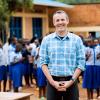 Evan Thomas, director of CU Boulder’s Mortenson Center in Global Engineering and Resilience, is pioneering climate-financed clean water programs that have brought safe drinking water to over 5 million people in Africa. Using carbon credits to fund long-term maintenance and real-time water quality monitoring, the center aims to reach 3 million more people by 2030.
- Professor Karl Linden received the American Water Works Association’s 2025 A.P. Black Research Award, which honors outstanding contributions to water science and supply. Linden was recognized for his pioneering work in developing and applying ultraviolet technologies to improve water and wastewater treatment.
 Researchers in Professor Mark Hernandez's lab have discovered that a passive, generally safe ultraviolet light treatment can rapidly inactivate airborne allergens. They believe this approach could serve as an additional tool to help reduce allergens in homes, schools and other indoor environments.