

Research
Research news & events


You are invited to attend summer seminars on Wednesday evenings at 7pm in the historic Megaron building (June-August).
The science topics range widely and are not restricted to research conducted at the station. Speakers gear their talks towards a general audience.

Current research

Mountains sustain diverse biological communities, store and release water, and influence climatic and atmospheric processes far beyond their peaks. They are also changing rapidly. Rising temperatures, shifting snowpack, drought, atmospheric pollution and changing species distributions can alter the timing and movement of water, the cycling of carbon and nutrients, and the structure of mountain ecosystems.
Research at the MRS examines these changes across connected terrestrial, aquatic, and atmospheric systems. Recent work includes studies of:
Alpine plant communities.
Pika populations and behavior.
Microbial influences on tundra vegetation.
Snow accumulation and melt.
High-elevation lakes.
Shrub expansion on the tundra.
Soil and nutrient processes.
Land–atmosphere exchanges.
Wildfire and water supplies.
New methods for observing snow and ecosystems.
Physical forces that shape mountain landscapes.
These projects help reveal both the resilience of mountain environments and the limits of their ability to adjust to change.
Each of the projects underway at the station fits into one or more of the following research topics.

Plants are the living foundation of ecosystems, and mountains are no exception. Myriad diverse species pack into small microhabitats, while wholly different communities can occupy areas just a few meters away. We study changes in plant composition and diversity over time to better understand the threats that these diversity hotspots face, and how these changes will affect the ecosystem as a whole.

Mountain animals live at the edge of environmental extremes, and climate change is making their persistence even more uncertain. Studies of animals like pika, marmots, birds, and bees provide indicators of environmental change through shifts in their abundance and distribution over time.

Coming soon

In the most austere mountain environments devoid of other life, microbes find a way. We study microbes living on high-altitude glaciers and talus fields to better understand how these organisms survive extreme conditions. We also study the roles of microbes in cycling nutrients and providing resources to plants, to better understand how this web of interactions buffers or accelerates climate adaptation.

In high-elevation lakes and streams, we find food webs of phytoplankton and zooplankton that nimbly respond to ice off, flushes of cold snowmelt water, and warmer conditions at the height of the summer. We study long-term shifts in these aquatic communities as a way to understand current and future shifts to water chemistry, water availability, and mountain ecosystems.

We study how ecology and earth surface processes interact with spatial patterns and geographic structures across mountain landscapes. We measure how species, water, nutrients, energy, and disturbances move among habitats, and collect data to understand how climate, topography, and geomorphology shape biodiversity, ecosystem function, and environmental change over time.

From the subalpine forest to the highest alpine tundra, we monitor the atmosphere and its interactions with the Earth's surface. We collect measurements of temperature, precipitation, solar radiation, atmospheric deposition, carbon and water fluxes, ozone, and even meteors entering the atmosphere. We also measure how energy, water, and gases move between land and air to better understand environmental processes as they occur.

High-elevation ecosystems function like water towers. They store snow during the winter, and release snowmelt in the spring. Decades of water monitoring show how atmospheric deposition and permafrost thaw can affect the export of many constituents found in our water, such as nitrate, sulfate, and carbon.

We study climate by building on decades of observations to understand long-term environmental change. We collect and preserve records of temperature, precipitation, snowpack, vegetation, and other key indicators. Our records rank among the longest in the United States. We also measure how mountain ecosystems respond over time, revealing the impacts of climate change on water resources, biodiversity, seasonal timing, and the resilience of plants and animals.
Science highlights
The power of long-term research
Long-term environmental records are one of the Mountain Research Station’s greatest scientific strengths. Many important changes can be detected only after researchers have measured the same processes consistently for decades. These records make it possible to distinguish lasting trends from short-term variability, understand unusual events, and place current conditions within a broader environmental history.
The Station and its partners, especially the Niwot Ridge LTER, collect a wide range of records. Here are some highlights:
MRS Mountain Climate Program
The Program has measured weather at multiple stations along an elevational gradient in the Front Range since the 1950s. Records include temperature, precipitation, humidity, wind, solar radiation, soil conditions and snow depth. The D1 site on Niwot Ridge is North America’s highest continuously operating weather station, with a record extending from 1953 to the present.

The D-1 site on Niwot Ridge at 12,267 ft (3739 m) elevation. This is the highest continuously operating weather station in North America (1953-present).
Analysis of the long-term trends for the climate stations indicate an increase in winter precipitation at the highest elevations, and an increase in temperature at both higher and lower elevations in Spring and Summer, trends that are consistent with regional analyses. Collecting the short-term variations is also extremely valuable for understanding how plants, animals, and ecosystems respond to changing environmental conditions on shorter timescales.
Long-term trends in precipitation by season and biome
The figure below visualizes trends in total precipitation on Niwot Ridge for September through May (left panel) and June through August (right panel) from 1952 through 2025. Data from the subalpine (C1) are in red, and data from the alpine (D1) are in blue. Solid trend lines indicate statistically significant change over time; dashed lines indicate changes over time are statistically insignificant. More information on this precipitation plot.

Long-term trends in air temperature by biome and season
The figure below visualizes seasonal air temperature trends in the subalpine (in red, C1) and in the alpine (in blue, D1). Solid trend lines indicate statistically significant change over time; dashed lines indicate changes over time are statistically insignificant. More information on this air temperature plot.

Greenhouse gases

Collecting flask samples on Niwot Ridge for NOAA greenhouse gas monitoring.
Greenhouse-gas sampling began on Niwot Ridge in 1967 as part of NOAA’s worldwide monitoring system, creating the longest continental record of atmospheric carbon dioxide in the world and a lengthly record of methane too. Accurately measuring these gases and the change in their concentrations is critical to evaluating future climate change.
Besides the global implications, analysis of the Niwot CO2 concentrations indicate that the onset of spring has come earlier, the end of fall is later, and the seasonal amplitude of CO2 has diminished.

Long-term concentrations of atmospheric carbon dioxide (CO2) on Niwot Ridge, Colorado from 1968 through June 2026 (Credit: NOAA).
Air pollution

Collecting samples for precipitation chemistry on Niwot Ridge
We study how air pollution travels long distances and affects remote mountain ecosystems. As part of the National Atmospheric Deposition Program (NADP), we maintain long-term monitoring sites that measure pollutants carried in rain and snow, helping scientists track changes in atmospheric deposition over time.
These records reveal how pollutants such as nitrogen and mercury influence soils, lakes, streams, and alpine vegetation. In particular, inputs of nitrogen have led to environmental impacts, including soil and water acidification and changes in the composition of plants. By connecting atmospheric deposition with ecosystem change, our research improves understanding of air quality and supports efforts to protect mountain environments.

Change in nitrogen deposition on Niwot Ridge
Alpine plant cover

Students mark wildflowers for observation on Niwot Ridge during the Fired Up! program
We study alpine plant cover to understand how mountain ecosystems respond to changing climate and environmental conditions. Researchers repeatedly measure permanent plots across Niwot Ridge, recording the abundance and distribution of plant species through time to reveal long-term changes in alpine vegetation.
These long-term records show that vegetation change is not uniform across the landscape. Plant communities respond differently depending on local conditions such as snow cover, moisture, and topography, demonstrating that landscape diversity shapes how alpine ecosystems adapt to a changing climate.
Annual anomalies in plant cover by vegetation type
The Niwot Ridge LTER has monitored vegetation in an alpine dry meadow since 1989. Explore our data, visualized below, to discover how plant community composition is changing over time on the Saddle of Niwot Ridge.
The figure below shows annual deviation in percent cover from the long-term mean for each of five types— forbs, graminoids, shrubs, moss, and lichen— in an alpine dry meadow. Positive values indicate more cover than average while negative values indicate less cover than average.

Together with other ecological experiments and observations, these datasets provide an unusually detailed view of how climate, atmosphere, water, soils and living communities interact over time.
Field areas
The Mountain Research Station supports research across three principal field areas:

190 acres
Surrounded by national forest
Owned by Univ. of Colorado

Niwot Ridge
Special Research Area
1,775 acres
Managed by
U.S. Forest Service

Together, these areas encompass an exceptional range of mountain environments within about four miles (6 km) of the station campus, allowing researchers to work across steep gradients in elevation, climate, snow cover, soils and vegetation while operating from a single field station.
Researchers have access to:
Ponderosa pine, lodgepole pine, aspen, and spruce-fir forests.
Montane and subalpine meadows.
Alpine tundra.
Streams, lakes, wetlands and riparian corridors.
Glacial and periglacial landforms, including talus slopes, patterned ground and areas of permafrost.
This remarkable diversity of landscapes enables scientists to investigate ecological, hydrological, atmospheric, and geomorphic processes across interconnected mountain ecosystems.


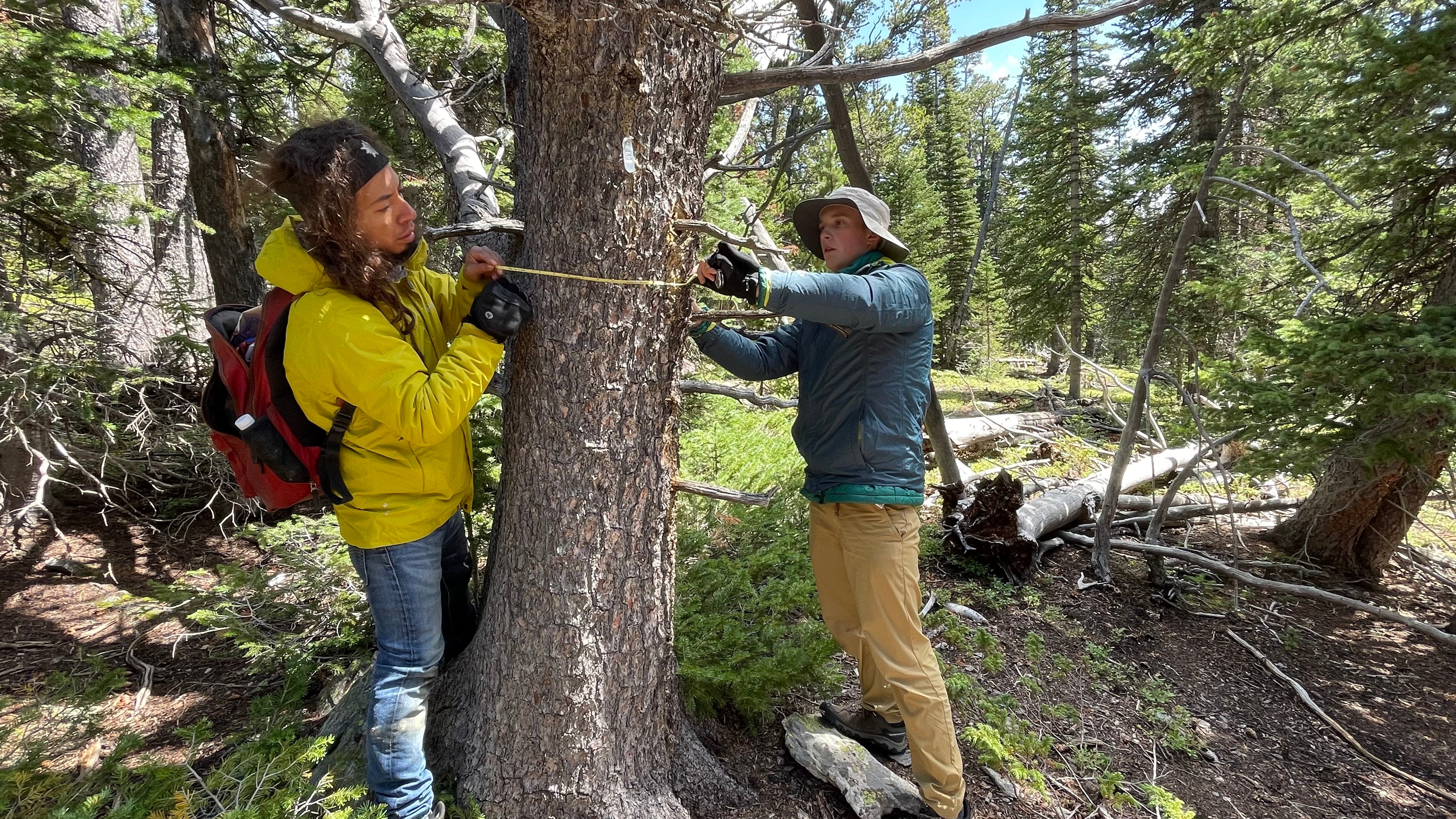
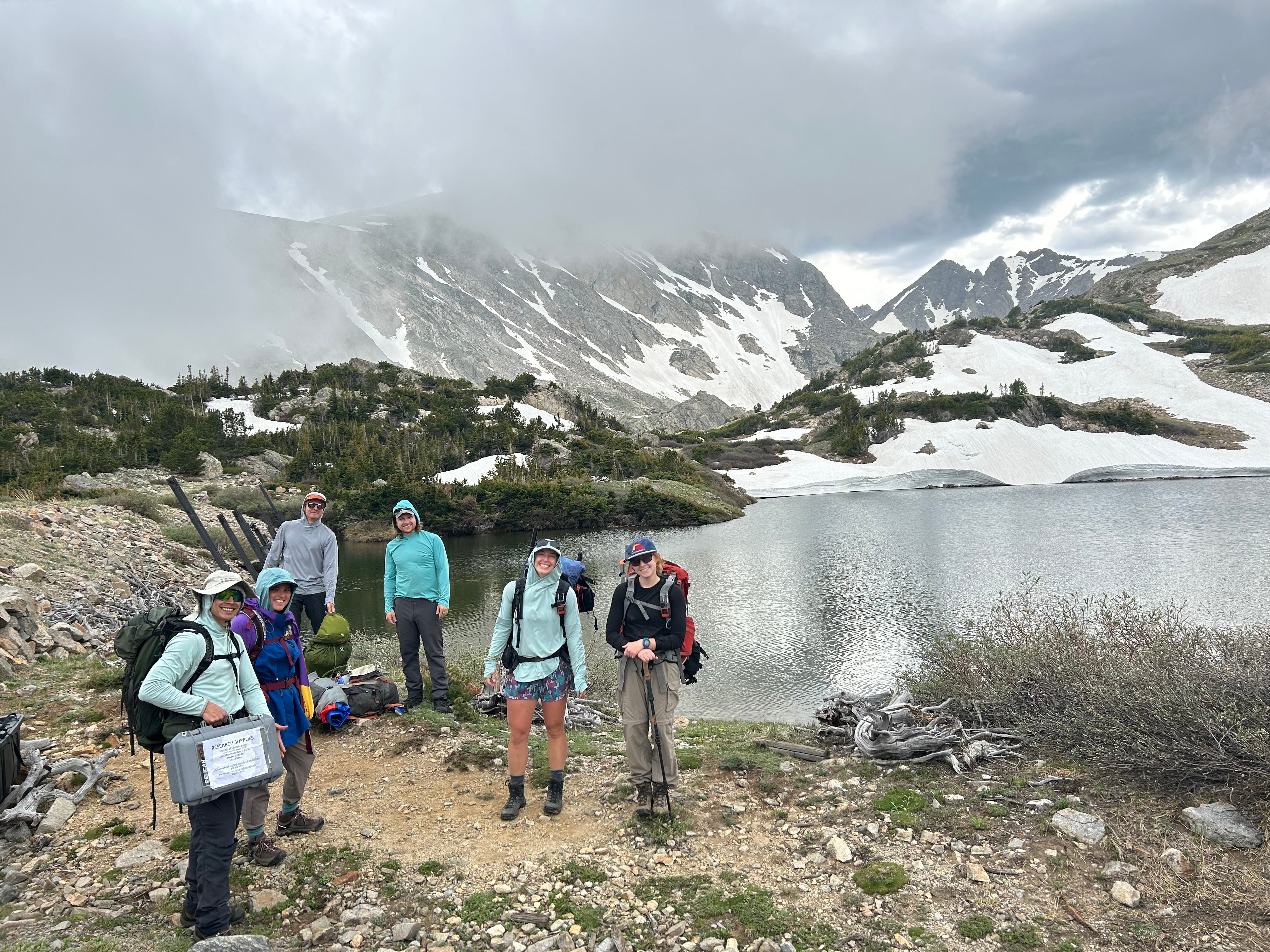


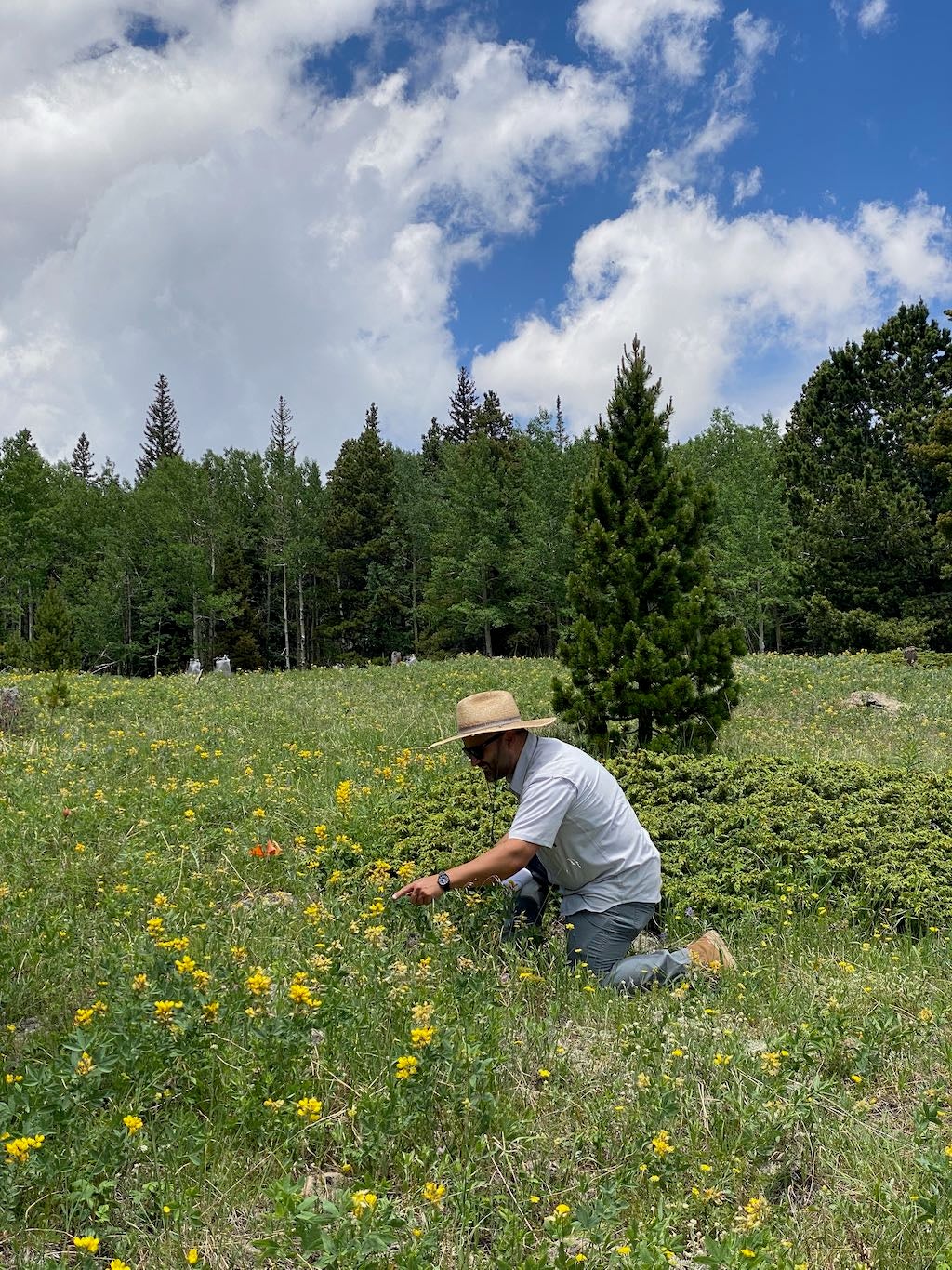


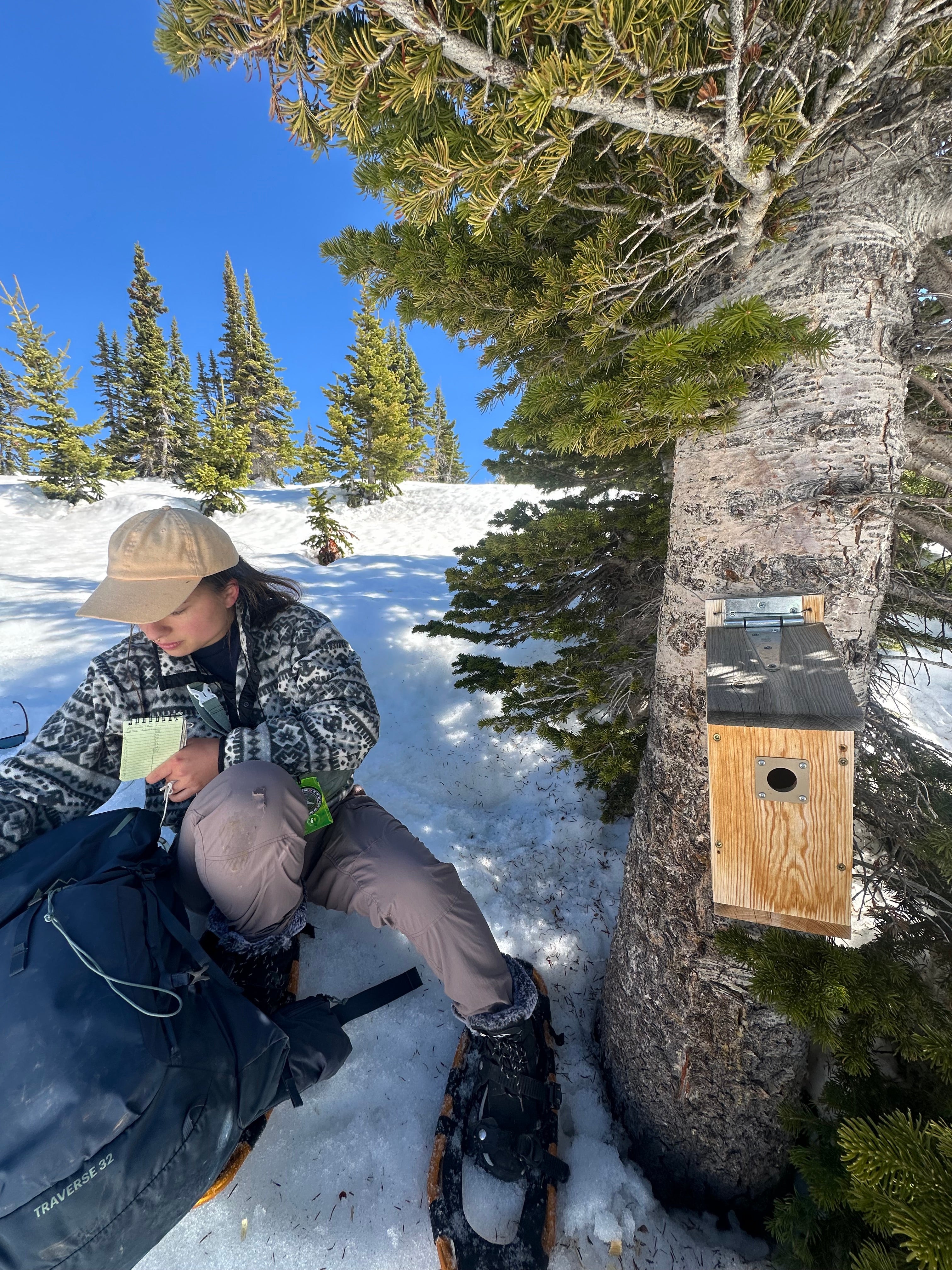


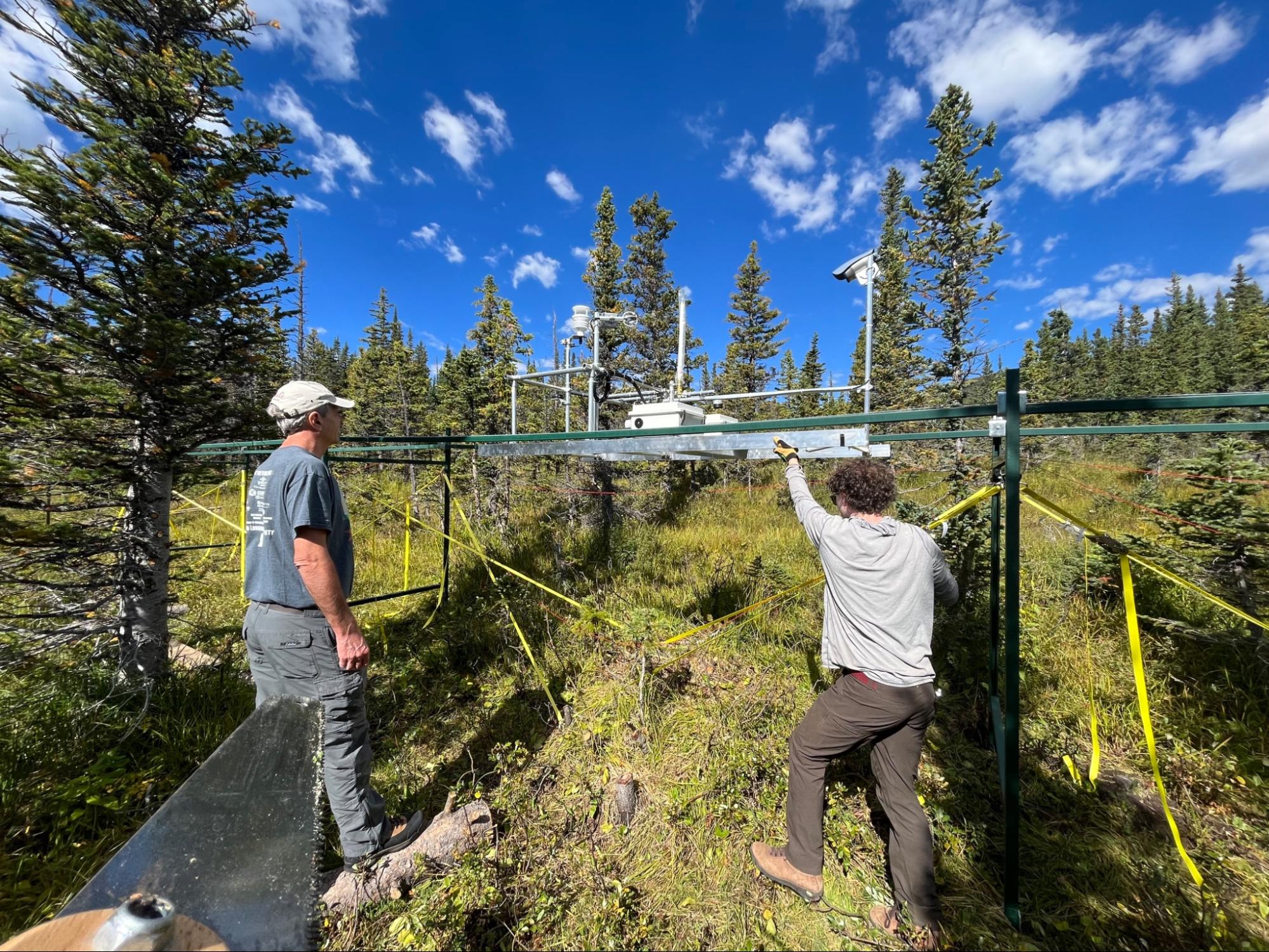
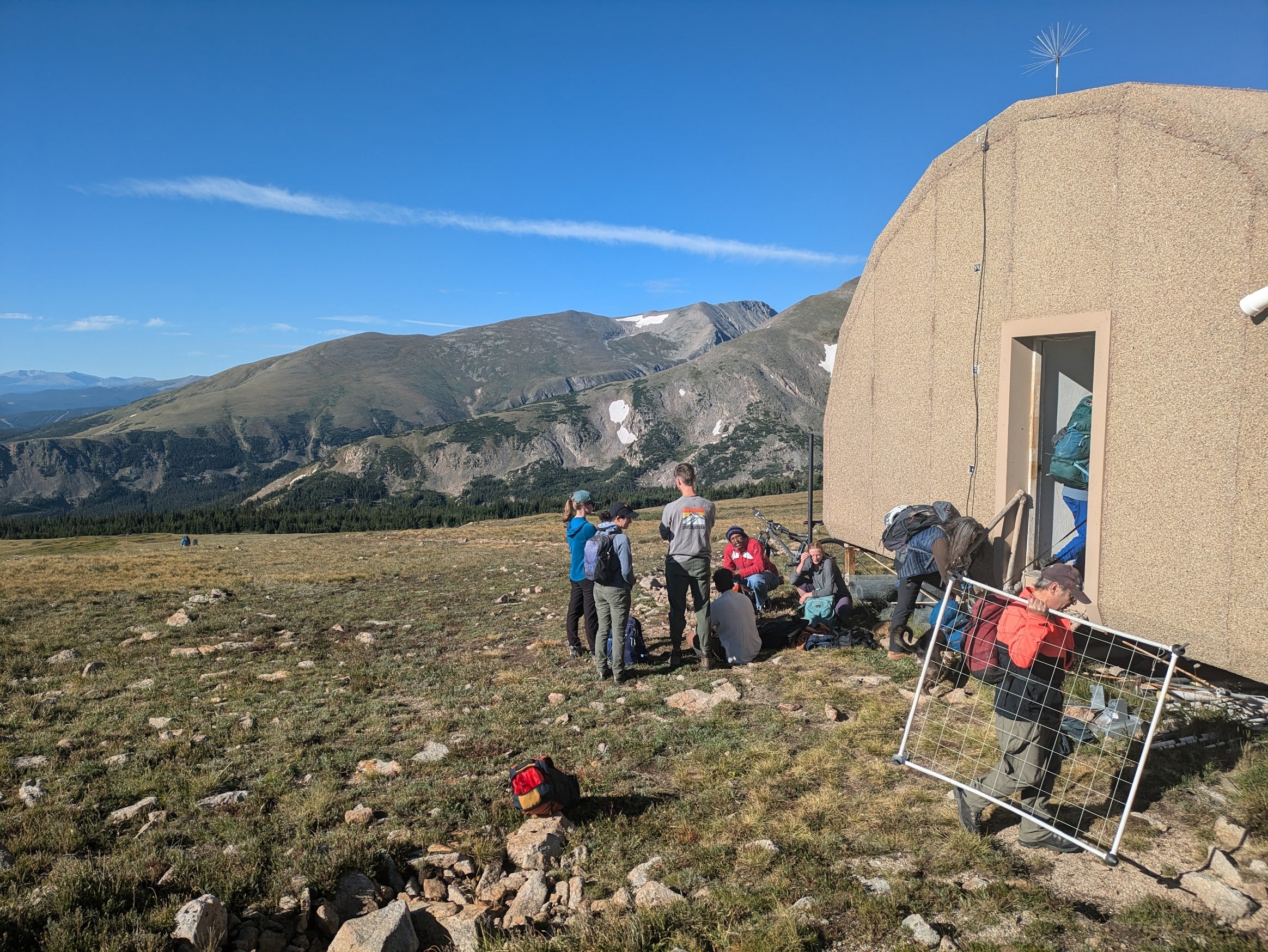
Most MRS-supported research takes place within the Columbine Springs Reserve and on Niwot Ridge, where observational studies and approved experiments are conducted under long-term stewardship designed to protect the scientific value of these landscapes. Additional research occurs in the City of Boulder Watershed under special authorization, reflecting the need to safeguard both fragile alpine ecosystems and Boulder’s municipal drinking water supply. Visitors should know that the Boulder Watershed is closed to the public and trespassers will be fined. Together, these protected landscapes provide an unparalleled setting for understanding how mountain environments function and respond to environmental change.
Science partners
The Mountain Research Station supports collaborations with institutions and researchers from across the country and the world. Our closest long-term partners are highlighted below.
CU Boulder
Most MRS research projects are led by scientists from our host institution: the University of Colorado Boulder. Within the university, the units that most frequently utilize the station include:


Niwot Ridge LTER

The Niwot Ridge Long Term Ecological Research program is the Mountain Research Station’s most closely integrated and longest-standing science partner. Founded in 1980 as one of the original six National Science Foundation LTER sites, it is among the world’s most enduring alpine research efforts. Based at CU Boulder but drawing researchers from across the country, the program focuses on the high-elevation terrain just northwest of the station, where key study sites—shown in the graphic below—anchor long-term environmental research.

Additional partners
The MRS collaborates on science projects with many other groups, including:


Want to see more research?
Find out how the station makes an exceptional, supported natural laboratory for studying how mountain systems function and respond to change.