Charles Hoeffer

  • Professor
  • INSTITUTE FOR BEHAVIORAL GENETICS
  • INTEGRATIVE PHYSIOLOGY
Address

Institute for Behavioral Genetics
University of Colorado Boulder
447 UCB
Boulder, CO 80309-0447

Dr. Hoeffer is recruiting new students for a fall 2026 start date

Applications are typically due mid November; for exact dates please check the Department of Integrative Physiology website, if you intend to work with Dr. Hoeffer. Additional information is available on IBG's Prospective Students page.

Research Interests:

Understanding the cellular and molecular basis for neurological disorder and neurodegenerative disease.

Active Grants:

  • NIA R01 AG064465-01 (MPI: Hoeffer, Link, Opp) 7/1/2019-6/30/2024. Sleep Disruption and Alzheimer's Disease Pathology. Role: PI
  • NIA R01 AG064465-01 SUPPLEMENT2 (MPI: Hoeffer, Link, Opp) 8/1/2022-7/31/2024. Sleep Disruption and Alzheimer's Disease Pathology/ Links between AD, DS and sleep disruption. Role: PI
  • AB Nexus Grant (MPI: Huntsman, Hoeffer) Period 12/1/2021-11/30/2022 Understanding AKT1 function regulating interneuronal activity involved in E/I balance. Role: PI
  • NIDA R21/R33 DA055781-A1 (Hoeffer, Ehringer, Stitzel) 9/15/2022-9/14/2027. Role of glial expression in nicotine behaviors for genes identified through human GWAS Role: PI
  • NIA RF1AG064465-S2 (Hoeffer, Opp, Link) 04/01/2022-3/31/2023 Sleep Disruption in Down Syndrome-related Alzheimer’s Disease. Role: PI
  • Lab Venture Challenge (LVC), Venture Partners at CU Boulder and the Colorado Office of Economic Development and International Trade (OEDIT) Advanced Industries Program, (MPI Hoeffer, Parker, Van Alstyne) 3/1/2024-2/28/2026. New treatment for dementia with peptide therapeutics targeting tau aggregation. Role: PI
  • NI23013. AFAR (Evans) 01/01/2024-12/31/2026 ,Gene-gene interaction associations with frailty to identify core genes of aging and their biological context. Role: Co-Investigator
  • NIH R01 AG083268 (Hoeffer) 9/1/2023-8/31/2028. Sleep abnormalities in Down Syndrome-related Alzheimer's disease. Role: PI
  • NIH R01 NS131660 (Whiteley) 4/1/2023-3/31/2027. Investigation of UBQLN2-dependent changes to neuronal health and function in ALS-FTD. Role: Co-Investigator
  • NIA R01 AG085307 (Hoeffer) 7/1/2024 - 3/31/2029. The Role of double-stranded RNA in neuronal cell death in Alzheimer's and related neurodegenerative diseases 
    Role: MPI (Hoeffer, Link, Zhang)
  • RIO Seed Grant (Hoeffer) 5/1/2024 - 10/30/2025. Molecular validation of epistatic network hub genes in Alzheimer's Disease and Related Dementias using AD brain samples and ADRD-derived iPSCs. Role: MPI (Evans, Hoeffer)
  • RIO Seed Grant (Hoeffer) 5/1/2024 - 10/30/2025. Studying astrogliosis in the brain using quantitative image analysis and mathematical modeling. Role: MPI (Betterton, Hoeffer)

Additional Resources:

Current CV

Dr. Hoeffer speaks on Molecular Signaling and Neurological Disorders: 

Hoeffer Current Lab

Hoeffer Former Trainees

Helen Wong

2017

Daniel Peterson

2016

Josien Levenga

2011

Ryan Milstead

2022

Kiriana Cowansage

2011

Publications

Hoeffer News

Hoeffer Highlighted Publications

Multielectrode array characterization of human induced pluripotent stem cell derived neurons in co-culture with primary human astrocytes

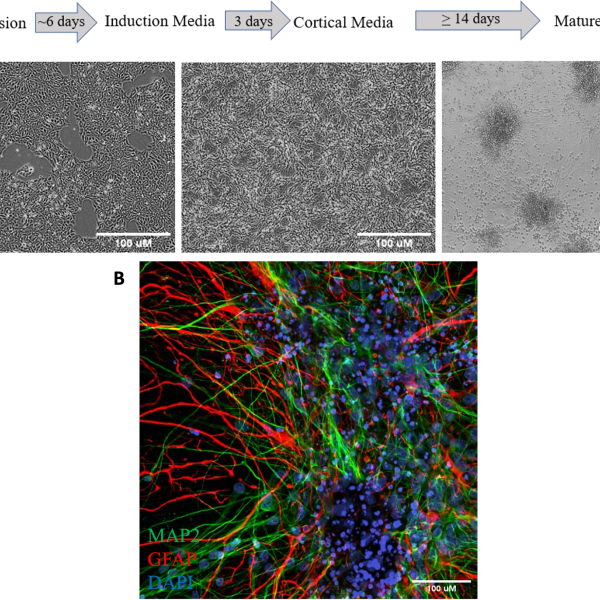
We differentiated human-induced pluripotent stem cells (hiPSCs)into neurons and co-cultured with primary human astrocytes to achieve robust neural network within six weeks, significantly faster than 3D brain organoids. This efficient, fully human co-culture system, paired with multielectrode arrays (MEAs), provides a powerful and high-throughput platform for studying neuronal network properties, blood-brain barrier dynamics, and neurodegenerative diseases.

(PLOS ONE, 2024)

TDP-43 knockdown in mouse model of ALS leads to dsRNA deposition, gliosis, and neurodegeneration in the spinal cord

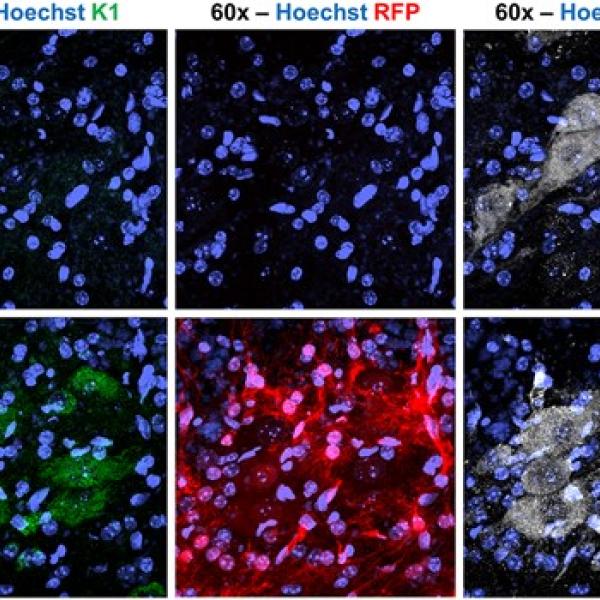
Transactive response DNA binding protein 43 kilodaltons (TDP-43) is a DNA and RNA binding protein associated with severe neurodegenerative diseases such as amyotrophic lateral sclerosis (ALS), primarily affecting motor neurons in the brain and spinal cord. TDP-43 dysfunction can lead to deficits in chromatin processing and double-stranded RNA (dsRNA) accumulation, potentially activating the innate immune system and promoting neuroinflammation. We used immunostaining to investigate dsRNA accumulation and other signs of CNS pathology in the spinal cords of amiR-TDP-43 mice and found data supporting the notion that loss of TDP-43 function could contribute to neuropathology by increasing dsRNA deposition and subsequent innate immune system activation.

(Cerebral Cortex, 2023)

RCAN1 knockout and overexpression recapitulate an ensemble of rest-activity and circadian disruptions characteristic of Down syndrome, Alzheimer’s disease, and normative aging

Regulator of calcineurin 1 (RCAN1) is overexpressed in Down syndrome (DS), but RCAN1 levels are also increased in Alzheimer's disease (AD) and normal aging. AD is highly comorbid among individuals with DS and is characterized in part by progressive neurodegeneration that resembles accelerated aging. Anomalous diurnal rest-activity patterns and circadian rhythm disruptions are also common in DS, AD, and aging and have been implicated in facilitating age-related cognitive decline and AD progression. Using the Dp(16)1Yey/+ (Dp16) mouse model for DS, which expresses three copies of Rcan1, we found reduced wheel running activity and rhythmicity in both light-entrained and free-running young Dp16 mice like young RCAN1-overexpressing mice. Critically, these diurnal and circadian deficits were rescued in part or entirely by restoring Rcan1 to two copies in Dp16 mice.
 
(Journal of Neurodevelopmental Disorders, 2022)

Immunohistological Examination of AKT Isoforms in the Brain: Cell-Type Specificity That May Underlie AKT’s Role in Complex Brain Disorders and Neurological Disease

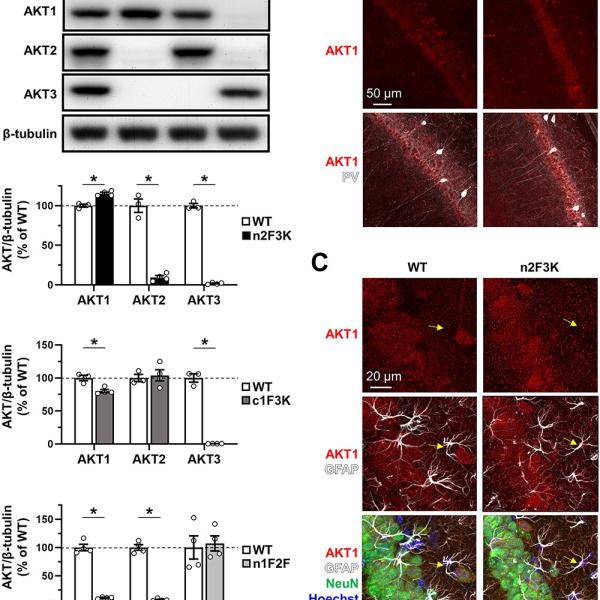
In this study, we use a combination of histology, immunostaining, and genetics to characterize cell-type-specific expression of AKT isoforms in human and mouse brains. In mice, we find that AKT1 is the most broadly expressed isoform, with expression in excitatory neurons and the sole detectable AKT isoform in gamma-aminobutyric acid ergic interneurons and microglia. By contrast, we find that AKT2 is the sole isoform expressed in astroglia and is not detected in other neural cell types. Because AKT signaling is linked to numerous neurological disorders, a greater understanding of cell-specific isoform expression could improve treatment strategies involving AKT.

(Cerebral Cortex Communications, 2021)

Isoform-specific roles for AKT in affective behavior, spatial memory, and extinction related to psychiatric disorders

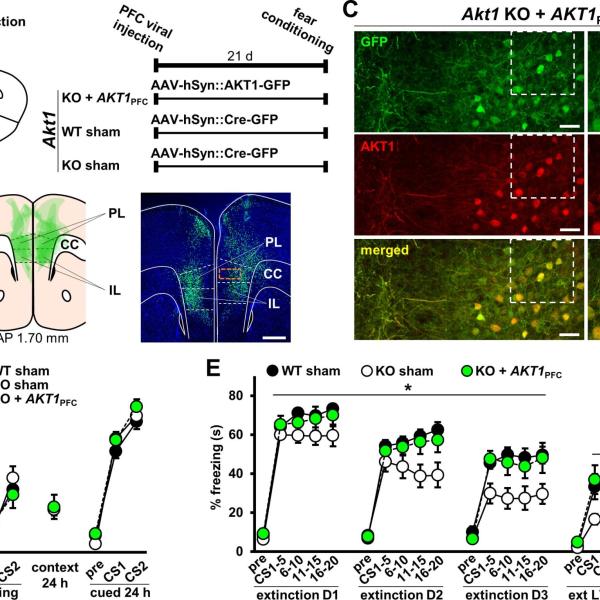
Our studies revealed AKT isoform- and sex-specific effects on anxiety, spatial and contextual memory, and fear extinction. These results highlight sex as a biological variable and isoform- or cell type-specific AKT signaling as potential targets for improving treatment of neuropsychiatric disorders.

(eLife, 2020)

Sleep Behavior and EEG Oscillations in Aged Dp(16)1Yey/+ Mice: A Down Syndrome Model

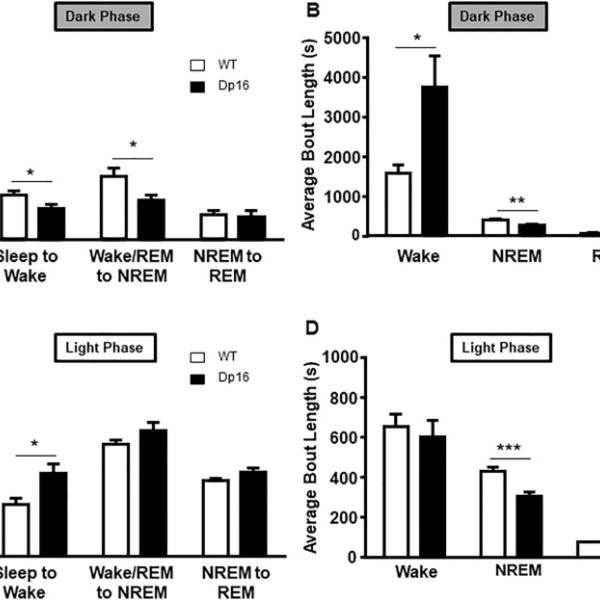
In this study, sleep and electroencephalography (EEG) oscillations were recorded from aged Dp(16)1Yey/+ mice (Dp16), a mouse model of DS. We observed disrupted sleep demonstrated by increased activity during the dark phase and increased time awake at the expense of NREM sleep compared to wild-type mice. These results in Dp16 mice are consistent with sleep disturbances found in individuals with DS, and the abnormal EEG oscillations in aged Dp16 mice suggest a potential role for GABAergic activity in these sleep and EEG abnormalities.

(Neuroscience, 2018)