


What is sustainability leadership? Students share insights from research and practice

Angie Balish and Erin Bucchin
This spring, Masters of the Environment (MENV) graduate students Angie Balish and Erin Bucchin set out to better understand how MENV can better support future sustainability leaders.
But what is sustainability leadership?
Between interviews with sustainability leaders, literature review and research into sustainability leadership programs, Balish and Bucchin discovered that definitions vary wildly—and perhaps that means that leadership should, too.
The students set out to define sustainability leadership and identify the core competencies of sustainability leaders, supported by funding through CU Boulder's Center for Leadership and Affiliate Leadership Accelerator Bootcamp (A-LAB).
Stefanie Johnson, director of the Center for Leadership and professor in the Leeds School of Business, noted: “The students in the MENV program are already coming in with outstanding technical and leadership skills. The Center for Leadership is thrilled to support them and other groups on campus by investing in their continued leadership growth.”
The team conducted a literature review of academic sources and established leadership programs and interviewed sustainability leaders across CU Boulder and the broader Colorado sustainability community, including MENV faculty, program administrators and practitioners who offered insight into what makes sustainability leaders effective and how students can practice to become leaders.
Defining sustainability leadership
One of the clearest takeaways was that there is no single, universal definition of sustainability leadership. Some leaders described it as a distinct skillset unique to sustainability, while others saw it as strong leadership applied within an environmental and social context.
What united these perspectives was an acknowledgment of the “wickedness” and complexity of sustainability challenges, in that they are interconnected, critical and constantly evolving at global scales that need to be addressed collectively. Thus, sustainability leadership is less about fixed or positional authority and more about having the skills and expertise to collaboratively navigate change, adapt quickly and work across boundaries.
Key takeaways
Sustainability leadership is grounded in...
- Systems thinking
- Collaboration
- Communication
- Adaptability
Sustainability leadership is shaped by values like...
- Integrity
- Curiosity
- Accountability
Through Balish and Bucchin's interviews and literature review, a set of core competencies emerged. Among them, systems thinking stood out as foundational. Sustainability leaders emphasized the ability to understand how environmental, social and economic systems interact, and to make decisions informed by this interconnectedness.
Natalie Ooi—associate chair of the MENV Professional Master's Program and lead of MENV's sustainability in outdoor industry specialization—spoke to this, saying that leaders need “the ability to think expansively, draw those connections, think beyond a particular project or idea, and start to think holistically about how this all interconnects and intertwines.”
Closely tied to this idea was collaboration and engagement—the ability to build relationships, foster trust and mobilize others were consistently named as essential in Balish and Bucchin's inquiry. Leadership, in this context, is not individualistic; it is collective and relational.
Communication and storytelling also surfaced as indispensable, as sustainability leaders must be able to translate complex ideas across audiences, facilitate dialogue and inspire action.
Resilience and adaptability were highlighted as necessary competencies for navigating a field that is often emotionally and professionally demanding. Interviewed leaders spoke to the importance of sustaining not just systems—but themselves—by balancing urgency with longevity in their work.
Another key takeaway was how these leaders developed their skills. Interestingly, few pointed to formal training alone. Instead, they emphasized learning through experiences such as previous roles, mentorship and opportunities for both taking risks and reflection.
“It is critical to understand the technical aspects of whatever sustainability issue we’re working on. Also, there are advocacy and communication components that are key. How we articulate the technical solutions can be what actually moves the idea to real world impact.”
–Vice Chancellor for Sustainability Andrew Mayock
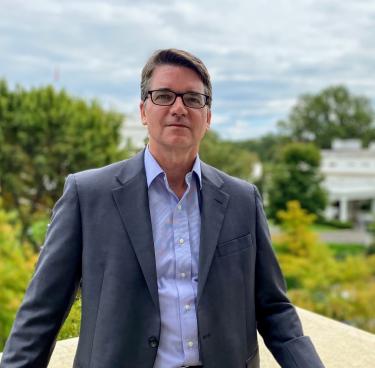
Leadership, they suggested, is not innate or fixed. It is something that can be practiced, shaped and expanded over time.
Josh Radoff, director of campus climate action, sustainability and resilience and lead of MENV's renewable and sustainable energy specialization, noted: “There's not one single archetype of what a leader looks like. Whatever your role is, there's an opportunity for leadership within that role, even if you're not in a leadership role,” highlighting the many different ways leaders can show up with intention and impact. This is exactly how students can practice leadership right now within their own programs, at CU Boulder and in their communities.
Ultimately, this work suggests that sustainability leadership is grounded in systems thinking, collaboration, communication and adaptability, and shaped by values like integrity, curiosity and accountability. These competencies enable leaders to take on complex, “unsolvable” problems and still move work forward.
The future of MENV
Balish and Bucchin's work will inspire a future program for MENV that will fill a gap in leadership education.
Alice Reznickova—associate director of MENV, teaching associate professor and capstone lead—who brought this project to MENV shared: “The grant we received supported Angie and Erin’s work to design a program for students based on their experiences—they did a phenomenal job exploring and then teaching me what sustainability leadership means. We will implement their plan immediately so that the next generation of students can benefit from their work!”
Looking ahead, the next step is translating these insights into practice. A pilot sustainability leadership certification within the MENV program will provide students with flexible, experiential opportunities to build these competencies through mentorship, reflection and applied learning all the while formulating a sustainability leadership definition for themselves.
On Balish and Bucchin's voyage to define sustainability leadership, one conclusion became clear: It is not a static label but a practice. And in a field defined by complexity and change, it is practice rooted in key competencies that equips leaders to address the challenges ahead.