Robert Frost Image

Publications:
GTP Handbook / The Tutor / National Teaching and Learning Forum


The Tutor - Vol. 2, No. 3, 1986


Sexism in the Classroom: From Grade School to Graduate School

by Myra Sadker and David Sadker

From grade school to graduate school to the world of work, males and females are separated by a common language. This communications gender gap affects self-esteem, educational attainment, career choice, and income. But its hidden lessons generally go unnoticed.

For the past six years, we have conducted research on classroom interactions in elementary and secondary schools and in institutions of higher education. In this article, we will discuss four conclusions of our research.

  • Male students receive more attention from teachers and are given more time to talk in classrooms.
  • Educators are generally unaware of the presence or the impact of this bias.
  • Brief but focused training can reduce or eliminate sex bias from classroom interaction.
  • Increasing equity in classroom interaction increases the effectiveness of the teacher as well. Equity and effectiveness are not competing concerns; they are complementary.

Our first study of classroom interaction was conducted from 1980 to 1984. With funding from the National Institute of Education (NIE), researchers trained in the INTERSECT Observation System collected data in more than 100 fourth-, sixth-, and eigth-grade classrooms in four states and the District of Columbia. The sample included urban, suburban, and rural classes; classes that were predominantly white, predominantly black, and predominantly integrated. The teachers observed in this study were both male and female; they represented both white and minority groups; they taught in the areas of language arts, social studies, and mathematics. While the sample reflected the diversity of American students and teachers, the observations revealed the pervasiveness of sex bias.

At all three grade levels and in all subjects, we found that male students were involved in more interaction than female students. It did not matter whether the teacher was black or white, male or female; the pattern remained the same. Male students received more attention from teachers.

But the matter was not as simple as boys winning and girls losing the battle for the attention of the teacher. Classrooms were characterized by a more general environment of inequity; there were the "haves" and the "have nots" of teacher attention. Students in the same classroom, with the same teacher, studying the same material environments.

About a quarter of the elementary and secondary students typically did not interact with the teacher at all during class. These were the silent ones, spectators of classroom interaction. A second group was involved in a nominal level of interaction - typically one interaction per class session. The majority of students fell within this group. The final category consisted of interaction - rich students who participated in more than three time their fair share of interactions with the teacher. Only a few students (typically less than 10%) fell into this category; these were the stars, the salient students.

The quality as well as the quantity of classroom interaction is also distributed inequitably. Teacher interactions involving precise feedback were more likely to be directed to male students. We identified three types of precise teacher reactions: praise (positive reactions to a student's comment or work), criticism (explicit statement that an answer is incorrect), and remediation (helping students to correct or improve their responses). A fourth, less-specific teacher reaction consisted of simple acceptance of student comments, including such teacher comments as "okay" or "uh-huh." More than half of the teachers' comments fell into this category. This high rate of acceptance responses created classroom environments best characterized as flat, bland, and unexciting.

When teachers' reactions were more precise, remediation comments designed to correct or improve students' answers were the most common. These accounted for about one-third of all teacher comments. Praise constituted approximately 10% and criticism 5% of teacher interactions. Male students received significantly more remediation, criticism, and praise than female students. There was more equity in the distribution of acceptance responses - the ones that pack the least educational wallop.

Although our research has made the inequities of classroom interaction more apparent, the reasons why males capture more and better teacher attention remain less clear. Sex segregation may be part of the problem. The majority of classrooms in our study were sex-segregated, and teachers tended to gravitate to the boys' sections, where they spent more of their time and attention.

Another explanation is that boys demand more attention. Our research shows that boys in elementary and secondary schools are eight times as likely as girls to call out and demand a teacher's attention. However, this is not the whole story; teachers behave differently depending on whether the student calling out is a boy or a girl. When boys call out, teachers tend to accept their answers. When girls call out, teachers remediate their behavior and advise them to raise their hands. Boys are being trained to be assertive; girls are being trained to be passive - spectators relegated to the sidelines of classroom discussion.

These findings cannot be dismissed as a mechanistic and irrelevant game of counting who talks more often. National measures of academic progress support the thesis that girls and boys are experiencing different educational environments. In the early grades, girls' scores on standardized tests are generally equal to or better than boys' scores. However, by the end of high school, boys are scoring higher on such measures as the National Assessment of Educational Progress and the Scholastic Aptitude Test.

Given our findings about classroom interaction, common sense suggests that this is what should happen. The most valuable resource in a classroom is the teacher's attention. If the teacher is giving more of that valuable resource to one group, it should come as no surprise that that group shows grater educational gains. The only real surprise is that it has taken us so long to see the problem.

Nor is bias in classroom interaction confined to schools in the U.S. Recently we returned form Great Britain, where we had been discussing sexism in classroom instruction. Unlike American educators, who are often taken aback by the subtle but significant bias in teacher/student interaction, British educators were not surprised by evidence of bias in the classroom. Indeed, over the past few years debate in Britain has focused on strengthening girls' schools as a way of avoiding this bias. Such a separate-but-equal approach would be far less palatable in the US, where the memory of struggles to end racial segregation is still fresh.

Following completion of our three-year NIE study of elementary and secondary schools, we received support from the Fund for the Improvement of Postsecondary Education (FIPSE) to train college faculty members in equity and excellence in classroom instruction. Joan Long conducted a doctoral dissertation study of this two-year project.

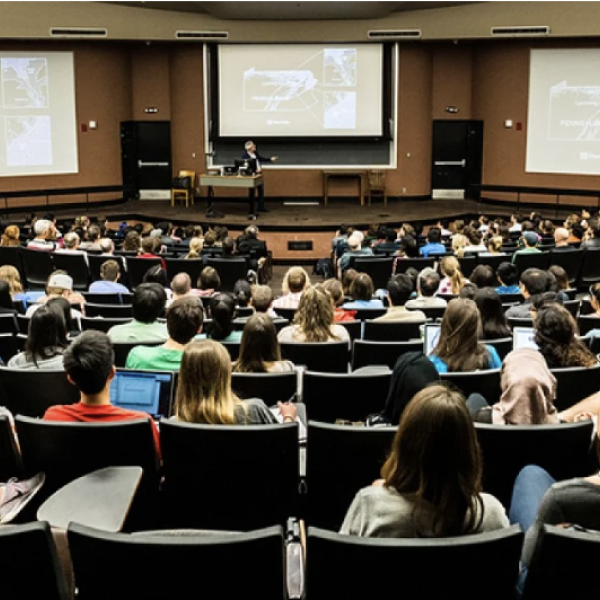
Field researchers, who had been trained in a post-secondary version of the INTERSECT Observation System, collected data in 46 classes in a wide range of academic and professional disciplines at American University. The data indicate that the patterns established in elementary and secondary school continue in higher education. Male students receive significantly more attention, and sex bias persists.

The need for teacher training at the college level is evident. The data from the observations of college classrooms showed that the overall amount of interaction in fourth-, sixth-, and eigth-grade classes, 25% of the students did not interact with the teacher at all; in college classes this number rose in half. The "okay" classroom was prevalent at the university level. There was more acceptance than praise, criticism, and remediation combined. Research also shows that college women experience a decline in self-esteem as they progress through college. It is likely that a key factor in this decline the inequitable communication women experience inside and outside the college classroom.

Training that Works
For both our NIE and our FIPSE projects, we designed and evaluated intensive four-day programs of training for teachers. At the elementary and secondary levels, more than 40 teachers from several states have participated in the training.

Initially, many of these teachers were skeptical. Some said, "Girls get better grades on their report cards. What's the problems?" Others felt that boys did not receive more attention but that this was true in some other teacher's classrooms, not in their own. One teacher ho was an active member of the National Organization for Women (NOW) said, "I'm delighted that you're doing this project. Of course, I won't have to change anything I do in the classroom. This is an issue I've been concerned about for years." But, as these teachers became more involved in the training, their perceptions and attitudes toward classroom interaction underwent substantial change.

In the training session, the teachers viewed videotapes and films that demonstrated the research finding about bias in student/teacher interaction. In a modified micro-teaching setting, the teacher's practiced equitable teaching skills, received feedback on their performance, and practiced again. They were surprised to look at videotapes showing, irrefutably, their own bias in classroom interaction. But all the teachers saw the need for change.

Changing instructional patterns in the college classroom was a more difficult challenge because inservice training in postsecondary institutions rarely addresses specific teaching skills (nor does perservice training, for that matter). When we proposed our microteaching design, many K-12 educators expressed serious reservations. "Professors will talk about teaching," they said, "but they'll never be willing to have their teaching observed, videotaped, and critiqued by their colleagues."

Nevertheless, we were able to recruit American University professors from a wide range of academic disciplines - from anthropology to computer science, from biology to economics, from chemistry to community studies. We did not find aversion to clinical training, but rather a thirst for it. For many experienced professors, this project was the first opportunity in their professional lives to systematically analyze and improve their teaching skills. Some professors, who had lectured (and only lectured) all their lives, had to learn questioning skills. Others, who had received awards for their teaching skills, were surprised to see videotapes showing that half of their students didn't receive a fair share of teacher time. These professors, committed as they were to good teaching, also wanted to change.

In both of these studies, trained teachers and professors were matched with control groups, and the performance of the two groups was evaluated. The trained instructors at all levels achieved equity in verbal distribution; they included male and female students in numbers that reflected their distribution in the classroom. The differences between the trained groups and the control were statically significant. Moreover, the trained instructors had higher rates of interaction, more precise reactions, more academic contacts, and a greater number of student-initiated comments. In short, the training resulted in more intentional and more direct teaching. Developing equity in teaching had promoted excellence as well.

The experience of female students in US schools is unique. What other group starts out ahead - in reading, in writing, and eve in math - and 12 years later finds itself behind? We have compensatory education for those who enter school at a disadvantage; it is time that we recognize the problems of those who lose ground as a result of their years of schooling.

Bias in classroom interaction inhibits student achievement. Bias in workplace interaction inhibits the nation's productivity and efficiency. The tools to solve these problems have been forged. It is up to educators to pick them up and put them to use.

*Experienced for PHI DELTA KAPPAN, March 1986. Reprinted with permission of the authors.

Back to Tutor Newsletters Menu

Back to Top