


Daniel Strain
 Michelle Sauther has long wondered where Madagascar’s mysterious wild cats came from. Now, new genetic evidence delivers an answer.
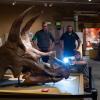 For more than 40 years, the Triceratops skull in the CU Museum of Natural History has wowed visitors of all ages. Now, that fossil is ready for its close-up.
 Kevin Costner, eat your heart out. New research shows that the early Earth, home to some of our planet’s first lifeforms, may have been a real-life "waterworld."
 A new study taps into mathematics to probe how people make fraught choices, such as whom to vote for on election day.
 This week, NASA announced that it has given the green light to Libera, a new space mission that will record how much energy leaves our planet’s atmosphere.
 For the first time, researchers have used radar and other tools to accurately measure the volume of snow produced through cloud seeding.
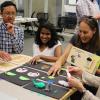 Through innovative uses of technology and other materials, the Build a Better Book project at CU Boulder does a whole lot more than create cool books. It challenges young people to design games and books that are fully accessible—and lots of fun.
 Underground robots will soon become part of CU Boulder’s efforts to achieve new feats of spelunking as part of a high-stakes competition launched by the U.S. Defense Advanced Research Projects Agency.
 A new study finds that a nuclear war could throw the world's ocean chemistry for a loop—and coral reefs could pay the price.
 Fiske Planetarium is debuting two new exhibits designed by students that will give visitors a chance to get up close and personal with Earth's favorite star.