


Daniel Strain
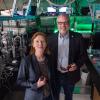 Henry Kapteyn and Margaret Murnane, pioneers in the field of laser science, have won this year's prestigious Benjamin Franklin Medal in Physics.
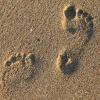 Just like modern-day humans, Neanderthals may have seen the appeal in a little sand and surf, according to a new study.
 Buildings that can heal their own cracks, absorb toxins from the air or even glow on command? They may not be so far off, a new study suggests.
 Scientists have finally scaled the equivalent of the Rocky Mountain range in space.
 Researchers have taken the closest look yet at the Kepler 51 star system, home to the lowest-density planets ever discovered.
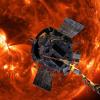 NASA’s Parker Solar Probe has gotten closer to the sun than any other object designed and developed by humans—and CU Boulder scientists have been along for the ride.
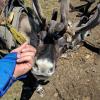 Mongolia's Tsaatan reindeer herders depend on munkh mus, or eternal ice, for their livelihoods. Now, soaring global temperatures may be threatening that existence.
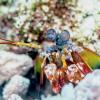 Pow! These underwater animals can punch through glass and create underwater shockwaves. And we’re studying them on campus.
 New research dives deep into Reddit’s r/nba discussion platform, providing a new window on an enduring sports tradition: trash talk.
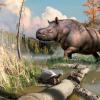 Paleontologists have used modern tools to identify the origins of a few fragments of teeth found more than four decades ago by a schoolteacher in the Yukon.