


Does mental illness have a silver lining? Mounting research says yes
Ask June Gruber about life growing up in Half Moon Bay, California, and her eyes light up as she recalls the times spent with her dad.
They played basketball at the school playground and splashed around in the river beneath the redwoods near her house. He cracked her friends up with his wry one-liners. When she was a teenager, they talked books and philosophy during walks on the beach.
He also had his struggles. At one point, his bipolar disorder forced him to abandon the family business and quit work for six months. At times, his midlife journey into psychosis and back frightened him.
Now 76, he looks back and says he is a stronger and better person for it.
“He is and always has been one of my favorite people,” said Gruber, a professor of psychology and neuroscience at CU Boulder.
Her father’s experience and Gruber’s many other encounters with exceptional people who live with mental illness got her thinking: Are there positives associated with psychological disorders that we are overlooking?
In a new paper titled “Silver Linings in Psychological Disorders: An Agenda for Research and Social Change,” she and collaborators at Cornell University make this case, pointing to dozens of studies associating mental illness with heightened creativity, empathy, resilience and other positive attributes.
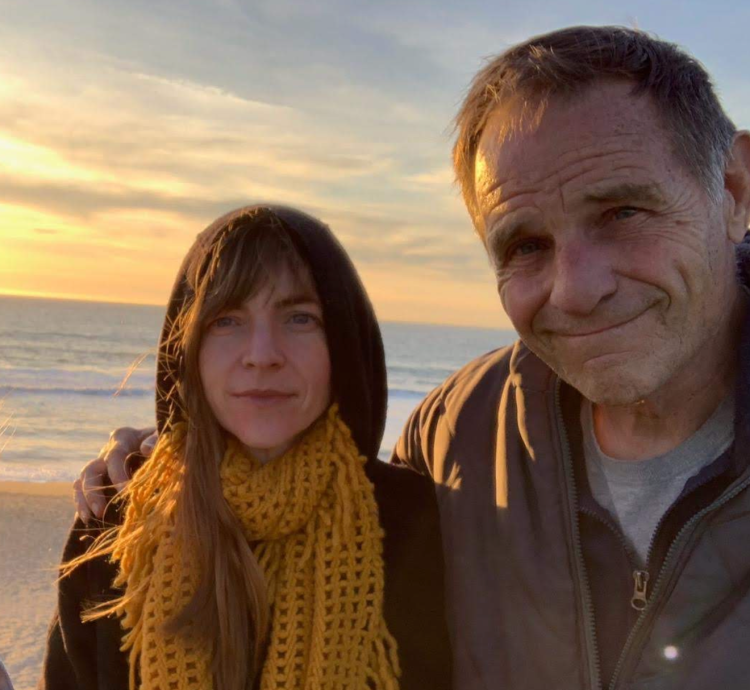
June Gruber with her father Glenn Gruber on the beach in Half Moon Bay, California, in 2022.
The authors stress that they do not intend to make light of the suffering that mental illness can bring. They have personally felt the pain of watching loved ones go through it. But they contend that studying and acknowledging these silver linings could reduce stigma and, ultimately, improve patient care.
“The prevailing narrative in clinical psychology focuses on mental health from a disease model perspective—we are taught to diagnose what’s wrong and try to fix it,” said Gruber. “This leaves out the fact that at the same time people struggle with mental health challenges, they may also grow, thrive and even develop unique strengths.”
Looking for silver linings
The project began when Chloe Plaisance, then an undergraduate in Gruber’s Positive Emotion and Psychopathology Lab, stumbled upon a paper showing that people with certain psychological disorders tend to be more creative.
Plaisance was struck by the paper’s rare attention to a positive versus negative association, and she, Gruber and colleagues at Cornell began scouring the literature for more.
“No one had put this perspective out into the world,” said Plaisance, a co-author. “We wanted to change the narrative.”
Some of the strongest evidence highlighted in the paper shows that people with mild schizophrenia, hypomania and bipolar disorder tend to score higher on measures of creativity and gravitate toward more creative professions.
One biographical review of 1,005 famous writers, poets, musicians and designers found that about 8% had experience with mania, compared to about 1% in the general public.
“Some of the most creative minds in our society have also been the minds of people who had mental illness,” said Gruber.
People with a history of depression also tend to show more willingness to cooperate, research has shown.
While conventional wisdom holds that people with mood disorders tend to be isolated or lack interpersonal skills, some studies have found the opposite.
One study of nearly 2,000 college students, led by CU Boulder graduate student Stevi Ibonie, found that although those on the bipolar spectrum report greater social conflict, they also report significantly larger social networks and feel greater social support. Another study from Gruber’s lab found that while young adults at increased risk for mania tend to perceive even negative situations in an overly positive light, they are also better at detecting emotional shifts in others.
“Our findings show that along with well-documented social challenges that come with mood disorders, there may also be meaningful social strengths,” said Gruber.
As with Gruber’s dad Glenn Gruber, who is now writing about his experiences (a promise he made to Gruber’s mother before she passed away), many people in remission look back on their darkest mental health struggles as catalysts that helped them build resilience and self-awareness.
Take one 2019 study, led by Cornell Psychology Professor Jonathan Rottenberg, a co-author on the “silver linings” paper. It found that 10 years after being diagnosed with clinical depression, 10% of study participants were “thriving” (meaning they were not only free of depression but had a psychological wellbeing better than one-quarter of nondepressed adults).

June Gruber with her dad, Glenn Gruber, in 1988.
“The perspective we offer is needed now, because most of the conversation about mental health problems and their prognosis is terribly dispiriting,” said Rottenberg, noting that positive outcomes are seldom highlighted.
He is particularly careful to not convey a “Pollyanna,” or “all-will-be-well” approach that glosses over the suffering that mental illness can bring to individuals and their families.
He knows it well. His own daughter Sophie tragically died by suicide.
But by opening people’s eyes to the full range of outcomes and possibilities for people with mental illnesses, he believes the paper can honor everyone who has battled them (those who have overcome them and those who have not).
It can also offer hope rooted in data.
“Yes, mental health problems exact tremendous pain and are often cruel,” he said. “That makes real hope even more important to nourish.”
Decreasing stigma, improving care
Gruber believes that people who have come through the depths of depression or the highs of mania may have a “wider aperture” of emotional experience that enables them to see the world through a different, and richer, lens.
She also suspects there may be evolutionary reasons that psychological disorders and neurodivergent conditions like ADHD and autism (which, the paper notes, also have silver linings) persist.
“For the health of a broader physical ecosystem, we need biodiversity, right?” she said. “In order to have a society that has all the different components, it needs to work as an integrated whole. We need psychological diversity, too. No single kind of mind can do it.”
The paper is not a call to abandon medication or psychotherapy, which can both be lifesaving and critical, said Gruber. And, she adds, for some people at some points in their illness, there are no silver linings.
But by acknowledging the positives that do exist, she believes her field can help reduce stigma and potentially develop treatment plans that seek to preserve the unique qualities people like about themselves while keeping the harmful elements of their illness at bay.
“If you have a more holistic understanding of a person, you can do more to support them,” she said.
If you or someone you know is struggling or in crisis, call or text 988 or chat 988lifeline.org. Read about suicide prevention resources at CU Boulder.