


Daniel Strain
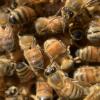 Think of it as a testament to a honeybee's love for its queen: Bees build what looks like a telecommunications network to pass messages, in the form of pheromones, from their queen to other members of a colony.
 Black holes are impossible to observe directly. But researchers like Jason Dexter are probing the hot and violent regions of space that circle these mysterious objects.
 Vega, one of the brightest stars in the night sky, may play host to a giant planet with average surface temperatures of 5,390 degrees Fahrenheit.
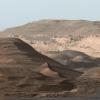 Mars is a dangerous place for vulnerable humans—but robotic space missions can probe the planet's radiation, dust storms and other threats safely and for a fraction of the cost of crewed missions.
 One day, Earth will send human astronauts to Mars. A team of aerospace engineers is studying how we can get them there—and back—safely.
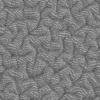 The new technology, called SLIP, mimics the structure of snake scales to create an ultra-slick surface.
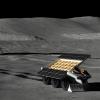 Scientists will probe whether the far side of the moon can become an unprecedented laboratory to study the early history of the universe.
 Jack Chin, the father of Professor Karen Chin, was just 17 when he enrolled in the U.S. Army Air Forces as a member of the final class of Tuskegee Airmen.
 Since the 1980s, Colorado's small mammals have made an ominous trek—climbing, on average, 400 feet uphill in elevation to escape from climate change.
 A team of engineers has developed a new device that you can wear like a ring or bracelet and that harvests energy from your own body heat.