AQ Buffs 2026: Annual Student-Led Air Quality Symposium

A CU Boulder student-led air quality research symposium
Date: Friday, February 27, 2026
Location: SEEC Auditorium (C120), CU Boulder East Campus
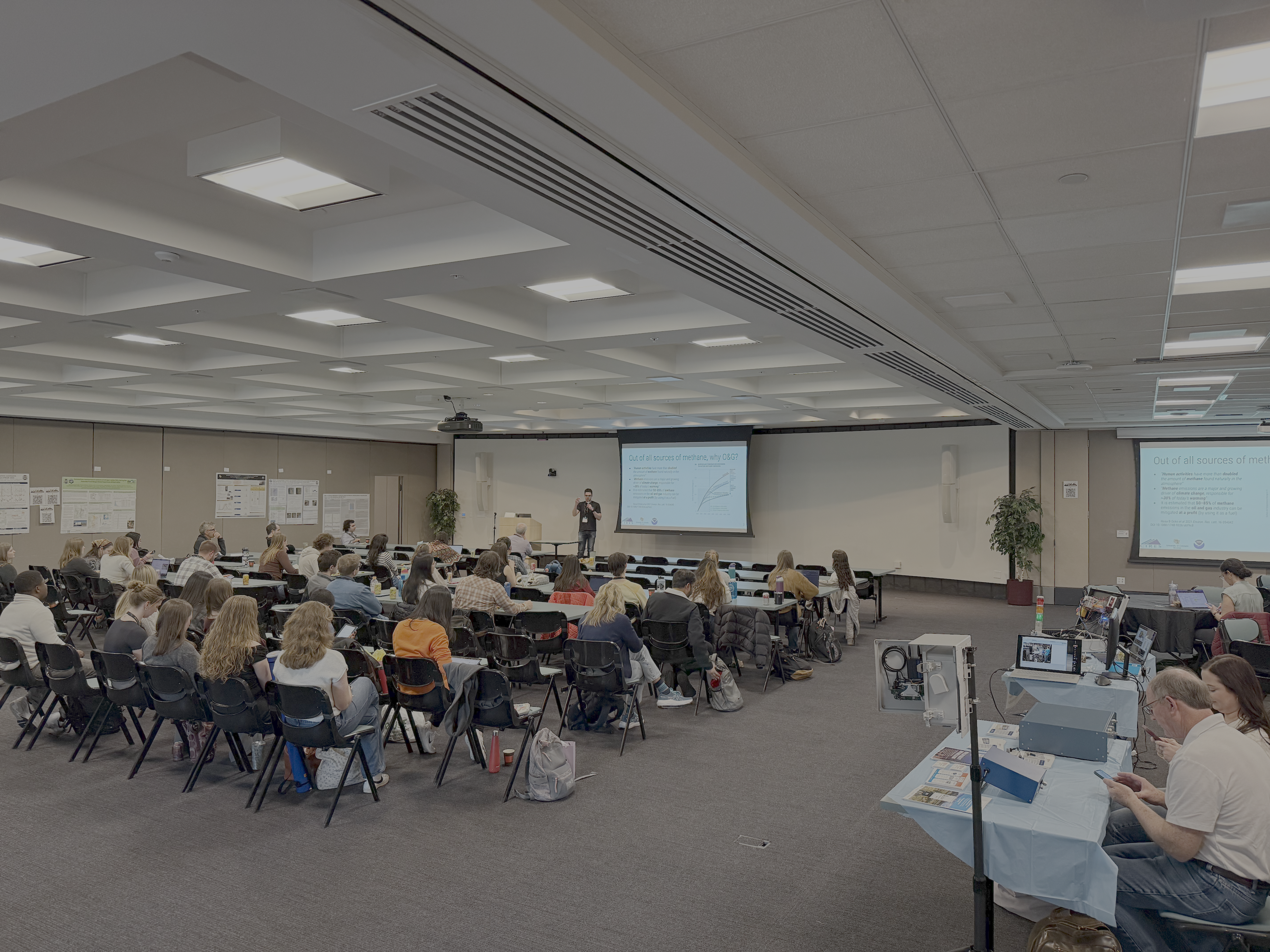
Join us for the Second AQ Buffs Air Quality Research Symposium, a student-led event designed to connect CU and Colorado Front Range students conducting air quality research. This symposium fosters collaboration and networking within the CU community, among different Colorado Front Range institutions, while engaging with Colorado-based industry and government representatives in the air quality field.
2026 Competition winners
Best podium presentation
First Place: Eli Miller
Second Place: Emmaline Longnecker
Third Place: Sofie Schwink
Best poster presentation
First Place: Jared Stickney
Second Place: Esther Ozuruoha
Third Place: Alyssa Lalko
Best photo submission
First Place: Rileigh Robertson
Meeting Program
The meeting will run from 9:00 am to 5:00 pm and will feature research talks, a poster session, a career panel, a networking lunch, and a keynote talk, providing a platform to share your work, develop your presentation skills, and build professional connections.
Schedule (subject to change):
| Thursday, February 26 | |
| 5:00 - 6:30 pm | Optional Happy Hour at Rayback Collective |
| Friday, February 27 | |
| 9:00 - 9:15 am | Welcome and introductions |
| 9:15 - 10:45 am | Session I: Platform presentations (15 min each x 6) |
| 10:45 - 11:00 am | Coffee break |
| 11:00 - 12:00 pm | Panel discussion: Career Paths in Air Quality |
| 12:00 - 1:30 pm | Networking lunch and Poster Session |
| 1:30 - 3:00 pm | Session II: Platform presentations (15 min each x 6) |
| 3:00 - 3:15 pm | Coffee Break |
| 3:15 - 4:15 pm | Keynote Speaker: Prof. Linsey Marr, University Distinguished Professor, Civil and Environmental Engineering, Virginia Tech |
| 4:15 - 4:30 pm | Concluding remarks and awards |
| 4:30 - 5:00 pm | Room cleanup |
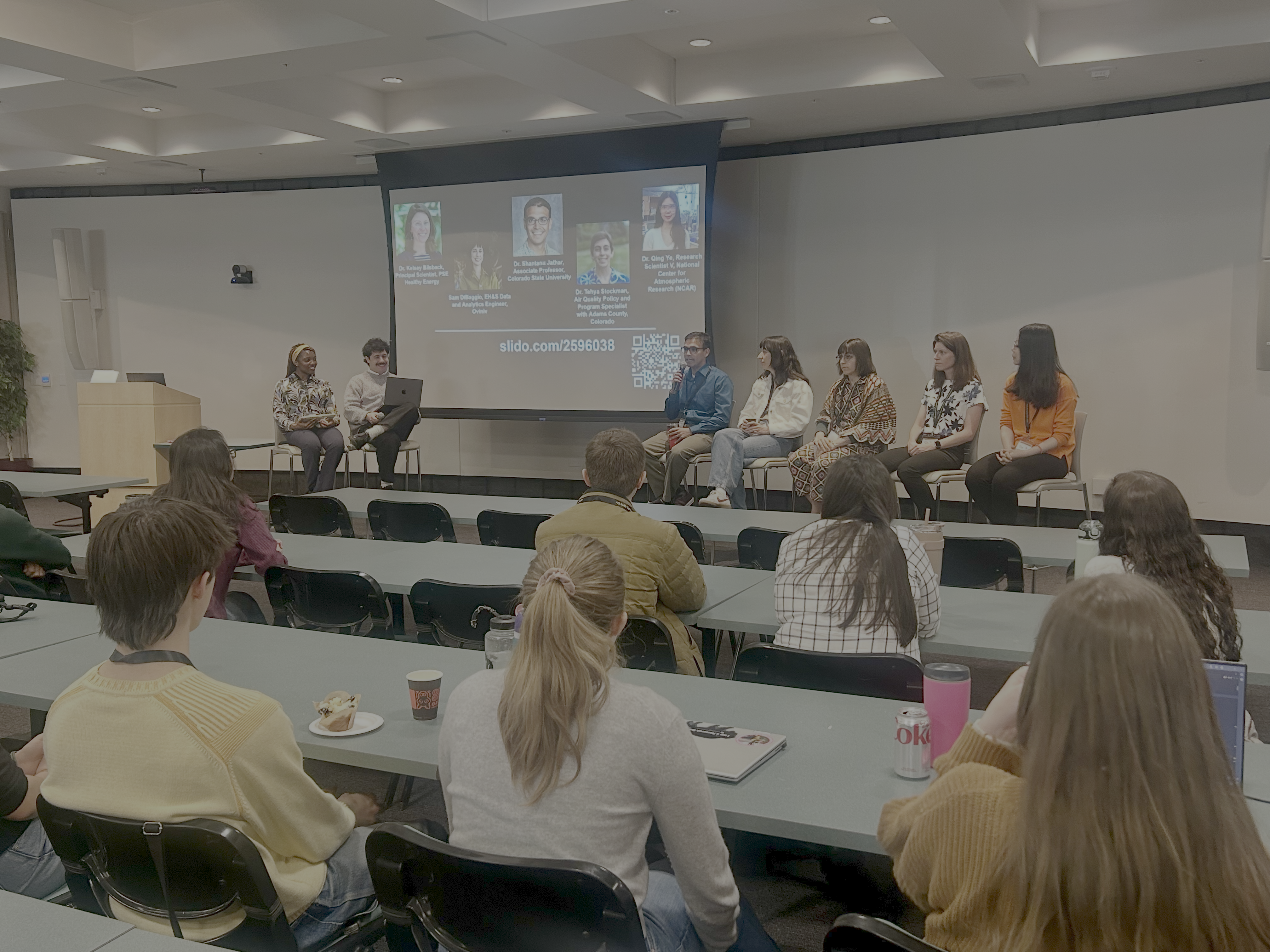
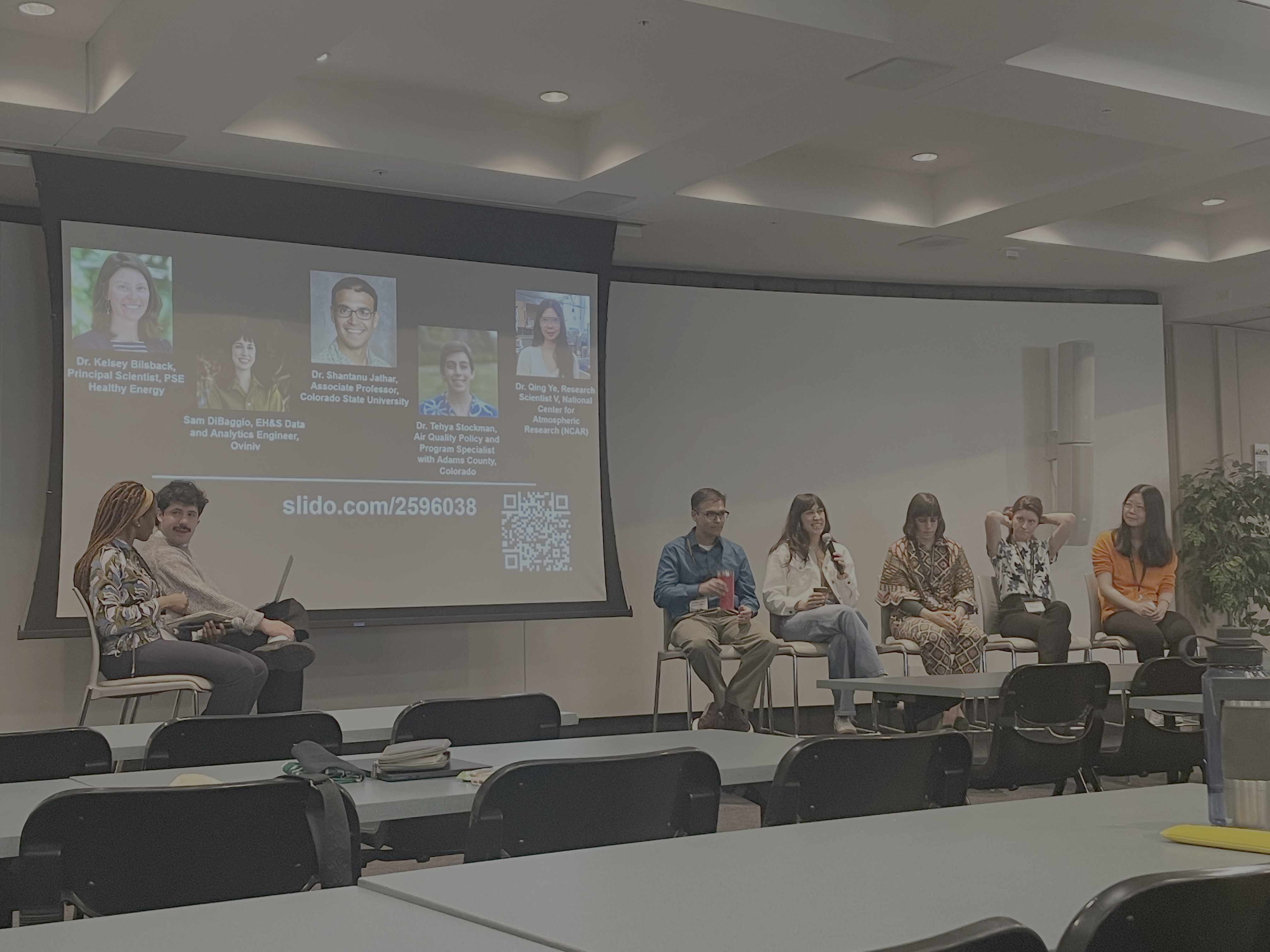
Panel discussion: Career Paths in Air Quality
We are excited to host a career panel discussion with representatives from a variety of Air Quality career paths, including industry, academia, national lab, and federal and state government.

Dr. Kelsey Bilsback is a Senior Scientist at PSE Healthy Energy. She is a scientist with a background in engineering and atmospheric science. Expertise in data analysis, emissions, air pollution, measurements, atmospheric modeling, and the impacts of air pollution on health and climate.

Sam is an EH&S Data and Analytics Engineer at Ovintiv with over 15 years of experience focused on air quality compliance and emissions management. Sam’s background spans environmental consulting and industry roles, with experience in air permitting, emissions calculations, and regulatory reporting. Sam’s current interests center on translating air quality regulations into automated data systems and analytics that support accurate reporting, strong compliance programs, and better decision‑making.

Dr. Shantanu Jathar is an Associate Professor of Mechanical Engineering at Colorado State University (CSU). His research interests are in air quality engineering and atmospheric chemistry and at CSU he leads the Laboratory for Air Quality Research. Current research projects range from studying aerosols in smoke plumes to developing affordable instrumentation to measure outdoor (e.g., ozone) and indoor (e.g., bacteria) air. He is married to an electrical engineer and has two bouncy kids. In his spare time, he likes to run, bike, hike, paddle, drink coffee, and play the bansuri.

Tehya Stockman is the Air Quality Policy and Program Specialist for Adams County, Colorado. In her current role, she works on a variety of projects, including participating in state air quality rulemakings; managing an indoor air quality grant program sponsored by Kaiser Permanente; reviewing air quality permits within the county; and working closely with community groups on air quality concerns. Tehya works across local governments, the state, and community groups to advocate for policies to improve air quality for residents of Adams County. Before her role at Adams County, Tehya worked as a senior air quality engineer at Air Sciences, a temporary aide for the Air Pollution Control Division, and air quality analyst for Denver Department of Public Health and Environment’s Love My Air team. She received a BS in mechanical engineering from Olin College of Engineering and PhD in environmental engineering from CU Boulder.

Dr. Qing Ye is a Scientist working in the Atmospheric Chemistry Observations and Modeling Lab at NSF NCAR. She received her PhD degree from Carnegie Mellon University and did her postdoctoral training at the Massachusetts Institute of Technology. At NCAR, she works with the university community to study the chemistry of atmospheric organic gases and aerosols using laboratory experiments and chemical mechanism models. She is also interested in studying how human activities affect air quality in indoor environments.
Keynote
Engineering-Based Interventions for Airborne Disease Transmission

Abstract
A silver lining of the COVID-19 pandemic is that it deepened our understanding of how diseases spread through the air. However, gaps in knowledge remain about the detailed mechanisms of transmission and the effectiveness of engineering-based interventions in real-world settings. This seminar will feature findings from two studies, one on ventilation and one on ionization. Using a novel experimental setup resembling childcare settings, we studied the impact of ventilation rate on influenza virus transmission between ferrets. We exposed four recipient ferrets to a donor infected with influenza virus at low and high ventilation rates. Surprisingly, the transmission efficiency of the virus was 50% in both cases. In the second study, we evaluated the effectiveness of in-duct ionization for reducing airborne bacterial contamination in a large lecture hall. We collected bioaerosol samples at multiple locations in the room with the ionizer on and off. Ionization did not significantly reduce total bacterial concentrations nor culturable bacterial counts. These findings highlight the need to account for behavioral and environmental factors when designing engineering-based interventions for airborne disease transmission.
Bio
Linsey Marr is a University Distinguished Professor in the Department of Civil and Environmental Engineering at Virginia Tech. Her research group studies pollutants in indoor and outdoor air. She is especially interested in emissions of microorganisms into the air and how they are transformed in the environment. Prior to the pandemic, she was one of a small number of researchers who studied viruses in the air. Marr is a MacArthur Fellow, a member of the National Academy of Engineering, and a Fellow of the American Association for Aerosol Research, American Geophysical Union, and International Society of Indoor Air Quality and Climate. She received a B.S. in engineering science from Harvard College and a Ph.D. in civil and environmental engineering from the University of California, Berkeley and completed her post-doctoral training at the Massachusetts Institute of Technology.
Key Deadlines
- Abstract submission and participant registration open: January 9, 2026
- Abstract submission close: We’re extending the abstract submission deadline to Friday, Feb 13!
- Abstract decisions made by February 20, 2026
- Late-breaking poster submission close: February 17
- Participant-only registration close: February 17
Register here to attend
Please fill out this form to register to attend or to submit an abstract to present.
Photo competition
The symposium also features an air quality-inspired photo competition. Submit your photos related to AQ research or AQ impacts in the form below. No AI-generated photos are allowed. Attendees will vote on the submitted photos during the symposium and the winning photo will receive a prize!
Use the registration link above to submit your photo to the competition.
Photo competition winners must be present at the event in order to claim their award.
Cost
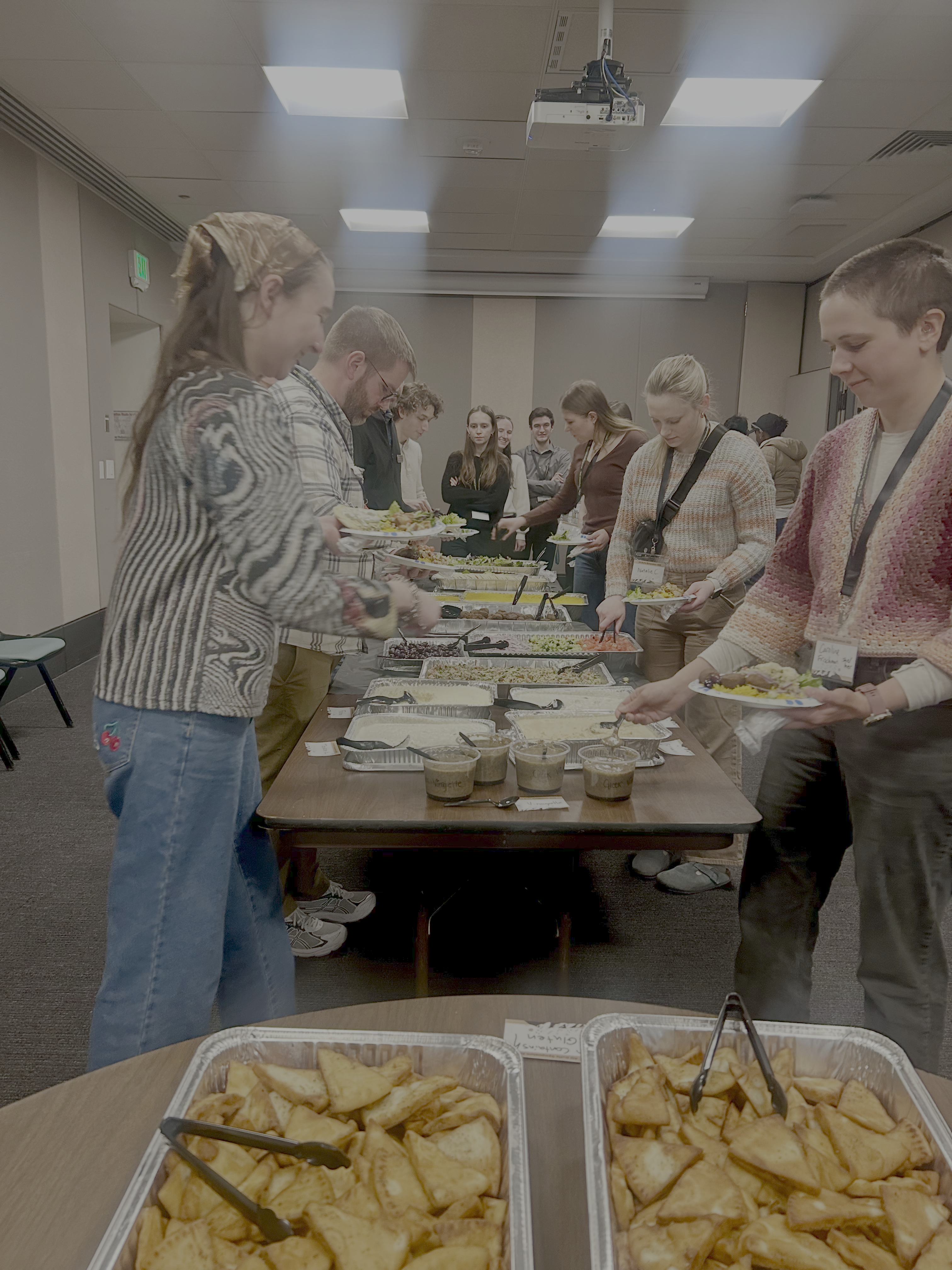
Free to attend. Participants must register using the link above by February 6, 2026 so we can arrange catering orders. Lunch, coffee, and snacks will be served.
Posters can be printed for a fee at InkSpot at the UMC, INSTAAR in SEEC, ITLL at the Engineering Center, FedEx, and many other locations.
Organizing committee
Environmental Engineering:Betsy Farris, Dorian Schwartz, Gabriela Cortes, Grace Berg, Kate Rodelli, Rileigh Robertson.
Mechanical Engineering:Esther Ozuruoha.
Chemistry: Lee Feinman, Matt Shulman.
Material Science and Engineering:Joy Edwin-Ezeh.
Faculty Adviser:Marina Vance.
Interested in joining our organizing committee? Please email Rileigh Robertson for more information.
Inclusion and Accessibility
The University of Colorado Boulder is committed to providing equal access to individuals with disabilities. If you are planning to attend this event and require accommodations, please contact Marina Vance no later than 7 days before the event. We will make all reasonable efforts to fulfill requests submitted after the deadline.
Sponsors
A big thank you this year's sponsors!
CU Boulder Sponsors
Environmental Engineering (EVEN) Program, University of Colorado Boulder.
Mechanical Engineering Department, University of Colorado Boulder.
Graduate and Professional Student Government (GPSG), University of Colorado Boulder.
Industry Sponsors

Original Code Consulting
Original Code Consulting provides LabVIEW software development from instrument drivers to complete applications, and has decades of experience with atmospheric instrumentation.

2B Tech
2B Technologies develops analytical instruments for atmospheric and environmental measurements.
Would you like to become a sponsor? Please email Gabriela Cortes for more information.
Presentation List
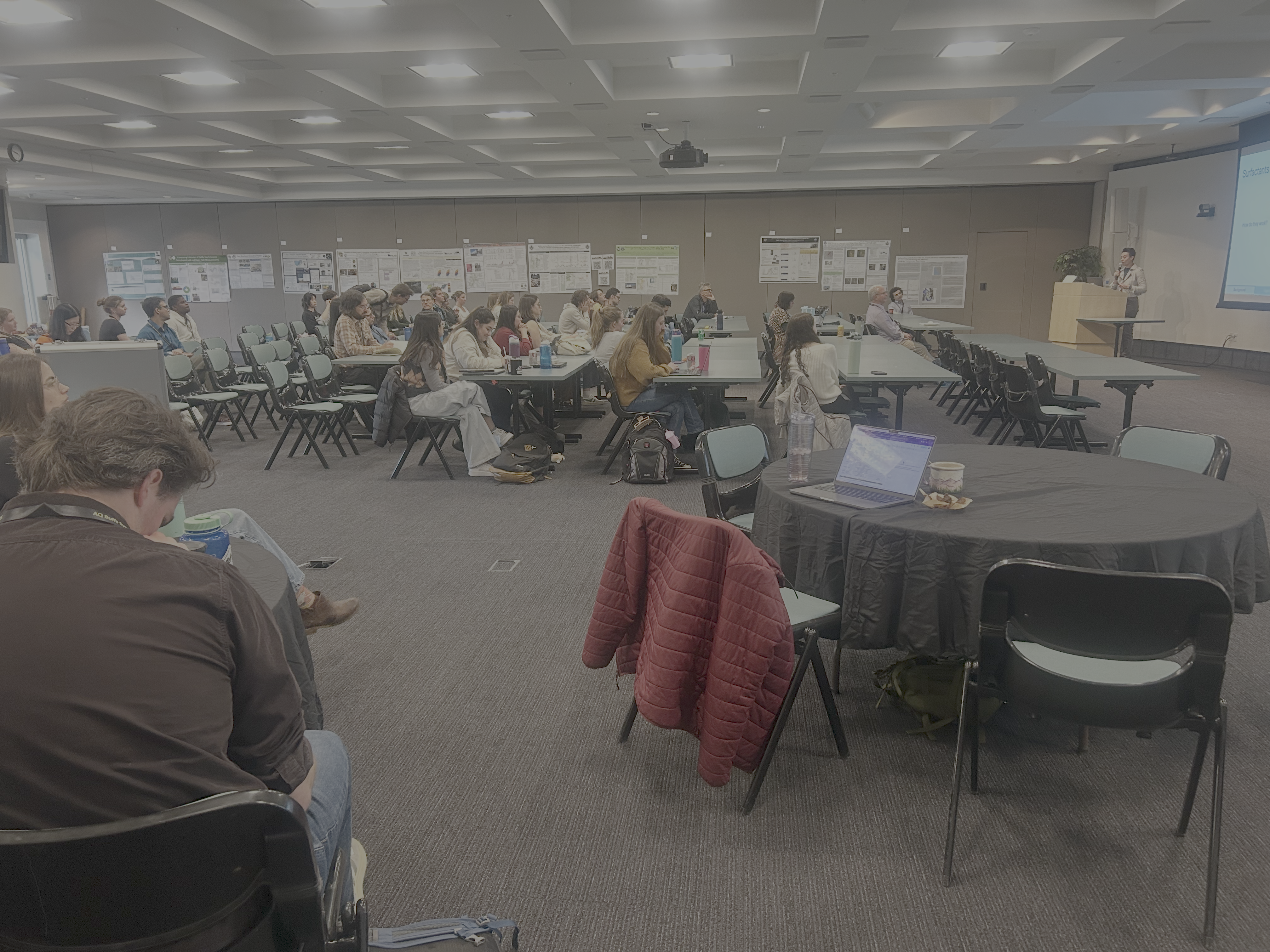
Session I: Morning platform presentations
This session will run from 9:15 to 10:45 am. Presenters and titles are shown in bold.
| Time | List of authors | |
|---|---|---|
| 1 | 9:15-9:30 | Gabriela Cortes, Helena Pliszka, Evan Coffey, Michael Hannigan. Characterizing Landfill Methane through a Low-Cost Ground-Based Sensor Network. |
| 2 | 9:30-9:45 | Elijah A. Miller, Sean Coburn, Caroline Alden, Gabriela Cortes, Evan Coffey, Madison Rutherford, Joost De Gouw, Daven Henze, Mike Hannigan, Greg Rieker. Continuous monitoring of landfill methane emissions using open-path laser spectroscopy. |
| 3 | 9:45-10:00 | Dongwook Kim, Pedro Campuzano-Jost, Guy Symonds, Benjamin Nault, Hongyu Guo, Douglas Day, Mindy Schueneman, Melissa Morris, Jason Schroder, Patrick Veres, Andy Neuman, Jack E. Dibb, Taehyun Park, Jihee Ban, Taehyoung Lee, Daun Jeong, Rebecca Hornbrook, Alan Hills, Eric Apel, Barbara Barletta, Donald Blake, Andrew Weinheimer, Alessandro Franchin, Teresa Campos, Joshua DiGangi, Sally Pusede, Glenn Diskin, Róisín Commane, Steven C. Wofsy, Kirk Ullmann, Samuel Hall, Linda Arterburn, David J. Tanner, L. Greg Huey, Katherine Ball, Benjamin C. Schulze, John H. Seinfeld, Paul O. Wennberg, Rainer Volkamer, and Jose L. Jimenez. Observations of particulate bromine and iodine over urban atmosphere: sources, abundance, gas-particle partitioning, and chemistry. |
| 4 | 10:00-10:15 | Drew Blauth, Doug Day, Anne Handschy, Jose Jimenez, Paul Ziemann, Joost de Gouw. Chloramine Photolysis and Sources in Denver and the Los Angeles Basin. |
| 5 | 10:15-10:30 | Karolina Cysneiros de Carvalho, Justin D. Hamlin, Kimberly A. Prather, William C. Porter, Kelley C. Barsanti. Ambient Gas and Particle Measurements Reveal the Connection between Polluted Waters and Urban Air Quality in a Coastal Environment. |
| 6 | 10:30-10:45 | Sean Youn, Daven K. Henze, Manjula Canagaratna, Harald Stark, Luping Su, Donna Sueper, Pedro Campuzano Jost, Doug Worsnop, Jose L. Jimenez. Efficient error-weighted positive matrix factorization for large atmospheric mass spectrometry datasets. |
Session II: Afternoon platform presentations
This session will run from 1:30 to 3:00 pm. Presenters and titles are shown in bold.
| Time | Presentation (presenter shown in bold) | |
|---|---|---|
| 7 | 1:30- 1:45 | Pedro B. de Melo, Daniel Varon, Nikolay Balashov, Ryan Stauffer, Daven K. Henze, Lori M. Bruhwiler. Machine learning-based analysis of oil and gas methane emissions in the Gulf of Mexico using publicly available satellite data. |
| 8 | 1:45-2:00 | Andrey Marsavin, Amy Sullivan, Jared Stickney, Jihee Ban, Daniela Guevara, Brandon McGuire, Emily Fischer, Jeff Collett, Wade Permar, Emily Cope, Lu Hu, Erick Mattson, Alicia Frazier, Tom Moore. How well does TEMPO capture NO2 and HCHO variability across the Colorado Front Range? |
| 9 | 2:00-2:15 | Rebecca Mesburis, Seonsik Yun, Douglas A. Day, Pedro Campuzano-Jost, Melissa A. Ehrenfels, Matthew Shulman, Anne V. Handschy, Sofie Schwink, Rileigh Robertson, Andre Schaum, Qing Ye, Kelvin H. Bates, Marina E. Vance, Joost A. de Gouw, Jose L. Jimenez. SOA formation potential of indoor air from ∙OH and O3 oxidation in a real home. |
| 10 | 2:15-2:30 | Aditya Singh, Raj Kamal Singh. Optimizing Filterless & Chemical-free Air Treatment Deployment to Enhance Airborne Biosecurity in Poultry Facilities Using CFD. |
| 11 | 2:30-2:45 | Sofie Schwink, Matthew Shulman, Darrah Boyle, Ethan Richter, Marina Vance. Secondary Organic Aerosol Formation During the Consumer products, Lights, and Environmental Air cleaning in Normal conditions (CLEAN) Home Indoor Field Study. |
| 12 | 2:45-3:00 | Emmaline Longnecker, Heather L. Runburg, Mark T. Hernandez. Characterization of airborne cationic and anionic surfactants in residential and educational settings. |
Poster presentations
Posters will be available for viewing in the meeting room throughout the day and will be presented at 12:00 - 1:30 pm. Presenters and titles are shown in bold.
| Poster presentations (presenter shown in bold) | |
|---|---|
| 1 | Alyssa Lalko, Garrett Mathews, Anna Ziola, Colton Huff, Hermina Beica, Carly Rowe, Kevin Williamson, Amanda Makowiecki, Anthony Harness, Robert Wright, Masayuki Takeuchi, Anne Handschy, Douglas Day, Peter Chang, Tsung-Han Wu, Alex Lind, Nazanin Hoghooghi, Scott Egbert, Graeme Gillespie, Jose Jimenez, Satoshi Takahama, Daven Henze, Tin Komljenovic, Jiang Li, John Bowers, Kerry Vahala, Scott Diddams, Gregory Rieker. The Eye of SAURON: Standoff Aerosol measUrement Remote Optical Network. |
| 2 | Andre Schaum, Matt Shulman, Rebecca Mesburis, Sofie Schwink, Qing Ye, Nina Vance, Kelvin Bates. Emissions of Volatile Organic Compounds and Aerosols from Indoor Cooking During the CLEAN Home Campaign. |
| 3 | Angela Wang, Sean Peters , Maria Frediani, David Kingsmill. Radar-Based Retrieval of Wildfire Ash Particle Size and Concentration. |
| 4 | Annamarie Guth, Marissa Dauner, Evan Coffey, Mike Hannigan. Comparing emission factors across broadcast and pile prescribed burning. |
| 5 | Brandon McGuire, Daniela Guevara, Andrey Marsavin, Amy Sullivan, Jared Stickney, Yong Zhou, Jihee Ban, Matthew Davis, Wade Permar, Emily Cope, Damien Ketcherside, Barkley Sive, Erick Mattson, Alicia Frazier, Daniel Welsh, Tom Moore, Lu Hu, Jeffrey Collett, Jeffrey Pierce, Emily Fischer. Wildfire smoke influence on ozone and other atmospheric constituents during the Colorado Front Range OZone Éxperiment (FROZÉ 2025). |
| 6 | Daniela Carolina Guevara Proaño, Daniela Guevara, Brandon McGuire, Matthew Davis, Andrey Marsavin, Jared Stickney, Amy Sullivan, Yong Zhou, Jihee Ban, Emily Cope, Wade Permar, Damien Ketcherside, Lu Tan, Erick Mattson, Alicia Frazier, Daniel Welsh, Tom Moore, Barkley Sive, Jeffrey Collett, Lu Hu, Emily V. Fischer. Summertime spatiotemporal patterns of nitrogen oxides (NOx) during the Colorado Front Range OZone Éxperiment (FROZÉ 2025). |
| 7 | Emma Pellerin, Katelyn Richard, Morgan Selby, Tyson Berg, Lauren Garofalo, Bighnaraj Sarangi, John Mak, Julia Marcantonio, Delphine Farmer. Constraining Tropospheric Oxidation Capacity in the Tropical Marine Boundary Layer through the Investigation of Chlorine Radical Production. |
| 8 | Esther N. Ozuruoha, Sofie K. Schwink, Marina E. Vance. Secondary Organic Aerosol (SOA) formation from reaction of Bleach and Cleaning Liquids under various lighting conditions. |
| 9 | Jared Stickney, Andrey Marsavin, Amy Sullivan, Yong Zhou, Jihee Ban, I-Ting Ku, Daniela Guevara, Brandon McGuire, Matthew Davis, Lena Low, Erick Mattson, Alicia Frazier, Daniel Welsh, Tom Moore, Barkley Sive, Emily V. Fischer, Jeffrey Collett. Mobile measurements of ozone, its precursors, and air toxics at the local and regional scale during the Colorado Front Range OZone Éxperiment (FROZÉ 2025). |
| 10 | Jennifer Wu, Jeong Eun Kim, Daven Henze. Methane Source Attribution in the San Joaquin and Denver-Julesburg Basins: Integrating High-Precision In Situ Monitoring with WRF-STILT. |
| 11 | Maria Carter, Kelvin Bates, Matthew Coggon, Chelsea Stockwell, Carsten Warneke, Caroline Womack, Nell B. Schafer, Ilana Pollack, Jeff Peischl, Brian McDonald, Meng Li, Colin Harkins. Mobile observations of waste management facility VOC emissions in the Northern Wasatch Front during the 2024 USOS campaign. |
| 12 | Matthew Shulman, Rebecca Mesburis, Sofie Schwink, Andre Schaum, Rileigh Robertson, Qing Ye, Marina Vance, Kelvin Bates, Jose Jimenez, Joost de Gouw. Volatile Organic Compound (VOC) Emissions During the Consumer products, Lights, and Environmental Air cleaning in Normal conditions (CLEAN) Home Indoor Field Study. |
| 13 | Nathan Sweet, Kimberly Stackhouse-Lawson, Pedro H V Carvalho, Leonardo Sitorski, Juan Vargas, Erin Burke, Sara Place, Brian R. Washburn, Kevin C. Cossel. Comparing Estimates of Cattle GHG Fluxes from Greenfeed and Open-Path Measurements. |
| 14 | Peter Reeves, Evan Coffey. Pivot Bioethanol Cookstove Project. |
| 15 | Piper Read, Drew Blauth, Lindsey Anderson, Joost de Gouw. Development of a Model to Assess Ozone Sensitivity and HCHO/NO2 Utility in the Denver Metro Area. |
| 16 | Raphael Odai, Kelvin Bates, Matthew Coggon, Chelsea Stockwell, Lu Xu, Carsten Warneke. Urban measurements help constrain novel anthropogenic ethanol sources. |
| 17 | Riley Smith, Alex Volkova, Rachel Davey, Erick Mattson, Alex Huffman. Heterogenous Nitration and Oligomerization Reaction of BSA Protein with Urban Air. |
| 18 | Sara Nielson. Updating Aerosol Dry Deposition Parameterizations Using New Flux Measurements over the Pacific Ocean. |
| 19 | Surya Goda, Rileigh Robertson, Marina Vance. Using CONTAM to Model Infiltration of Wildfire Smoke Into 200 Homes to Determine Influential Parameters on Concentrations Indoors. |
| 20 | Tatiana Peccedi, Tatiana Peccedi, Alex Huffman. PM Monitoring using PurpleAir at the new DU Kennedy Mountain Campus. |
| 21 | Zoe Lynch, Erick Mattson, Alex Huffman. Comparison of Low-Cost BlueSky Sensors Against Reference Monitors for Ozone and Nitrogen Dioxide. |
Meeting Archive
AQ Buffs 2026 Photos