

AI and Health

Artificial Intelligence and Health Focus Areas

- Personalized Medicine
- Genome Analysis
- Patient Network Dynamics
- Host-Pathogen Co-Evolution
- Medical Diagnostics
- Disease Risk Prediction
- Complex Dataset Analysis
- New Methods in Machine Learning
Labs Studying AI and Health
Alistar Lab
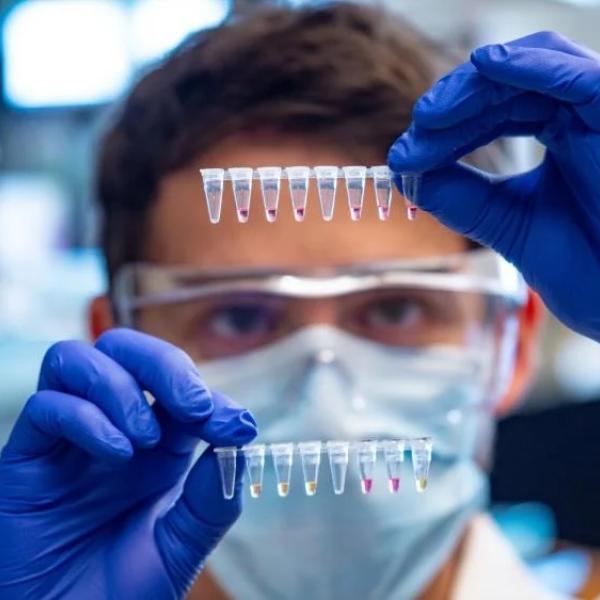
The Alistar Living Matter Lab is dedicated to making healthcare more affordable, effective, and personal. They design digital microfluidic biochips that enable people to directly interact with their microbiomes and bring diagnostics out of the lab and into the home.

Allen Lab
The Allen Lab is focused on deciphering meaning in an individual person’s genome and how person-to-person DNA sequence variability contributes to personal traits, ultimately enabling personalized medicine. They devote special effort to understanding how conditions associated with Down syndrome arise from the extra copy of chromosome 21.

Bhamla Lab
The Bhamla Lab uncovers living organisms' extraordinary solutions to daunting problems and leverages this to build frugal technology for global health.

Chuong Lab
The Chuong Lab investigates the evolution and function of gene regulatory networks, or the choreography of gene activity in response to specific cues. They are particularly interested in virus-derived “DNA parasites” that have been co-opted by human genomes over evolutionary time and are responsible for biological landmarks such as the placenta and human-specific immune system traits.
Clauset Lab
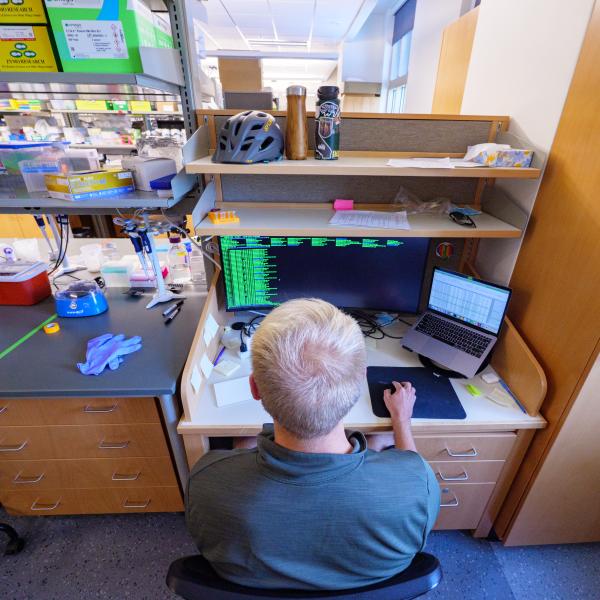
The Clauset Lab uses network science to study how small-scale interactions drive large scale patterns in complex social and biological systems. Further, they apply machine learning to infer causality or make predictions in diverse problems such as body size evolution, terrorist network activity, and the social hierarchies and inequities in scientific ecosystems, or the science of science.
Dowell Lab
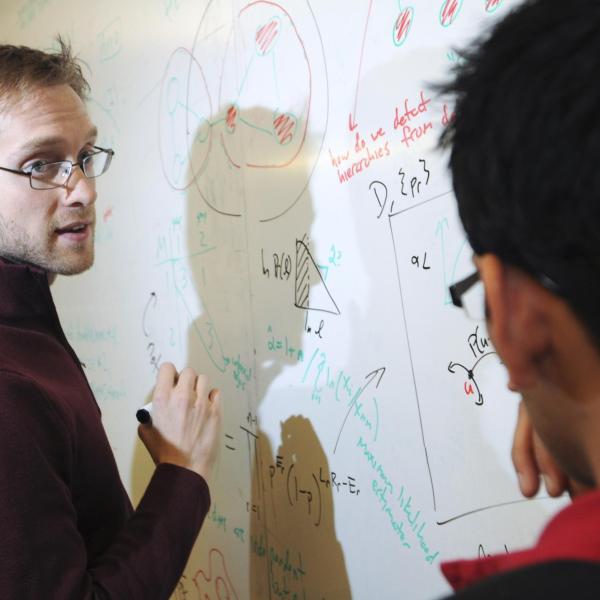
The Dowell Lab investigates transcriptional regulation through a combination of genetics and biologically informed machine learning approaches. They have developed techniques to interrogate the initial stages of RNA synthesis and dissect the role of the functional RNAs known as enhancer RNAs (“eRNAs”). They apply these tools to understand cells with abnormal chromosome numbers, such as trisomy 21 (causing Down syndrome), many cancers, and liver regeneration.

Kissler Lab
The Kissler Lab seeks to make the world more resilient to infectious diseases by studying how pathogens interact; how our bodies, communities, and societies respond to infection; and how epidemics compound other major threats to our well-being using the latest data, statistics, and computational methods.

Larremore Lab
The Larremore Lab develops computational methods and mathematical models rooted in network science, dynamical systems, and statistical inferences and applies them to real-world problems spanning infectious diseases and social sciences. Their work has been used globally to inform on critical public health policies.
Layer Lab
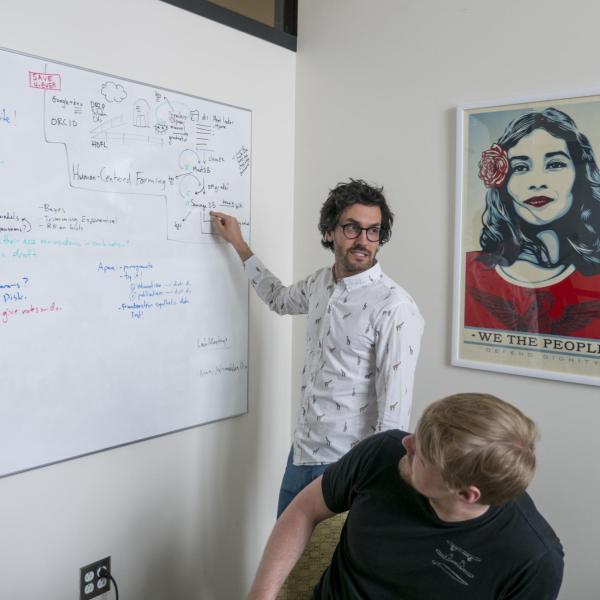
The Layer Lab studies the ways in which genetic variation affects human health by developing computational genomics tools to analyze population-scale datasets. They are particularly interested in large chromosomal rearrangements (or, structural mutations) and uncovering how those contribute to the spectrum of normal human variation across global populations and which of those are causal factors in cancers.
Mukherjee Lab
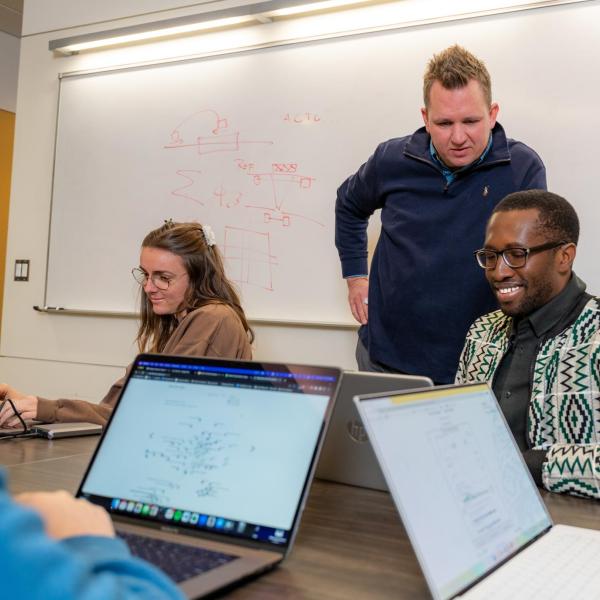
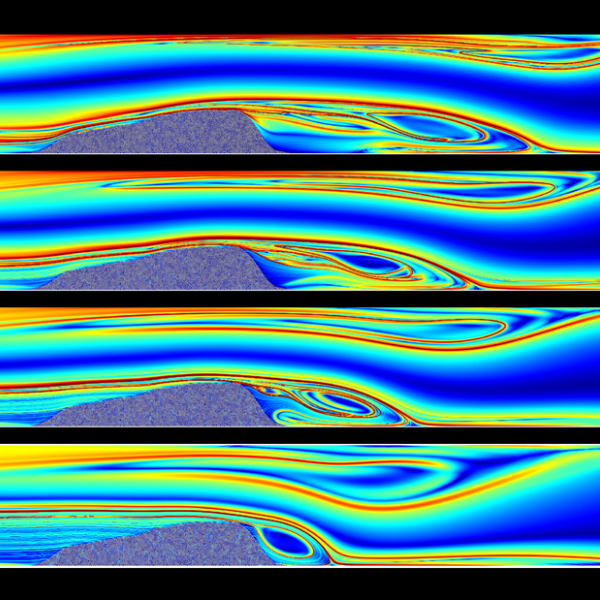
The Mukherjee Lab investigates the flow, transport, and mechanical underpinnings of physiological processes and develops tools for disease biomechanics, medical device design, treatment planning, and drug delivery. A primary application area is in cardiovascular and cerebrovascular processes in healthy and diseased states, like stroke, thrombosis, and embolisms.
Sawyer Lab
The Sawyer Lab studies animal viruses that infect humans through a combination of bioinformatics, genomics, and evolutionary theory. They are uncovering the viral properties that lead to this “virus spillover” to learn what leads to global pandemics such as HIV-AIDS and COVID-19. Their goal is to prevent this through rapid identification with new test design and through vaccine development.
Zeng Lab
The Zeng Lab investigates the causes of neuron death, especially in relation to aberrant RNA processing, in diseases such as amyotrophic lateral sclerosis (ALS) and frontotemporal dementia (FTD). They combine human genetics, RNA science, disease modeling, stem cell biology, and technology development across multiple scales with the goal of discovering interventions that could stop neurodegeneration and improve patient quality of life.
