

CU Boulder philosopher building a bridge to Africa
Top photo: Hu Chen/Unsplash
Associate Professor Ajume Wingo was recently appointed as a research associate at the Center for Philosophy in Africa at Nelson Mandela University, a recognition of his decades of scholarship
For a young Ajume Wingo growing up in Nso, a northwestern region of Cameroon, philosophy wasn’t a topic relegated to ancient Stoics or the halls of academia.
“Philosophy was not an abstract pursuit. It was a living practice woven in everyday life,” says Wingo, an associate professor of philosophy at the University of Colorado Boulder. “As a child I was surrounded by elders who transmitted their wisdom to me through storytelling, through rituals, through symbols, through ceremonies. That had deep philosophic meaning.”
That early foundation shaped not just how Wingo views philosophy today, but also how he practices it. He values using lived experience as a starting point and working toward the abstract, rather than the other way around.
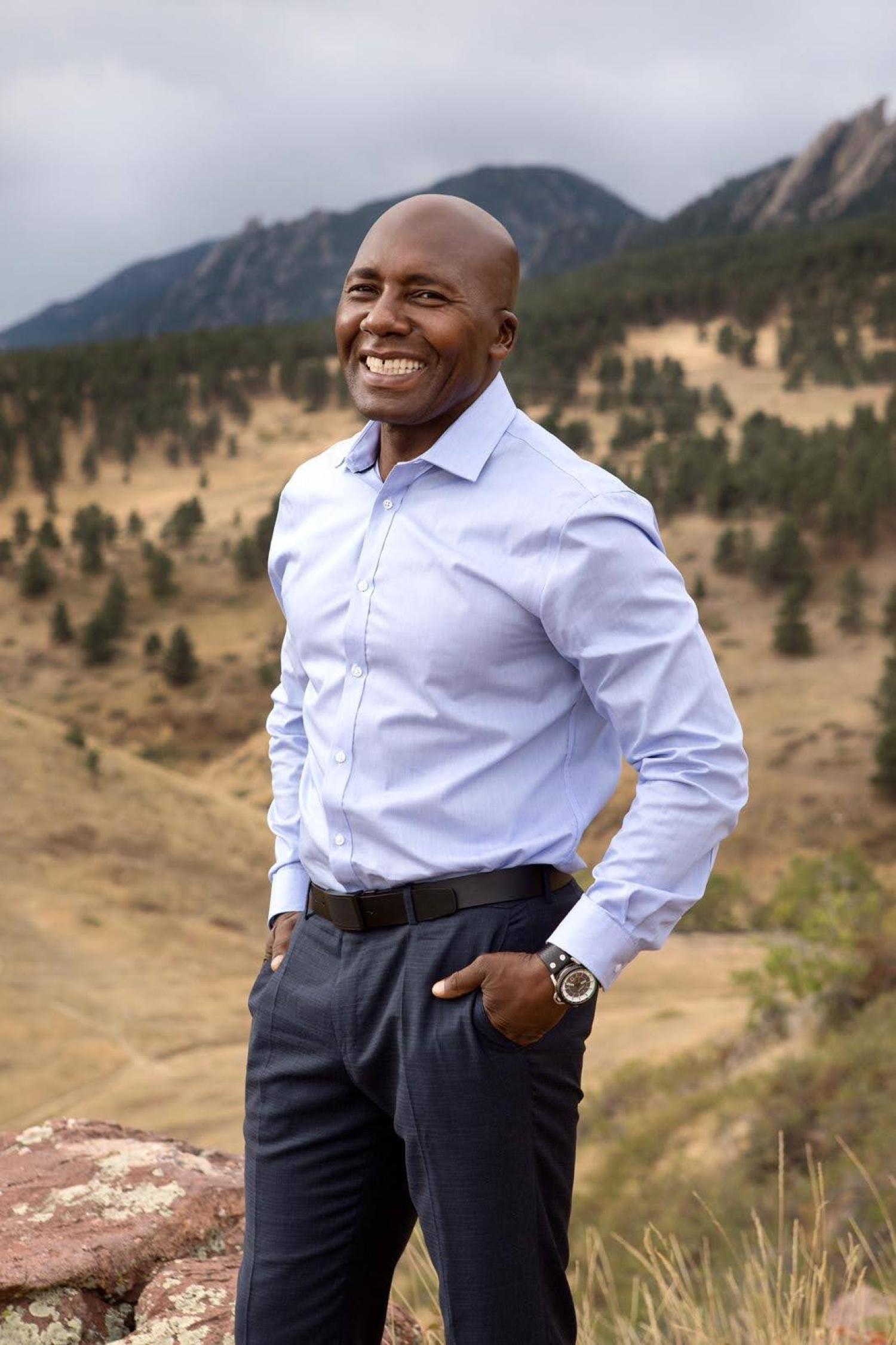
Ajume Wingo, a CU Boulder associate professor of philosophy, was recently appointed as a research associate at the Center for Philosophy in Africa at Nelson Mandela University.
“I start from life, and then I go up. That’s the way I think about philosophy as a living practice. As life,” he explains.
Looking beyond our circles
Recently, Wingo’s philosophical journey has taken a major step forward.
In October, he was appointed as a research associate at the Center for Philosophy in Africa at Nelson Mandela University in South Africa. The role recognizes his decades of scholarship and offers a new platform for expanding international research collaborations between African and Western thinkers.
“At a personal level, it’s a recognition many years in the making. It gives me the opportunity to work collaboratively at the international level, to act like a bridge between Western philosophy and African philosophy,” Wingo says.
His appointment is the result of a personal connection with Nelson Mandela University that has grown over many years. Wingo had previously delivered lectures across South Africa, but his keynote speech in April 2024 at Nelson Mandela University titled “In the Shade of Power” sparked something more.
“Many of the students from the university came up to me after. They wanted to exchange numbers and work with me and all that,” Wingo recalls.
During that same visit, he also participated in many broader conversations around ethics and justice in business alongside thinkers and industry leaders from across Africa.
Wingo’s research draws on both his formal training and his cultural roots in Cameroon. That dual grounding allows him to explore concepts through multiple lenses, he says, from Western theories of justice to African communal models of governance.
“Philosophy reflects the lived experience of the people that philosophers are dealing with,” he says. “And that already gives us some kind of differentiation.”
For Wingo and the kind of political philosophy he practices, Nelson Mandela University is a natural home.
“The Nelson Mandela University is named after Nelson Mandela, who was a victim of apartheid and who came out with a lot of compassion and reconciliation,” he says.
Take the concept of freedom.
In Western political philosophy, Wingo says, freedom is often defined as the absence of interference or constraint. But he says that idea doesn’t translate well into many African contexts.
“The African perspective on freedom is the presence of the right kind of associations. The presence of the community, of belonging. The more you belong, the more you are associated with people, the more freedom you have,” Wingo explains.
He says this contrast extends to views on politics, citizenship and even the role of blood and kinship in shaping identity. Where Western models may emphasize choice, contract and individual rights, African perspectives tend to view community as organic and identity as inherited.
“Politics from the African perspective has always been about … these bounded people in this place with a story, real or imagined, deciding for themselves how they should live,” Wingo says.
By bringing these frameworks into the conversation, he hopes to “humanize” politics and offer new ways of asking questions that might help us understand global and regional challenges. However, he warns that conversation can only happen when philosophers are willing to look outward.
“Philosophy itself is a kind of death when it is inward looking,” Wingo says. “Some of the time I worry that philosophy is becoming like a ghetto … a bunch of people sitting around talking among themselves about themselves.”
“You miss a lot when you’re inward looking, when you keep asking the same thing over and over again. And you gain a lot when you open up to the rest of the world.”
He believes true philosophical vitality comes when thinkers “communicate across the mighty mountains and across the vast oceans,” adding, “That’s philosophy at its best.”
Becoming a bridge
For now, Wingo hopes his appointment at Nelson Mandela University can serve as a bridge, both for his own work and for the CU Boulder community. He’s already planning faculty and student exchanges between the two institutions as well as an international symposium and conferences in both Colorado and South Africa.
“Even just the idea of me being there is exciting. Many people will learn about CU Boulder because of me and will get to hear a new perspective on philosophy,” he says.
That kind of cross-cultural exchange is good for the discipline, helping to shape the ideas born of those who practice it.
“To learn about your culture, you should make it foreign to you by learning about the cultures of other people,” Wingo says, paraphrasing Aristotle. “And in that way, you learn about your culture, not just the cultures of other people.”
In a world facing increasingly global challenges, Wingo believes that philosophers must rise to the moment. He says asking bold questions, ones that defy norms and societal comforts, is the only way we can overcome today’s biggest obstacles.
“You miss a lot when you’re inward looking, when you keep asking the same thing over and over again,” he says, “And you gain a lot when you open up to the rest of the world.”
Did you enjoy this article? Subscribe to our newsletter. Passionate about philosophy? Show your support.