


Lisa Marshall
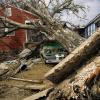 Research by CU Boulder sociologist Lori Peek explores what happens to families long-term when they are subjected to not just one but several natural disasters. "In this era of climate change and weather extremes, these families are harbingers of what is to come," said Peek.
 A new initiative seeks to understand the role scientific advice played, or did not play, in driving COVID-19-related policies in at least seven countries. Researchers hope the project helps improve communication between scientists and policymakers.
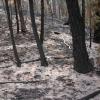 A new study of 22 burn areas across 710 square miles found that forests are not recovering from fires as well as they used to, and many regions will be unsuitable for ponderosa pine and Douglas fir in the coming decades.
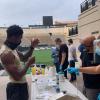 Before ever entering a residence hall, students moving to campus will spit in a tube, hand it over and wait just 45 minutes for their COVID-19 test results.
 Attention to climate change has rapidly declined in recent months. That's concerning, say study authors who found that simply directing one's attention to an environmental risk—even briefly and involuntarily—makes people more concerned and willing to take action.
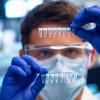 Researchers from the BioFrontiers Institute at CU Boulder have developed a saliva-based COVID-19 test capable of returning results in as little as 45 minutes—no nasal swabs or fancy laboratory equipment required. It could potentially be used for mass, inexpensive screening in community settings like schools and factories.
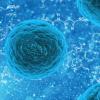 If each human cell has the same blueprint, or set of genes, why does an eye cell look and act differently than a brain cell or skin cell? New research moves science one step closer to solving this mystery, potentially leading to new treatments for cancer, heart abnormalities and more.
 As many as 7% of moms-to-be use marijuana while pregnant, and that number is rising fast as more use it as a remedy for morning sickness. But new research shows such use could have a lasting impact on the fetal brain, influencing children's sleep for as much as a decade.
 Eat a slab of steak and your resident gut bacteria get to work immediately to break it down. But new research shows that a metabolic byproduct, called TMAO, produced in the process can be toxic to the lining of arteries, making them age faster.
 Extremely conservative Facebook users are responsible for sharing the bulk of fake news, but extreme liberals are responsible for a good chunk of it, too, according to a new study. Those who lack trust in the media, and in society in general, are also more likely to share it.