


Daniel Strain
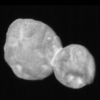 Scientists from CU Boulder are part of a team exploring an icy minor planet called Arrokoth—the farthest object that any spacecraft has ever visited.
 Students in a new class offered by the ATLAS Institute are stretching their technological and design skills by taking on a challenge straight from a heist movie.
 Scientists have generated an ultra-hot state of matter called a quark gluon plasma in three shapes and sizes: circles, ellipses and triangles.
 Four experiments supported by BioServe Space Technologies blasted off en route to the International Space Station this week.
 Carson Bruns is working to put body art to use, designing high-tech inks that may one day signal your temperature or changes in blood chemistry.
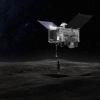 CU Boulder researchers are playing an important role in a NASA mission to grab a piece of an asteroid and return it to Earth.
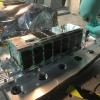 Two CubeSats designed by the Laboratory for Atmospheric and Space Physics (LASP) will launch later this month to investigate the physics of the sun and its impact on life on Earth.
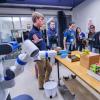 Daniel Szafir's work may pave the way for fleets of automated assistants that will one day help people carry out a range of tasks—from fighting wildfires to building craft projects in the home.
 Researchers have uncovered the chain of events that caused more than two dozen sea mines to suddenly—and without explanation—explode in the water off the coast of North Vietnam.
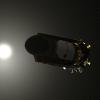 Researchers reflect on the legacy of Kepler, a telescope that located thousands of planets beyond Earth's solar system.