


Daniel Strain
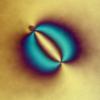 Physicists report they can build and control particles that behave like tiny atoms with a precision never seen before.
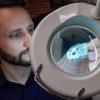 CU Boulder researchers are taking a page from “The Magic School Bus” and journeying inside the human body using a new, versatile robot to navigate the squishy and often-unpredictable terrain of the intestine.
 At a recent event, students shared their ideas for how the U.S. Armed Forces can keep up with an increasingly connected world—from a strategy for resupplying ships using autonomous capsules to a device that detects GPS jamming signals.
 With a new prototype under their belts, four students are just getting started in their mission to bring the walker into the 21st century.
 Want more accurate weather forecasts? You’re in luck: Last month, the first in a planned fleet of satellites launched that will one day record weather data at every point on the globe every 15 minutes.
 Garcia, graduating with a dual bachelor’s and master’s in ethnic studies and education, has dedicated much of his time at CU Boulder to unraveling Eurocentrism in education.
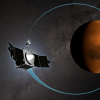 As NASA's Mars Atmosphere and Volatile Evolution (MAVEN) spacecraft enters into a new orbit, researchers reflect on the past and future of this landmark mission that has opened a new window into the evolution of the Red Planet.
 Researchers have discovered how magnets recover after being blasted by a laser. It turns out, they act a bit like oil and water in a jar.
 Researchers show that they can trap and load lone atoms into large grids with an efficiency unmatched by current methods.
 Educational reform efforts that fail to address long-festering issues of distrust may be "doomed to failure," Dean Katherine Schultz argues in a new book.