


College of Engineering and Applied Science
 Tiers 3 and 4 fund faculty-led public and community-engaged scholarship that connects research, teaching and creative work with public needs and interests. Based on the committee’s recommendations 22 projects are receiving over $398,00 in funding this cycle.
 The Science-Engineering Inquiry Collaborative in Rural Colorado program, otherwise known as SCENIC, has been conducting programming in Colorado public schools for more than 10 years. On its program page, SCENIC is described as connecting “CU Boulder faculty and students with rural high schools to develop student-driven, inquiry-based science projects.” This year, a multi-year partnership between SCENIC’s program lead and co-founder, Associate Research Professor Daniel Knight, and two organizations in Mongolia allowed SCENIC to spread its wings.
 What is a regular Tuesday for many students at Pueblo East High School is a special day for students in Ms. Turner’s chemistry class. This group of students has been working for the entire semester with CU Boulder graduate students on projects about
 The Science Community Outreach Program and Education (S.C.O.P.E) started out with a goal of diversifying STEM (Science, Technology, Engineering, and Mathematics) industries. The program works with underrepresented middle schoolers to build a science identity before kids lose interest or think they cannot be scientists because of a lack of representation. S.C.O.P.E. uses the message “meet a scientist, be a scientist” to encompass its goal.
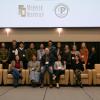 A new generation of water scientists from CU Boulder and Colorado Mesa University join in Grand Junction to learn from experts and form lasting partnerships.
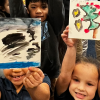 CU Boulder's Elementary Arts Lab (EAL) is an interdisciplinary team of graduate and undergraduate students supporting elementary school teachers with a multidisciplinary approach to teaching traditional science. EAL founder and postdoc Emma
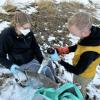 The Marshall Fire also spurred researchers—many of them personally affected by the fire—to pivot and apply their expertise to the aftermath. One year later, dozens of ongoing research projects continue to explore the science behind what happened that day, the widespread impacts on people, pets and the environment and how we can mitigate future catastrophes amid a changing climate.