


Home


Mission and Vision
The Center for the American West is a recognized hub for illuminating the role of the western United States in regional, national and global issues. We bring people together to explore the ongoing complexities of and challenges facing the western United States through education, research, programs, and projects.
University of Colorado Boulder Land Acknowledgment
The University of Colorado Boulder, Colorado's flagship university, honors and recognizes the many contributions of Indigenous peoples in our state. CU Boulder acknowledges that it is located on the traditional territories and ancestral homelands of the Cheyenne, Arapaho, Ute and many other Native American nations. Their forced removal from these territories has caused devastating and lasting impacts. While the University of Colorado Boulder can never undo or rectify the devastation wrought on Indigenous peoples, we commit to improving and enhancing engagement with Indigenous peoples and issues locally and globally.
We will do this by:
- Recognizing and amplifying the voices of Indigenous CU Boulder students, staff and faculty and their work.
- Educating, conducting research, supporting student success and integrating Indigenous knowledge.
- Consulting, engaging and working collaboratively with tribal nations to enhance our ability to provide access and culturally sensitive support and to recruit, retain and graduate Native American students in a climate that is inclusive and respectful.
Internships
The Center for the American West offers internship opportunities for CU-Boulder undergraduates (juniors and seniors) to work for public and private organizations on projects that deal with Western topics and issues and offer professional training for the student.
In Spring 2026, interns worked with The Nature Conservancy developing professional skills, technical skills, and field work experience!


Seo-Hirabayashi Families Student Fellowship Symposium 25-26
On May 4th, 2026, the Center of the American West hosted its first iteration of the Seo-Hirabayashi Families Student Fellowship Symposium. When the idea to develop a student fellowship focused on Japanese-American Incarceration in the American West arose--a special thank you to Julia Shizuyo Popham for her contribution in developing this idea--we initially had the funds to award our new fellowship to six students. After we received a large number of thoughtful, lively proposals from students all across campus with different expertise, experience levels, we decided to pull out all the stops to expand the program. With financial support from Dean Daryl Maeda of the College of Arts & Sciences, Director Jennifer Ho of the Center for the Humanities and Arts, and Chair Phoebe Young of the Department of History, we awarded fellowships to twelve students for our inaugural fellowship opportunity.
Seo-Hirabayashi Student Fellowship Projects


Events and Exhibits

On September 30th, the C4AW will host an exhibit opening for the CU Boulder campus Culture Crawl. In partnership with the Macky Auditorium Gallery, the exhibit will span from the first floor gallery to the second floor C4AW offices. Artists will be on site to lead gallery tours and lunch from Tocabe will be available to the first 50 guests.
Never Vanishing: Reclaiming Indigenous Relatives, Landscapes, and Resilience in the American Southwest features commissioned works from three local Indigenous artists — JayCee Beyale, Chelsea Kaiah, and Kristina Maldonado Bad Hand — who seek to challenge the persistent myths of the American West, especially as they emerged from the work of author and filmmaker Zane Grey.
In the early 20th century, novelist Zane Grey wrote prolifically about the American Southwest, depicting it as a romantic, barren landscape ripe for exploration and adventure. Eventually turning his novels into films, Grey’s work further perpetuated ideas of Native people as “vanishing” with the arrival of American settlers. Now in response, exhibiting artists Beyale, Kaiah, and Maldonado Bad Hand offer contemporary works that seek to reclaim relatives, landscapes, and the pressing concerns of Indigenous communities in the Southwest from the mystique Grey built around them. In doing so, the original artworks in Never Vanishing highlight Native survival, creativity, and resilience.
Research and Outreach
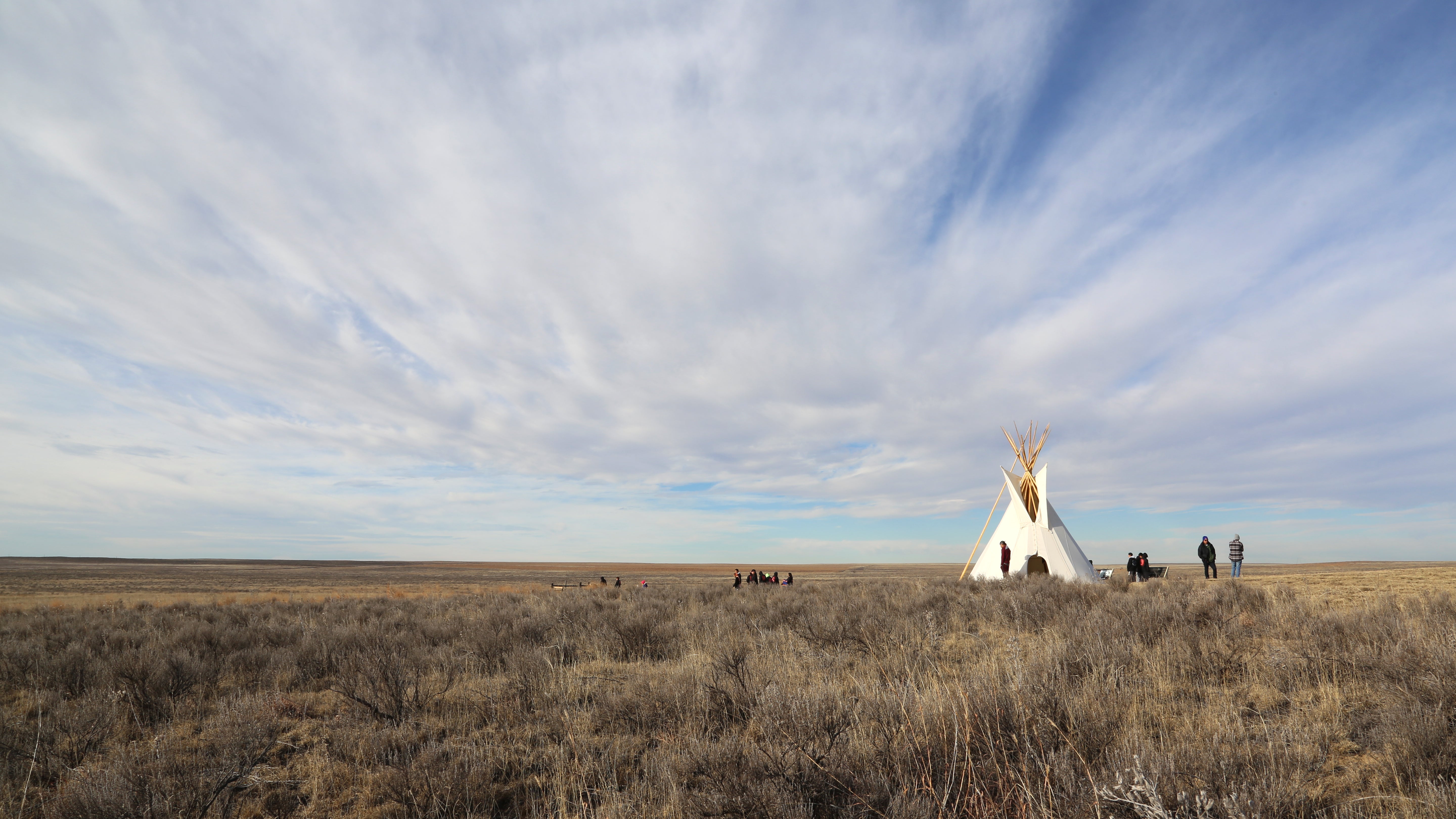
Announcing a New PACES Grant to Build Local Community Connections around the Sand Creek Massacre National Historic Site
The Center for the American West and the Center for Native American and Indigenous Studies (CNAIS), in partnership with the Sand Creek Massacre Foundation (SCMF), are launching a new project to support community-building efforts in Kiowa County and Eads, CO near the Sand Creek Massacre National Historic Site. SCMF is the non-profit partner for this National Park Service (NPS) site. SCMF works to broaden the site's efforts to educate the public about the legacies of the 1864 massacre for the Cheyenne and Arapaho people, Eastern Plains communities, and American society more broadly. The proposed project responds to a direct request from SCMF.
Undergraduate Certificate Program

Our certificate program offers a unique regional studies curriculum for CU Boulder undergraduate students with a passion for the American West. Our multi-disciplinary format allows an exploration of the region’s characteristic and evolving issues: from its flora and fauna to its history and literature; from the political, social, cultural, economic, and environmental concerns facing Westerners to the landscapes and ecosystems that they inhabit.
This 18-credit hour program includes an introductory course and a capstone course, and allows students to choose the remaining 4 classes from a variety of academic areas.

I am an Environmental Studies major and that is definitely one of my biggest passions. However, outside of class I enjoy playing field hockey on the CU club team, I love anything relating to the outdoors, especially camping, hiking, and snowshoeing. I am a fully licensed scuba diver and that is one of my favorite things to do. I am hoping to go into water and land management for my career and I am hoping to work with National Parks with the Bureau of Land Management. Some of my favorite classes I have taken are ENVS 2000, ENVS 3032, and Environmental Chemistry with Professor Raina Gough. I took CAMW 2001 and I really enjoyed the class and the topics, I found that it paired very well with ENVS and decided that I wanted to pursue a certificate in the studies of the American West.

Renae is a first-generation undergrad pursuing a B.A. in Environmental Studies and a Regional Expert of Western American Studies certificate, & Native American and Indigenous Studies certificate. She identifies as Chicana and Mixed Indigenous American, and is from Denver. Renae says she was drawn to the certificate program because: "I always wanted to be an expert in Regional History and my love of the West and my connection to the Land made it a perfect path for me." Renae conducted an honors thesis, with research based on inhuman-wildlife coexistence and a focus on traditional knowledge of coyotes. She was proud to complete her thesis with faculty mentor Dr. Joanna Lambert, her co-advisor Dr. Clint Carroll, and with support from Ph.D. candidate Emily Golden Beam. She says: "Coyotes evolved in the American West and their status as an indigenous species and presence on the land is demanding of admiration and respect." Renae is a disabled woman and recognizes the intersectionality of identities and communities in her. She has a task-trained service dog named Echo, who accompanies her through her daily life, and she is very grateful to him for his service.
Upcoming Events
Event Video Highlights
CU Culture Crawl: Charrería on Parade
Dr. Henrietta Mann and the Legacy of Sand Creek
The Lords of Yesterday and the Imperatives of Now
The Plant and the Plaintiff: A Seo-Hirabayashi Fellowship Kick-Off Event
In the News
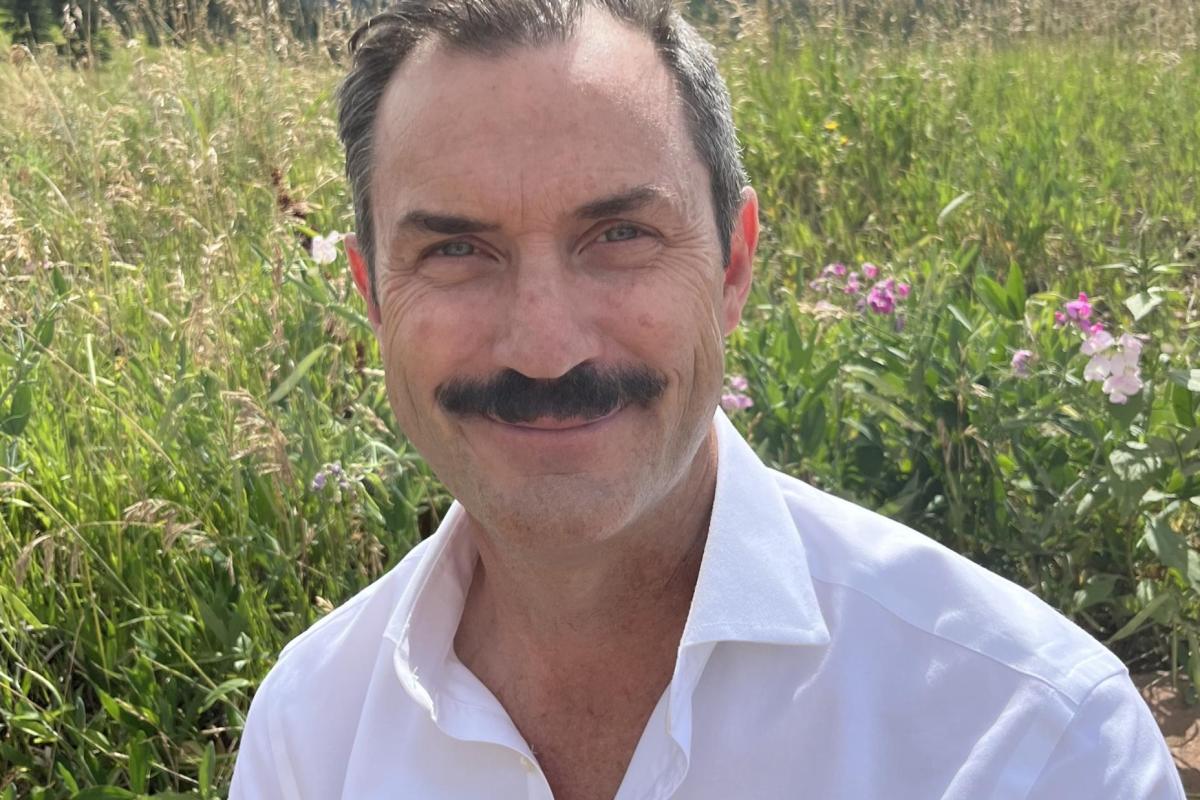
Thomas Andrews, University of Colorado Boulder professor of history, has been appointed faculty director of the Center of the American West. His appointment became effective in July.
Andrews’ research and teaching focus on western American, environmental, animal, Indigenous and 19th- and 20th-century U.S. history. He is the recipient a Guggenheim Fellowship, a National Library of Medicine/National Institutes of Health Grant for Scholarly Works in Biomedicine and Health, a National Endowment for the Humanities Public Scholars Award and other fellowships.
The history of Native people and the National Park Service in the United States is fraught. Dispossession, cultural insensitivity, and outright erasure characterize the long relationship that the NPS has with Indigenous groups. But change is possible, as Drs. Christina Hill, Matthew Hill, and Brooke Neely (Research Associate, Center of the American West) adeptly demonstrate in National Parks, National Sovereignty: Experiments in Collaboration (U of Oklahoma Press, 2024).
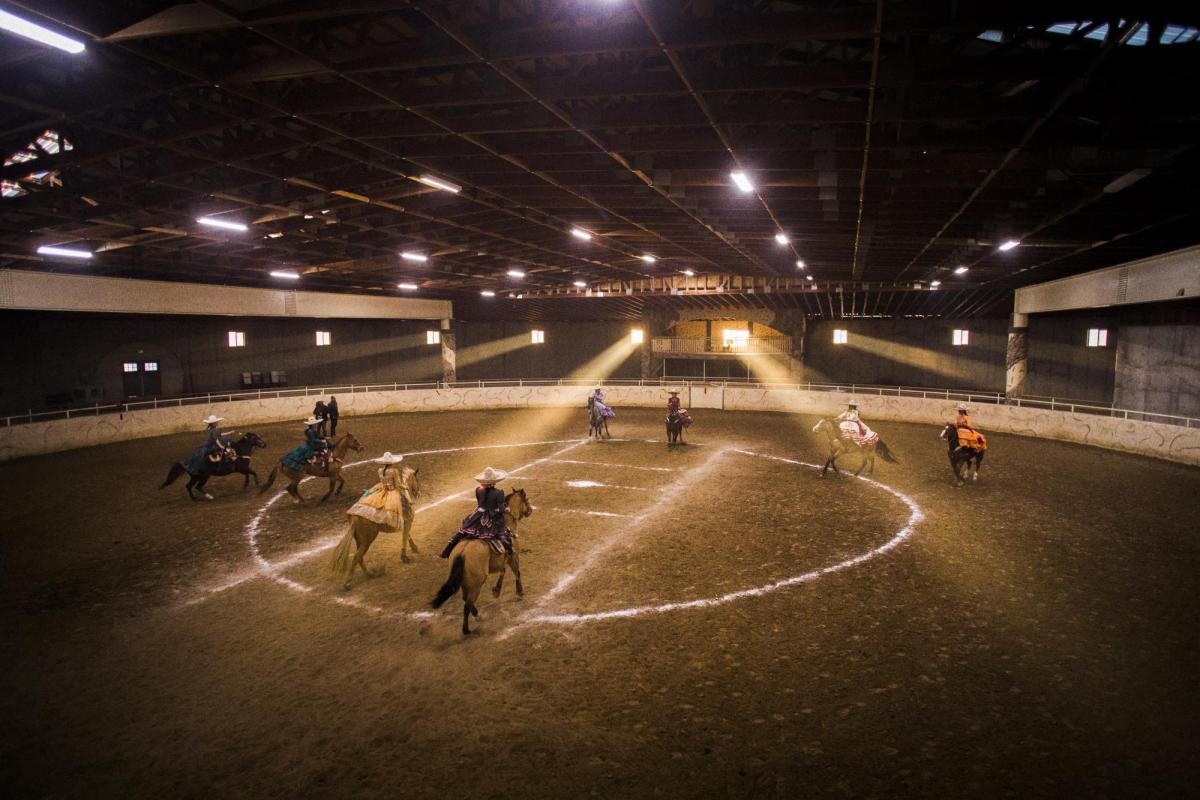
Alumnus and professional photographer Chris Sessions explains how one of his first photo assignments 30 years ago in a CU Boulder class evolved into a cultural art exhibit at the Center of the American West.