

arthistory
 For cam nelson, a new assistant professor of art history at the University of Colorado Boulder who is comfortable with both she/her and they/them pronouns, it’s important that their work, rather than their persona, take center stage.
 Ecological disasters often harm the most vulnerable people, animals and ecosystems, and yet this unequally distributed damage remains insufficiently seen, realized and discussed, a group of scholars at the University of Colorado Boulder contends.
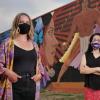 Allyson Burbeck has long been interested in graffiti and street art. She wrote her undergraduate thesis on graffiti art in 1980s New York. So, it wasn’t a surprise that the robust graffiti and street art scene in Denver drew her to CU Boulder for a master’s degree in art history.
 In fall 2020 and spring 2021, the project team of Erin Espelie (assistant professor of cinema studies and critical media practices and co-director of the NEST Studio for the Arts), Brianne Cohen (assistant professor of art and art history), Andrew Cowell (professor of linguistics), and Lori Peek (professor of sociology and director of the Natural Hazards Center) will host a graduate seminar, bringing together dozens of university participants, as well as national and international keynote speakers, visiting artists and a postdoctoral student.
 Four acclaimed video artists from Vietnam and Cambodia are traveling to the University of Colorado Boulder to take part in an immersive art program—in the hopes of taking a cross-disciplinary look at environmental issues.
 “The new program will challenge traditional and mainstream understandings of art by unpacking, contextualizing and decolonizing the term (art),” Cordova says. “We’re not just here to appreciate art,” he says. “We’re here to analyze and to be critical of the forces that surround its production, consumption and interpretation.”
 ‘What does this art mean?’ students muse. You tell me, prof replies