


Astronomy Highlights
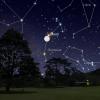 Summer is still five weeks away, but the season’s constellations are already on the rise.Tonight watch for the not quite full Moon next to the star Antares. Antares’s brilliant orange hue creates the heart of Scorpius, one of summer’s most
 Happy 100th birthday to the Planetarium! The first planetarium opened on May 7, 1925 at the Deutsches Museum in Munich, Germany.As the International Planetarium Society celebrates a century of inspiring curiosity, exploring the cosmos, and bringing
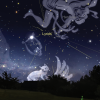 The Lyrid meteor shower peaks tonight and into the early morning hours of the 22nd. The radiant of the shower is the constellation of Lyra the harp. Intrepid sky watchers should be able to catch a few dazzling streaks of debris left from Comet
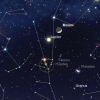 There will be a pretty view to the west tonight with Jupiter and the crescent Moon pairing up in Taurus. Add some extra magic to your evening and grab a pair of binoculars to gaze into the star-filled clusters of the Hyades and the Pleiades.Graphic
 It’s finally spring the Northern Hemisphere!Join us on March 21st at 7pm for Colorado Skies: The Spring Equinox to get all your questions answered, including:Why does the Sun rise due east and set due west?Why are day and night equal in length on
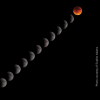 Are you ready for the total lunar eclipse? Join us to celebrate a full night of activities, including:7pm Capcom Go! The Apollo story8:30pm Stars & Moons live talkAnd, telescope viewing at Sommers-Bausch Observatory - find out more details.The
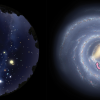 The wonders of the universe are on display even in the winter. If you find yourself under dark skies, take a moment to soak up the beauty of the winter Milky Way. It rises to the left of Orion in the southern sky and arches all the way up close
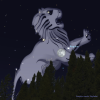 The Full Moon rises in the east this evening in the constellation of Leo the Lion. Watch it climb higher in the sky next to Leo’s brightest star, Regulus.The Moon is only 1.3 light seconds from Earth, but Regulus is 78 light years away. Bask in the
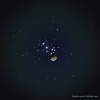 Night owls will be treated to a lovely sight around the midnight hour as the waxing gibbous Moon crosses in front of the Pleiades cluster. Look to the west to enjoy the show before the Moon sets at 1:30a.m.Graphic credit: Sky Safari app
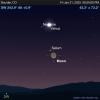 Watch a sliver of our Moon slide down the southwestern sky tonight with Venus and Saturn not far behind. The days are slowing getting longer and it should be a pretty view during twilight.Graphic credit: Sky Safari app