

Jeff Mitton
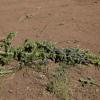 I had chosen a dispersed camping site on the Uncompahgre Plateau for its proximity to a small reservoir and a large meadow. But when I drove into the site, I found it was littered, not with refuse, but with tops of subalpine firs.
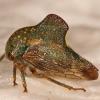 An amplectic pair of treehoppers, Telamona monticola, was on a CU sidewalk beneath a swamp oak tree, Quercus bicolor. I surmised that they tumbled from the tree while delicately adjusting their positions. I collected the treehoppers to photograph them and 7 hours later they were still amplectic.
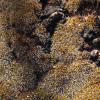 Desert moss lacks many adaptations that allow plants to survive in the desert, so why is it so successful?
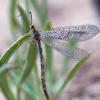 Something was fluttering clumsily near my tent. That evening in Canyonlands was too cold for sustained insect flight, but nevertheless it repeatedly tried to lift off.
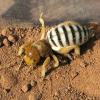 Jerusalem crickets are not crickets and do not occur in Jerusalem, so how did this common name come about?
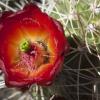 I was focusing on a claret cup when I noticed several beetles near the base of the stamens. They were moderately active inside the flower, but they did not venture onto the pistil, nor did I see any moving between flowers--they seemed content to stay deep in the flower.
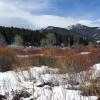 I was treated to a colorful sunrise and later I noticed a marshy meadow bright with green, yellow, orange and red willows. Colors were born by stems, not leaves, so the effect was delicate and diaphanous against wind piled banks of snow.
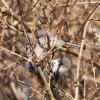 When I approached this group of three (see the photo) too closely, they flew off. But they did not fly away, but at me, passing within a foot of my head. So I was buzzed by a gang of small but cheeky birds.
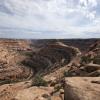 John Muir, one of America's most treasured naturalists and proponent of conservation, visited Yosemite Valley in 1868 and was smitten by its grandeur.
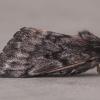 The large lampposts, 30 feet tall and a foot in diameter, had been completely covered with moths. Some of the moths had left as the day brightened, but several hundred remained, moribund.