


Biosciences
 University of Colorado Boulder biochemistry professor Xuedong Liu was inducted into the National Academy of Inventors this year, recognizing a career of pioneering discoveries and real-world impact. His research on cellular communication has fueled four startups advancing novel treatments for cancer and neurodegenerative diseases.
 Eleven teams of University of Colorado faculty, researchers and graduate student innovators competed for a combined $755,000 in startup funding grants in this year’s Lab Venture Challenge (LVC). Judges from CU's entrepreneurial network heard Shark-Tank-style pitches across two nights, one for innovations in biosciences and another for physical sciences and engineering.
 Forbes—Professor Kristi Anseth is known for developing tissue substitutes that improve treatments for conditions like broken bones and heart valve disease. She recently made key discoveries about sex-based differences in cardiac treatment outcomes. Anseth is also among the few innovators elected to all three national academies: Sciences, Engineering and Medicine.
 From agriculture to aerospace, NSF’s I-Corps is a launchpad at the University of Colorado Boulder, helping innovators in and out of the University of Colorado bring research and inventions to the people who need them most. By equipping scientists and inventors with entrepreneurial tools, the program transforms great ideas into startups that tackle real-world problems.
 News-Medical.Net—University of Colorado Boulder researchers have developed a new miniature laser that could enable smaller, cheaper and more powerful biomedical imaging systems. The innovation advances chip-based frequency comb technology, paving the way for improved optical tools that could transform diagnostics and medical research.
 EurekaAlert!—A new open-source tool is reshaping how engineers design multi-material objects. Charles Wade, a PhD student in the University of Colorado Boulder Department of Computer Science, has created a design system software package that uses functions and code to map not just shapes but also where different materials belong in a 3D object.
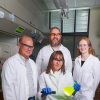 CU Boulder Today—University of Colorado Boulder researchers led by Professors Christopher Bowman and Kristi Anseth have received up to $5.8 million from the Advanced Research Projects Agency for Health (ARPA-H) to develop a new wound treatment that temporarily halts cellular activity to prevent tissue damage. Inspired by the biostasis of tardigrades, the light-activated hydrogel could one day protect and preserve tissue in burns, frostbite and battlefield injuries.
 Eleven teams of University of Colorado entrepreneurs, faculty researchers and graduate student innovators will compete for a combined $750,000 in startup funding grants in this year’s Lab Venture Challenge (LVC) Showcases at the Dairy Arts Center. Judges from Venture Partners at CU Boulder’s entrepreneurial network will hear Shark Tank-style pitches across two nights, one for innovations in biosciences and another for physical sciences and engineering.
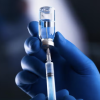 CU Boulder Today—CU Boulder researchers have discovered a new way to make human rabies vaccines that could greatly expand access to immunization across the globe. They have formed a startup company called VitriVax to bring the technology—decades in the making—to market.
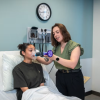 The AB Nexus program announced its 2025 seed grant awards to four research teams from the University of Colorado Anschutz Medical Campus and the University of Colorado Boulder. Collectively, the winning teams will receive $750,000 in funding to advance cutting-edge research that improves human health and well-being.