


Science & Technology
 CU Boulder’s CUbit and ColdQuanta together have made the Bose-Einstein lab available on the cloud.
 If a tsunami formed along the Cascadia Subduction Zone off the coast of Oregon, residents might have just 20 to 30 minutes to get to safety. Scientists have proposed a new forecasting system that could provide seaside towns with critical early warnings.
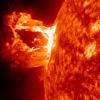 CU Boulder researchers are leading a $496,000 grant to design an artificial intelligence system to better forecast solar magnetic eruptions on the sun.
 Companies are eager to create and perfect new technologies, requiring training a new kind of workforce. Universities are adapting their curricula. But what exactly do jobs for this "second quantum revolution" require and what kind of work in this realm is out there?
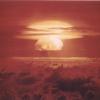 Well-managed, healthy fisheries could serve as an important source of food for people around the world in the event of a nuclear catastrophe, a new study finds.
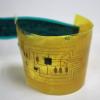 Electronic skin has long been a staple of science fiction, from "The Terminator" to "Star Trek." A team at CU Boulder is working to make it a reality.
 Drone crashes are becoming more common than ever before. Engineers at the ATLAS Institute have built a robot that comes with its own inflatable "airbag."
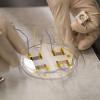 Diseases of the blood, like sickle cell disease, have traditionally taken at least a full day, tedious lab work and expensive equipment to diagnose, but researchers have developed a way to diagnose these conditions with greater precision in only one minute.
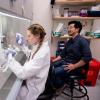 Ed Chuong, an assistant professor in the Department of Molecular, Cellular and Developmental Biology, has been awarded a prestigious $875,000 Packard Fellowship to study how remnants of ancient viruses shape modern-day immune response.
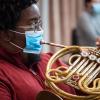 A CU Boulder research team of scientists and musicians seeks to find out how musical ensembles around the world can continue to safely perform music together during the pandemic.