


Daniel Strain
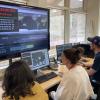 Over several white-knuckle months, an operations team at the Laboratory for Atmospheric and Space Physics brought a small satellite back from the dead—just in time to explore a region of space known as Very Low Earth Orbit.
 Experiencing malnutrition in childhood or adolescence may not necessarily harm the health of humans into adulthood—although the relationship is complicated, a new study finds.
 Founded in 2020, the U.S. National Science Foundation National AI Institute for Student-AI Teaming (NSF iSAT) explores how AI can help K-12 students collaborate together in ways that are meaningful and productive.
 A team of computer scientists discovered that some AI large language models can solve sudoku puzzles, but even the best ones struggle to explain how they did it.
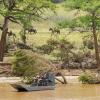 When natural disasters strike, people across the United States often depend on timely warnings to get to safety. But in Colorado and many parts of the country, these alerts are a patchwork that vary from county to county.
 Ten years ago, a pioneering spacecraft flew past Pluto, sending startling images of the dwarf planet back to Earth. Current and former students at CU Boulder reflect on their time working on the mission.
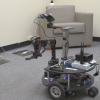 In the not-so-distant future, humans could train to operate robots on the moon using hyper-realistic virtual reality simulations, or "digital twins."
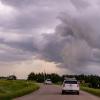 For six weeks this summer, scientists from across the country, including researchers at CU Boulder, are criss-crossing the Great Plains to investigate how hailstorms form—and how homeowners and builders can protect their properties.
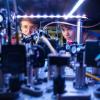 A new quantum device could one day help spacecraft travel beyond Earth's orbit or aid submarines as they navigate deep under the ocean with more precision than ever before.
 The price tag for developing AI models like ChatGPT or Google's Gemini is climbing, putting these tools outside the reach of all but the biggest corporations. An approach called "neurosymbolic" AI could help, says CU Boulder computer scientist Alvaro Velasquez.