


Daniel Strain
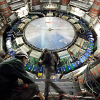 Disneyland for physicists: Breakthrough Prize honors scientists at world's largest particle colliderThis year's award recognized the work of four international research collaborations at the Large Hadron Collider, including 32 current and former physicists at CU Boulder.
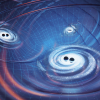 Massive ripples in the very fabric of the universe wash over Earth all the time, although you'd never notice. CU Boulder's Jeremy Darling is trying a new search for these gravitational waves.
 In 1972, a Soviet lander known as Kosmos 482 launched for Venus. It never made it past Earth's gravity, and now the spacecraft is coming back.
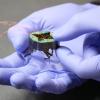 Kaushik Jayaram, a CU Boulder mechanical engineer, is the recipient of a $650,000 CAREER award from the U.S. National Science Foundation.
 Ice melting from modern-day Greenland could again drive an increase in volcanic eruptions around Iceland, a new study suggests.
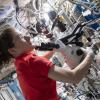 For nearly 40 years, researchers at BioServe Space Technologies at CU Boulder have conducted life science experiments in space—from studying the behavior of spiders in microgravity to producing human stem cells on the International Space Station.
 A new study from CU Boulder geologists weighs in on a long-running debate about Mars: Billions of years ago, was the Red Planet warm and wet or cold and dry?
 A team of physicists from CU Boulder teamed up with a group from the Colorado-based company Quantinuum to show how devices called quantum computers can outcompete traditional computers—at least, in some circumstances.
 A new kind of press-on nails comes in all shapes and colors—and when you’re done with them, you can melt them down and reuse the materials to make your next look.
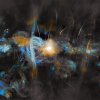 In new images, scientists have gotten the closest look yet at Sagittarius C—a “stellar nursery” where clouds of gas and dust have collapsed to form thousands of new stars.