


Daniel Strain
 Across the Arctic, bacteria and other microorganisms have become trapped underground in frozen soil and ice. A new study finds that these ancient microbes may still be capable of forming thriving colonies.
 In the largest study of its kind, researchers are exploring how the United States can prepare students to enter into the rapidly growing quantum technology industry.
 Planetary scientist Shannon Curry has spent her career exploring why Earth, Mars and Venus look so different today. Her findings may shape how scientists search for life in other worlds, and could help keep astronauts safe as they venture into space.
 Researchers from Colorado have brought a quantum device known as an optical atomic clock to the summit of Colorado's Mount Blue Sky. Their work could, one day, help people navigate without GPS or even predict when a volcano is about to erupt.
 A new instrument built at the Laboratory for Atmospheric and Space Physics at CU Boulder will capture tiny particles streaming into our solar system from the galaxy beyond.
 In a series of studies, researchers from the United States, Ukraine and beyond show how everyday people and communities banded together to keep the nation running in the midst of war.
 A team at CU Boulder has made a curious state of matter in which particles move constantly—like a clock with hands and gears that spin forever, even without electricity to keep them going.
 Questionable scientific journals, or those that publish studies without proper vetting for a profit, are growing around the world. A new AI system automatically seeks them out.
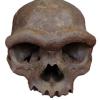 Scientists know little about Denisovans, a now-extinct relative of humans. But a gene inherited from these hominins may have helped ancient peoples adapt to the new environments of North and South America thousands of years ago.
 Across the globe, deserts are spreading, engulfing homes, roads and even entire villages in sand. Engineers at CU Boulder are exploring how humans can shift the paths of these towering formations.