

The ENES Curriculum
Small classes and big questions in a rapidly changing world
With the majority of courses limited to just 16 students, ENES courses are laboratories of rigorous engagement and learning in which engineering students wrestle with problems that don’t have pre-determined solutions, learn to listen and ask productive questions, and come to appreciate the indispensable role of others in learning. The “others” in view are not only classmates and professors, but books, data sets, articles, essays, films, documentaries, artworks, studies, and surveys.
ENES courses help students to:
1. Articulate an ethical awareness that helps them to think clearly and critically about the place of science, technology, and design in diverse global, economic, environmental, cultural, and societal contexts
2. Foster an ability to recognize ethical and professional responsibilities in engineering situations and make informed judgments
3. Contextualize their own experiences and communicate with others across diverse backgrounds, traditions, and cultures
Undergraduate Classes
Many ENES courses fulfill requirements for minors and certificates throughout the college. See individual course descriptions for details.
All ENES courses count toward Humanities and Social Sciences (H&SS) requirements for students enrolled within the College of Engineering and Applied Science (CEAS).
ENES 1010, 2000, and 3100 fulfill the CEAS writing requirement.
All ENES courses, with the exception of Global Seminars, are open only to students in the College of Engineering & Applied Science.
For a full list of ENLP course offerings, including a list of topics and course credit opportunities, consult the ENLP website.
ENES Seminars
ENES seminars are small, lively discussion classes that combine rigor and relevance. These interactive seminars cultivate ethical awareness and impart the communication skills that employers seek. Take either or both in fall, spring or summer terms to fulfill the CEAS writing requirement.
ENES 1010: Humanity in a Technological Age
This seminar considers what it means to be human in an increasingly technological age. Designed for engineering students, it also looks at the role of technology designers and creators in shaping the human environment. Individual sections may emphasize different topics. Students focus on sharpening their written and oral communication skills through a series of iterative assignments and projects. Fulfills College of Engineering writing requirement for first-year students only.
ENES 2000: AI, Writing and Inquiry
This course equips engineering students with essential communication skills for the future STEM workforce. It examines the ethics of Artificial Intelligence and its societal impacts while fostering inquiry, writing, presentational, and collaborative engagement with AI. Writing—whether with or without AI—is approached as a process, not just a product. The course enhances students' ability to use writing as a tool for critical thinking, learning, and refining ideas for public evaluation. Restricted to College of Engineering and Applied Science students in their sophomore year.
ENES 3100: Ethical Awareness for Engineers
This seminar introduces engineering students to a variety of essential texts and works drawn from literature, history, philosophy, and the arts. Through class discussions and a variety of writing assignments, students reflect on their personal values, goals, commitments, and responsibilities, and how these align with the ethical challenges of engineering. Fulfills the College of Engineering and Applied Science writing requirement.
ENES Topics Courses
ENES faculty teach a variety of topics-based courses that address the role of science and engineering in society. These courses often consider one theme, issue or topic, with subjects as rich and varied as the philosophy of science, the cultural and social impacts of globalization, or the history of energy. These courses are taught on a rotating basis.
ENES 1850: Engineering in History: The Social Impact of Technology
How should we understand the development of modern technology? How have new technologies shaped our society, culture, and politics, and how have they been shaped? This class is designed to help engineers use historical thinking and methods to better understand the history of technology and their own engineering practices. We'll begin the course with an overview of major developments in the modern history of technology and continue by using topical case studies to ask questions such as whether the new technologies of the twentieth century really made homemakers' lives easier, or how the needs and experiences of students, teachers, and end-users shaped the development of computing in the 20th century. This is an inquiry- and project-based course, so rather than listening to lectures, we'll spend most of our time in class working together in groups using historical sources and scholarship to investigate big questions in the history of technology. We'll also have the opportunity to reflect critically on how historical thinking can inform our own engineering practice and on how best to narrate the history of technology to engineers.
ENES 2160 and 3160: Energy, Society, and the Climate Question
Examines the social, political, and cultural dynamics of energy production and consumption with a focus on the “green” energy transition. Analyzes historic and contemporary efforts to address climate change in the US and around the globe and contextualizes technical and infrastructural developments; students collectively identify barriers and develop possible solutions.
ENES 2360 and 3360: Gaining A Global State of Mind for Effective Engineering Practice
This course ranges across cultures and centuries to reveal many dimensions of globalization and shows how cultural awareness enhances effectiveness in the increasingly global profession of engineering. This highly interactive course uses history, philosophy, geography, religion, economics, the arts, etc., to illustrate the complexity in global engineering’s cultural context. Concurrently, it encourages new insights into culture and identity, both at home and abroad. This course fulfills a requirement for students in the Global Engineering Minor, but is open to all CEAS students.
ENES 2843 and 3843: Special Topics
Students can find an up-to-date listing of current Special Topics offerings here.
For full course descriptions, see the current University Catalog.
- ENES 1010. Humanity in a Tech Age (see topic descriptions below)
- ENES 1843. Special Topics
- ENES 1850. Engineering in History: The Social Impact of Technology
- ENES 2000. AI, Writing and Inquiry
- ENES 2160/3160. Energy, Society, and the Climate Question
- ENES 2360/3360. Gaining A Global State of Mind for Effective Engineering Practice
- ENES 2843. Special Topics (see current topic descriptions below)
- ENES 3100. Ethical Awareness for Engineers
- ENES 3720. Global Seminar - Voices of Vienna
- ENES 3750. Global Seminar - Xi'an, China: Self-Awareness and Images of the Other
- ENES 3840. Independent Study
- ENES 3843. Special Topics (see topic descriptions below)
ENES 1010 Topic Descriptions:
- Technology and the Human Quest. 70,000 years ago, Homo sapiens had no more impact on the environment than did jellyfish. By 1945 we became the most dominant species on earth, capable of destroying ourselves and all other life on the planet. In little more than the first half of the 20th century, we progressed from horse and buggy to landing on the moon. In the years that followed, we developed computing and information technologies whose exponential growth led to even faster change. By the end of the 21st century, according to the theory of transhumanism, a segment of humanity will bioengineer itself into a fundamentally different species. Now more than ever, it is imperative to ask: What does it mean to be human in an increasingly technological age? Designed specifically for engineers, this course considers this question from multiple angles, as it juxtaposes ancient and modern thinking at the intersection of engineering, ethics, and society.
- Living Well as Engineers. Over the past century, remarkable innovations in the fields of Engineering, Applied Mathematics, and Computer Science have led to the creation of nuclear weapons, social media, and artificial intelligence. However, these disciplines, by their own definitions, do not address the ethical considerations of their use. This course, designed for engineering and applied science students, uses great works of literature, philosophy, music, and fine art to introduce undergraduates to fundamental questions about living well. These explorations take place through seminar discussions and regular practice in rhetorical writing.
- Designing the Renaissance. This course is an interdisciplinary approach to the study of the intellectual dynamics of the Northern European and Italian Renaissance, a time when intellectuals valued the power of reason, when mathematical perspective was invented, artistic techniques became more sophisticated, and immense cathedrals were dominating the skylines of cities. Learn about Leonardo Da Vinci, Michelangelo, and other great artists, architects, and engineers. Study the artworks of Hieronymus Bosch, Botticelli, Caravaggio, and Gentileschi. Dive into the depth of the human soul by reading Dante and Machiavelli.
- For All Mankind. This course considers issues of humanity and technology as they relate to human space flight, space exploration, and uses of space. Drawing on historical case-studies and current debates, students will examine the motives and values that compel technology designers and creators to reach beyond planet Earth. We will explore ethical issues that have surrounded space travel historically as well as those that are most pressing in our own moment when plans are afoot to return humans to the Moon and undertake missions to Mars.
- Antarctic Culture and Science. This course will introduce students to 250 years of historical, literary, and scientific exploration of the Antarctic region. Through historical and fictional readings from James Cook, Robert Scott, Ernest Shackleton, Edgar Allan Poe, Herman Melville, Ursula K. Le Guin, and others, we will examine themes of nation-building, cultural myth-making, leadership models, and the opportunities and limitations of post-Enlightenment scientific empiricism. The final portion of the course will focus on current scientific questions and engineering challenges in the Antarctic.
- Final Frontiers. This course explores understanding of the frontier in film, thought, and culture. Topics include westward expansion, the western genre, the space race, and digital frontiers.
- Disaster Culture. In this class we will interrogate the role of risk and disaster in society. Risk assessment is an often unnoticed part of our daily lives; however, our collective imaginings of disaster are often apocalyptic in scale. Why is this? To answer this question we will examine different kinds of risks including environmental, economic, and public health, and we will assess how individuals and communities assess risks and anticipate disasters through policy, infrastructures, and in popular culture.
- Enlightened Engineers. In this course we examine principles of enlightenment from various historical, personal, sociological, psychological and cultural perspectives. We consider the tensions between abiding by rules and standing up for principles as well as the exclusion of many within ostensibly virtuous societal frameworks through works of literature, philosophy, art and music. We study aesthetic concepts from different cultures and their ethical implications. Questioning aspects of the legacies students inherit and the paths they are expected to follow both personally and in their careers can guide engineers toward actively participating in their development as human beings as well as in the creation of a more inclusive, equitable, and beautiful world.
- Origins of Modern Science. Science is a defining aspect of the modern world, offering both unprecedented power over the natural world and persuasive frameworks for understanding it. In this seminar, we investigate the origins of modern scientific practices and ways of thinking by examining canonical elites such as Newton and Darwin, everyday people such as artisans and homemakers, and marginalized practitioners such as enslaved West African healers. Through the lens of both primary historical sources and modern scholarship, we ask questions such as who produces science, what makes science distinct from other ways of knowing, what is the relationship between science and technology, and how does science both emerge from and influence its social and cultural contexts.
- Technology and Death. This discussion-based seminar explores ethical questions around the uses of modern technologies and science to extend human control over death. We will take on this topic by considering human efforts both to delay death and to inflict death on others. Thus, our investigations will focus on the ethics of developing and employing technologies to extend, mirror, and even revive human life, as well as debates in engineering ethics around killing humans and non-human animals. Our main texts will include science fiction, scientific writing, religious sources, and works of philosophy and literature.
- Learning in a Tech World. This seminar will explore the purpose and methods of a university technical education in the current world in respect to the larger life goals of students. To do this, we will examine diverse texts that address this question both directly and indirectly: essays on higher education, science fiction that explores technology-enforced prioritization of specific values, global models of higher education, as well as essays and books on the sociology of technology.
ENES 3843 Topic Descriptions:
Engineering in History. How should we understand the development of modern technology? How have new technologies shaped our society, culture, and politics, and how have they been shaped? This class is designed to help engineers use historical thinking and methods to better understand the history of technology and their own engineering practices. We'll begin the course with an overview of major developments in the modern history of technology and continue by using topical case studies to ask questions such as whether the new technologies of the twentieth century really made homemakers' lives easier, or how the needs and experiences of students, teachers, and end-users shaped the development of computing in the 20th century. This is an inquiry- and project-based course, so rather than listening to lectures, we'll spend most of our time in class working together in groups using historical sources and scholarship to investigate big questions in the history of technology. We'll also have the opportunity to reflect critically on how historical thinking can inform our own engineering practice and on how best to narrate the history of technology to engineers.
Students in the ENES 3843 Special Topics section of the course will attend the same classes and investigate the same questions as the students in ENES 1850, but you'll also have the opportunity to choose and research a topic in the history of modern technology that is interesting and relevant to you and to undertake a research-creation project that uses your creative or engineering (or both!) practice to express your thinking about what you've learned.
- How Not to Be Replaced by AI. This course will explore: AI Hype and AI reality. How AI works and what it does well/poorly so far. How, specifically, we can partner ethically and effectively with AI to augment our learning, well-being and performance. What human qualities are hardest to replace, and how can we lean into them? We will consider human-grounded leadership, teamwork, connectedness, judgment, curiosity, humor, purpose and meaning. Readings will include science fiction, science fact, philosophy, history and current job hiring practices. Visitors from the AI industry and job recruiters will contribute to our holistic and up-to-the-minute understanding.
Global Experiences
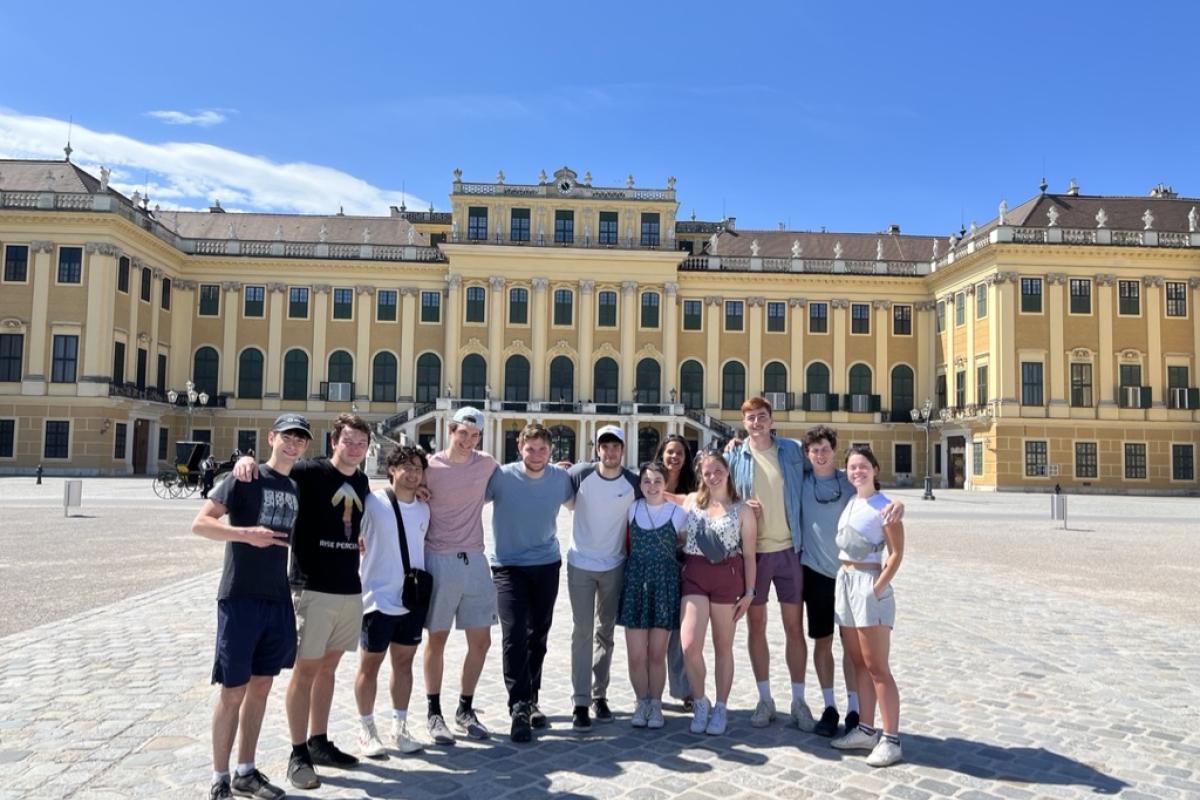
Students in front of Schönbrunn Palace in Vienna
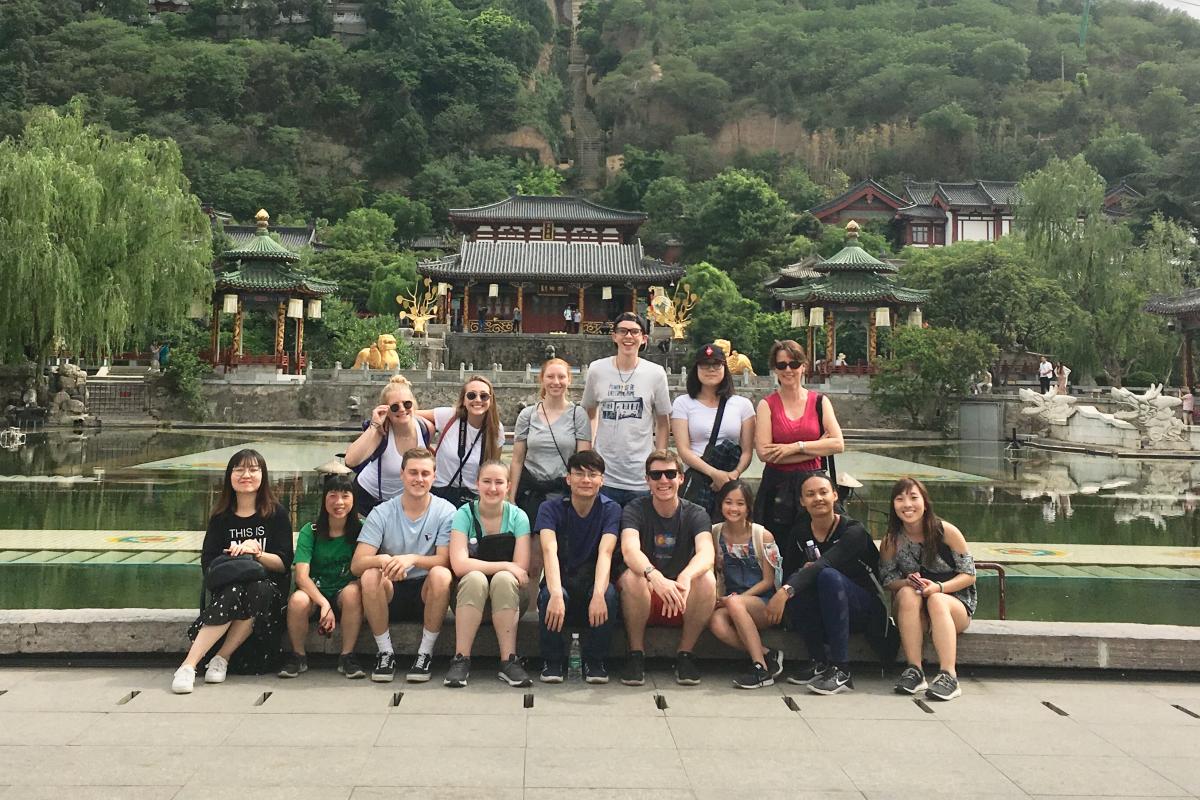
CU Boulder and Jiaotong University students at Huaquing Palace and Hot Springs in the Qinling Mountains near Xi’an, Shaanxi Province

Students from the Engineering Leadership Program and Kabale University share their collaborative problem-solving designs with peers on Lake Bunyonyi in Uganda.
Global Seminar: "Voices of Vienna" Vienna, Austria
- Attend the opera, tour palaces, visit Freud’s favorite coffee shop, and retrace Beethoven’s footsteps in this historic city.
- Enroll in a conversational German class to enhance your ability to connect with locals.
- The program is led by Professor Lisa de Alwis, a musicologist who specializes in Viennese music and culture of the late 18th and early 19th centuries.
- Learn about the region and its rich history by visiting Mauthausen Concentration Camp and seeing the spectacular Melk Abbey.
Global Seminar: "Self-Awareness and Images of the Other" Xi'an, China
- Explore cultural identity while visiting sites of historical and contemporary importance in Xi’an China.
- Interact with Chinese peers and experience the thinking and perspectives of China’s next generation.
- Students are eligible for the Tang Fund Scholarship to cover the cost of travel.
Leadership Abroad
The Engineering Leadership Program encourages students to explore leadership through experiences in other places and cultures, and ENLP faculty serve in leadership roles in international education organizations. Several Global Seminars and CU in DC courses count as ENLP Certificate core courses, and all ENES Global Seminars and Global Intensives count as electives. ENLP Enrichment Funding helps to support students participating in coursework, internships, and research abroad.
This coursework-based (12 credit hours) certificate is a formal credential indicating that students have worked to develop ethical awareness and spent time thinking clearly and critically about the place of engineers, science, and technology in diverse global, economic, environmental, and societal contexts.
To fulfill certificate requirements, students can choose from either ENES classes, or select from classes throughout CU that fulfill topical and thematic requirements.
For detailed information about Certificate requirements, opportunities, and community, check the Certificate Website.
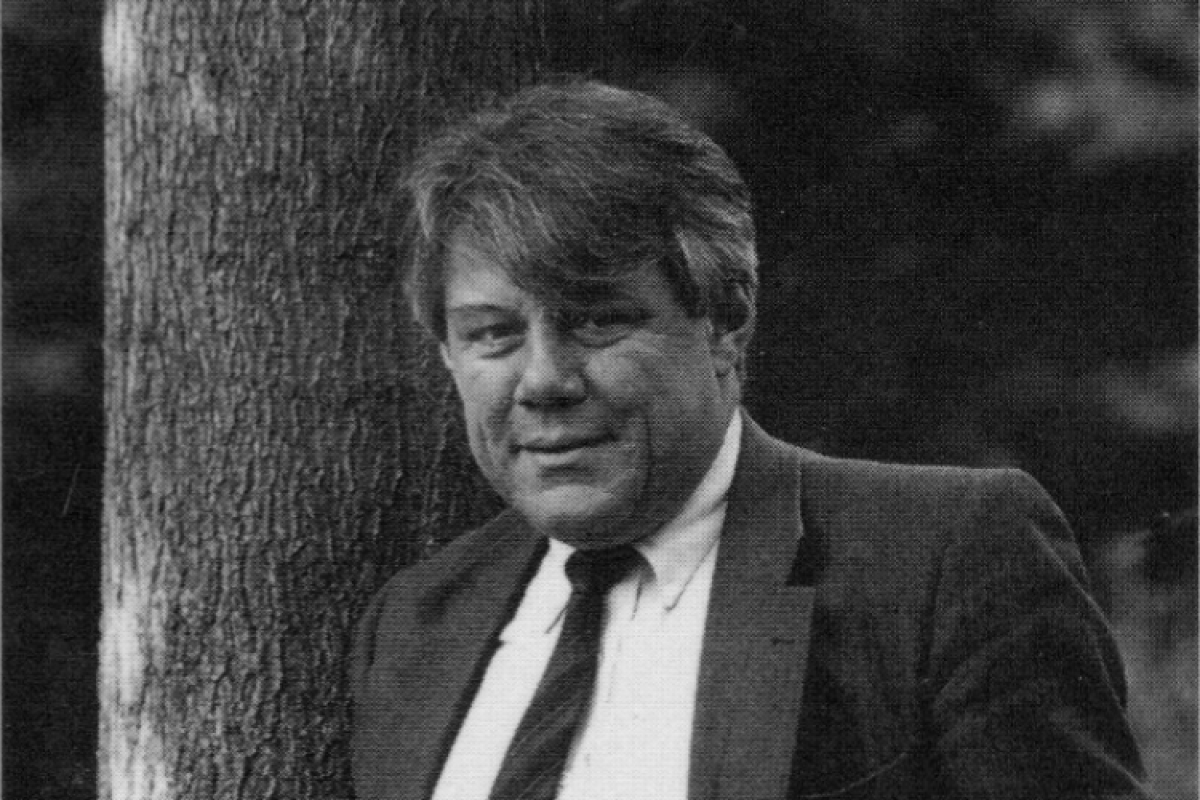
The Moulakis Lecture Series on Responsible Engineering seeks to inspire students to think deeply about the immense power of engineering and their active role in shaping its future.
More info on the series, including both past and upcoming speakers, can be found here.
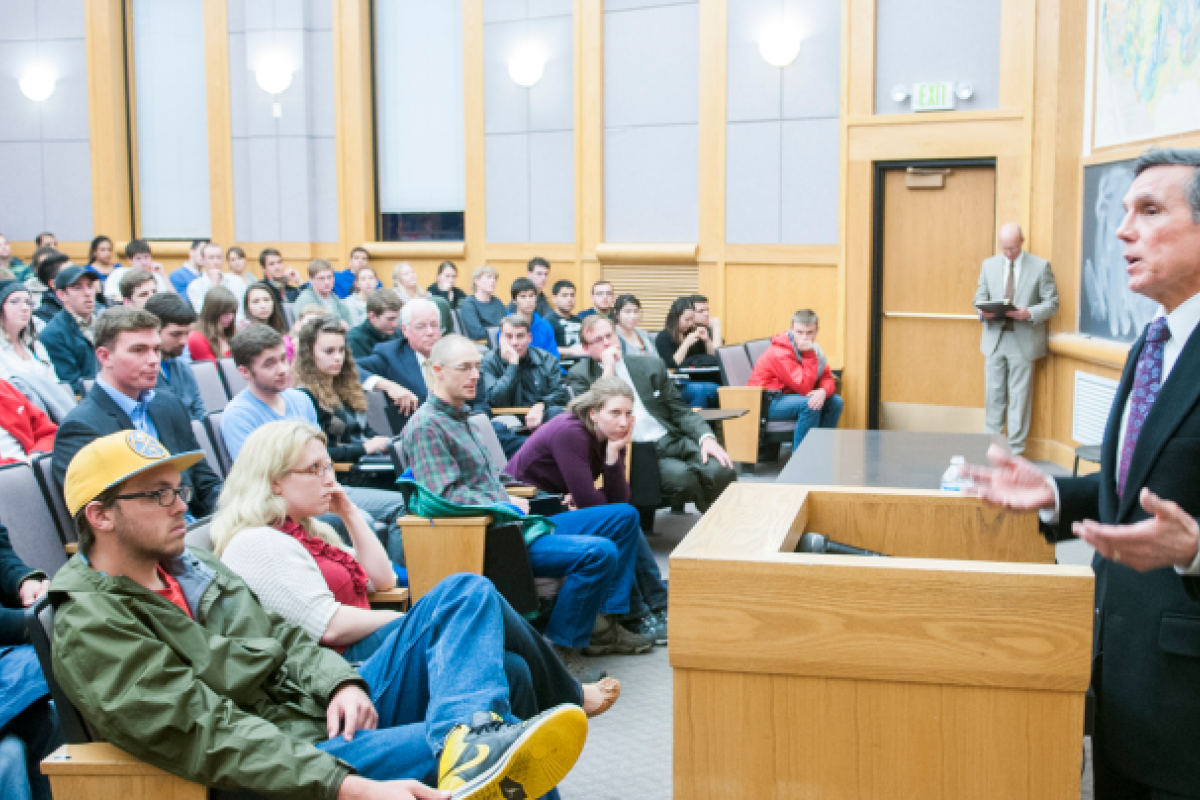
The Engineering Leadership Program cultivates leaders of curiosity and character, whose technical expertise is enriched through the study of the political, moral and philosophic dilemmas posed by the perpetual advancement of science and technology.