

Political Science
 Political science undergrad Cooper Baldwin wins prestigious U.S. Department of State Critical Language Scholarship to learn ‘one of the most critical languages for future United States policy.'
 CU Boulder political scientist Jaroslav Tir argues it’s not just what a government says about its ethnic minorities, but also the language it uses that can be threatening.
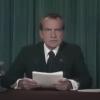 CU Boulder political science professor Kenneth Bickers reflects on what made the ex-president’s decision to step down following the Watergate scandal a watershed moment in American history and how it has influenced politics today.
 Political scientists find that partisan divide shrinks among governors who are responding to economic downturns.
 However, CU Boulder scholar Lorraine Bayard de Volo notes that electing a female president may not guarantee a more feminist mode of governing.
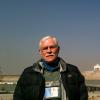 Gail Nelson, a career intelligence officer and CU Boulder alumnus, advised Afghan military intelligence leaders after the United States drove the Taliban from power.
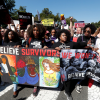 In new publication, CU Boulder PhD graduate Kimberly Killen highlights how ‘angry feminist claims’ have the power to inform and mobilize.
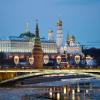 An agreement between the Wagner mercenary group and the Russian government averts a civil war for now, but the future is less clear, according to CU Boulder Russia expert and political science professor
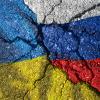 Benjamin Lourie’s career has made twists and turns, taking him to outer Mongolia and back to Moscow, where he opened a Tex-Mex restaurant near Red Square—two weeks before Russia’s invasion of Ukraine.
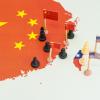 There are parallels between the Russo-Ukrainian war and China’s conflict with the United States over the status of Taiwan, but important differences as well, CU Boulder political science professor contends