


Science & Technology
- <p>Using the world’s fastest light source -- specialized X-ray lasers -- scientists at the University of Colorado Boulder and the National Institute of Standards and Technology have revealed the secret inner life of magnets, a finding that could lead to faster and “smarter” computers.</p>
- <p>CU System news release</p>
<p>DENVER – Graduate programs across the University of Colorado system continue to earn national prominence based on the latest annual rankings from <em>U.S. News & World Report.</em> Schools and programs at the four CU campuses notch 28 mentions in the 2013 edition of <a href="http://www.usnews.com/grad">Best Graduate Schools</a> (U.S. News Media Group), including 10 ranked in the top 10 of their fields.</p>
<p>CU’s 2013 rankings are:</p>
<p><strong>University of Colorado Boulder</strong></p> - <p>If you despise math and the sight of an equation makes you physically ill, Professor Edward Burger of Baylor University and Williams College may be able to heal you during a talk at the University of Colorado Boulder on Thursday, March 15.</p>
- <p>The exhaust fumes from gasoline vehicles contribute more to the production of a specific type of air pollution -- secondary organic aerosols -- than those from diesel vehicles, according to a new study by scientists from the University of Colorado Boulder’s Cooperative Institute for Research in Environmental Sciences, or CIRES, NOAA’s Earth System Research Laboratory and other colleagues.</p>
- <p>Four University of Colorado Boulder faculty members have been elected American Geophysical Union Fellows for 2012, the most from any institution in the world.</p>
- <p>The tragic school shooting that occurred Feb. 27 at a suburban Cleveland high school is another reminder that communities can and must take action to prevent school violence, according to Delbert Elliott, a nationally renowned authority on school safety and juvenile violence at the University of Colorado Boulder.</p>
- <p>Propulsion by a novel jet engine is the crux of the innovation behind a University of Colorado Boulder-developed aircraft that’s accelerating toward commercialization.</p>
<p>Jet engine technology can be small, fuel-efficient and cost-effective, at least with Assistant Professor Ryan Starkey’s design. The CU-Boulder aerospace engineer, with a team of students, has developed a first-of-its-kind supersonic unmanned aircraft vehicle, or UAV. The UAV, which is currently in a prototype state, is expected to fly farther and faster -- using less fuel -- than anything remotely similar to date.</p> - <p>Ten plug-in hybrid vehicles, or PHVs, have been added to a University of Colorado Boulder study that has been examining user experiences and system interactions since September 2010 in the local smart-grid environment.</p>
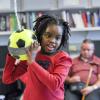 <p>A small smile appeared on the young girl’s face as she listened to the high-pitched sound coming from the whiffle ball. The sound helped the elementary student locate the ball after her classmate hit it from a specially designed baseball tee.</p>
<p>Both of the students are blind. On a recent afternoon, they were in a classroom at the University of Colorado Boulder’s Integrated Teaching and Learning Program and Laboratory testing toys designed by first-year engineering students. The students are enrolled in CU engineering instructor Seth Murray’s freshman projects class.</p>- <p>A University of Colorado Boulder symposium Feb. 27-29 will examine how the revolution in digital media is changing global politics, journalism and the way history is preserved.</p>
<p>Journalism and Mass Communication at CU-Boulder is sponsoring “The Content and Context of Digital Culture” symposium, which is free and open to the public. It will be held at various sites across campus and a complete schedule is available at <a href="http://www.icjmtsymposium.org/schedule/">http://www.icjmtsymposium.org/schedule/</a>.</p>