


Science & Technology
- <p>An update to an election forecasting model announced by two University of Colorado professors in August continues to project that Mitt Romney will win the 2012 presidential election.</p>
<p>According to their updated analysis, Romney is projected to receive 330 of the total 538 Electoral College votes. President Barack Obama is expected to receive 208 votes -- down five votes from their initial prediction -- and short of the 270 needed to win.</p>  <p>The <a href="http://www.nsf.gov/">National Science Foundation </a>has awarded a $12 million grant to a CU-Boulder-led team to explore ways to maximize the benefits of natural gas development while minimizing negative impacts on ecosystems and communities.<br /><br /></p>
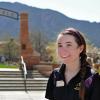 <p>Excited as she was about being at CU-Boulder, Melanie Ferraro’s freshman year got off to a rocky start.</p>
<p>Ferraro was eventually able to find her footing, however, in a class she was required to take as a <a href="http://enrichment.colorado.edu/norlinscholars/">Norlin Scholarship </a>recipient, called Constructions of Knowledge. It wasn’t the class itself that led to her transformation from scared and unhappy to confident and successful. It was the connections and friendships she made with the other students.</p>- <p>The University of Colorado Boulder’s Jennie Smoly Caruthers Biotechnology building has received a Leadership in Energy and Environmental Design, or LEED, platinum rating -- the highest possible evaluation -- from the United States Green Building Council.</p>
- Leading quantitative conservation biologist named CU’s first Colorado Chair in Environmental Studies<p>The University of Colorado Boulder has hired its first Colorado Chair in Environmental Studies, an endowed chair awarded to Daniel Doak, a conservation biologist known for his quantitative analysis of how different government policies could affect the populations of species ranging from sea otters, California condors, corals and rare plants.</p>
<p>The endowed chair in environmental studies was made possible by $4 million in gifts made anonymously in 2009 and 2010 toward the chair. </p> 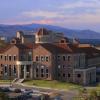 <p>Colorado business leaders’ attitudes remained almost unchanged going into the fourth quarter, according to the most recent quarterly Leeds Business Confidence Index, or LBCI, released today by the <a href="http://leeds.colorado.edu/">Leeds School of Business</a>.</p>
<p>The LBCI’s reading remained positive, above the critical mark of 50, but fell from 53.6 in the third quarter to 51.6 in the fourth. A reading greater than 50 indicates positive expectations, while one lower than 50 indicates negative expectations.</p>- <p> </p>
<p>Colorado business leaders’ attitudes remained almost unchanged going into the fourth quarter, according to the most recent quarterly Leeds Business Confidence Index, or LBCI, released today by the University of Colorado Boulder’s Leeds School of Business.</p>
<p>The LBCI’s reading remained positive, above the critical mark of 50, but fell from 53.6 in the third quarter to 51.6 in the fourth. A reading greater than 50 indicates positive expectations, while one lower than 50 indicates negative expectations.</p> - <p>Apollo and shuttle astronaut Vance Brand will present University of Colorado Boulder student Srinidhi Radhakrishnan with a $10,000 scholarship from the Astronaut Scholarship Foundation (ASF) during a public lecture and award presentation on Oct. 5.</p>
<p>During the presentation, which will begin at 3 p.m. in the lobby of Andrews Hall, home of the Engineering Honors Program, Brand will share his experiences from the Apollo-Soyuz Test Project and three space shuttle missions, in addition to presenting the award. The presentation is free and open to the public.</p> - <p> </p>
<p>A novel genetic study led by the University of Colorado Boulder has helped to clarify the native diversity and distribution of cutthroat trout in Colorado, including the past and present haunts of the federally endangered greenback cutthroat trout.</p> 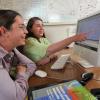 BioFrontiers faculty member, Debra Goldberg, sees computer science as truly interdisciplinary. Goldberg is a computer scientist by training and a teacher at heart. One of her favorite classroom tactics? Silence, which grabs the attention of sleepy students and pulls them back into the discussion.