


News Headlines
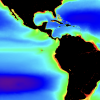 A new discovery by a CU Boulder researcher shows why global climate models overestimate warming in the tropical Pacific Ocean.
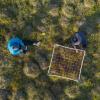 A team of 54 researchers, including Sarah Elmendorf, analyzed more than 42,000 field records of Arctic plant communities over a span of 41 years. Their insights are essential to understanding how Arctic environments are changing in the modern era.
 One in five new or expectant moms experiences mental health problems, like depression and anxiety. The Alma program matches moms who've been through it with those in the thick of it.
 The April 30, 1975, fall of Saigon marked the end of the Vietnam War. CU Boulder scholar Vilja Hulden discusses the war, its beginnings and what we've learned.
 Assistant Professor Longji Cui and his team have developed a new technique that allows them to measure phonon interference inside a tiny molecule. They believe this discovery can one day revolutionize how heat dissipation is managed in future electronics and materials.
 In 1972, a Soviet lander known as Kosmos 482 launched for Venus. It never made it past Earth's gravity, and now the spacecraft is coming back.
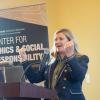 The Leeds School of Business program makes CU Boulder the first U.S. public university in Breakthrough Energy Discovery’s global network, joining MIT and Stanford.
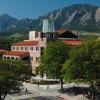 Recycling is extremely difficult for objects built with more than one type of plastic. Michael Rivera and the Utility Research Lab team have developed a novel way to disassemble 3D-printed objects for easy recycling.
 CIRES-led research found evidence that dense portions of Earth's lithosphere (its top layer of rock) are peeling off and dropping into the mantle below the Sierra Nevada mountains.
 Ending all funding for NPR and PBS would unravel a U.S. public media system that took a century to build—the precursors of which consisted of professors giving lectures on history and finance. Read from CU expert Josh Shepperd on The Conversation.