


Daniel Strain
 Kevin Welner, a lawyer and professor of education at CU Boulder, explained that individual college applicants can still mention how their race or ethnicity has shaped their lives in essays and interviews.
 At the center of nearly all large galaxies in the cosmos sits a supermassive black hole. In new research, a CU Boulder astrophysicist explores what might happen if you put these giants one-by-one on a massive scale.
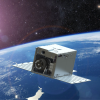 The new mini-satellite, called MANTIS, will be designed and built by the Laboratory for Atmospheric and Space Physics. It borrows its name from the mantis shrimp, an undersea creature with famously powerful eyesight.
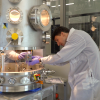 One day, small spacecraft could fly around Earth, using devices called electron beams to remove hulking, derelict spacecraft from orbit without ever having to touch. It may sound like science fiction, but aerospace engineers from CU Boulder say they could be ready to test the idea in space in just five to 10 years.
 The asteroid 7482 (1994 PC1) measures about two-thirds of a mile across. It will also remain in Earth's vicinity for much of the next 1,000 years. CU Boulder aerospace engineer Oscar Fuentes-Muñoz says its important to study objects like this one to make sure they don't pose a risk to life on our planet.
 Since the 1990s, Indigenous groups and other communities around the world have increasingly fought for, and secured, collective property rights to the land they live on. New research suggests that these arrangements can have impacts not just on ecosystems like forests but on the psychology of people.
 A revolutionary technique for editing genomes, called CRISPR-Cas9, has already helped cure sickle cell disease in dozens of people. But it also raises ethical concerns, which a panel of preeminent scientists grappled with at an event on the CU Boulder campus.
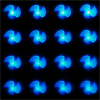 CU Boulder engineers have designed a new class of "microrobots" several times smaller than the width of a human hair that may be able to treat human illnesses like interstitial cystitis—a painful bladder disease that affects millions of Americans.
 A team of astrophysicists, including two researchers from CU Boulder, have caught a glimpse of a new and rocky planet called LP 791-18d. There, temperatures on the dayside could climb to more than 250 degrees Fahrenheit, while volcanoes blast the planet's surface.
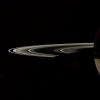 New research led by Sascha Kempf of the Laboratory for Atmospheric and Space Physics (LASP) at CU Boulder finds that Saturn's rings are no more than 400 million years old. That's much younger than Saturn itself, which formed around 4.5 billion years ago.