


Daniel Strain
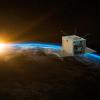 From rockets that reach the edge of Earth’s atmosphere to a historic journey to the moon’s South Pole, a landmark year for space exploration is coming for CU Boulder.
 For more than 30 years, teams at the Laboratory for Atmospheric and Space Physics (LASP) at CU Boulder have emblazoned the image of the university's beloved buffalo mascot onto instruments destined for space. Follow Ralphie as she journeys from orbit around Earth to the rings of Saturn and beyond.
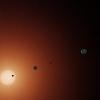 The star TRAPPIST-1 sits roughly 40 light-years from Earth. It's barely bigger than the planet Jupiter, but it shoots out giant flares several times a day. New observations of these eruptions could help scientists detect atmospheres around a host of far-away planets.
 During a packed event, a panel of journalists and scientists called for removing the stigma around studying unidentified anomalous phenomena—such as strange blips that zoom across the instruments of fighter jets or even mysterious lights in the night sky.
 Sky gazers in parts of the United States will see two solar eclipses in the next year, beginning with an annular, or "ring of fire," eclipse on Oct. 14. John Keller, director of the Fiske Planetarium, gives his take on what makes these events so exciting—and how you can observe them safely.
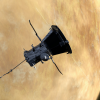 Venus is a distinctly unfriendly planet, with crushing atmospheric pressures at the surface and temperatures that hit 900 degrees Fahrenheit. But new observations from scientists at CU Boulder suggest that frequent lightning strikes may not be one of the planet's hazards.
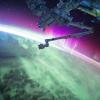 As its name suggests, the newly launched Space Weather Operational Readiness Development (SWORD) center at CU Boulder seeks to offer a little protection for the planet, spurring research into the tumultuous environment several hundred miles above the surface of Earth.
 Geologists at CU Boulder will experiment with injecting water deep below Earth's surface in an effort to stimulate the production of hydrogen gas—a clean-burning fuel that could provide energy for the globe.
 Physicists and engineers at CU Boulder envision infrared astronomy telescopes that may one day span the entire globe—syncing up observations from instruments spread across the continents, or even orbiting Earth, and giving scientists an unprecedented look at phenomena like the birth of new planets.
 Scientists will develop “worlds in a box” to investigate the phenomenon of atmospheric escape—how some planets, like Earth, hold onto their atmospheres while others, like Mars, don’t.