MUSAS Projects

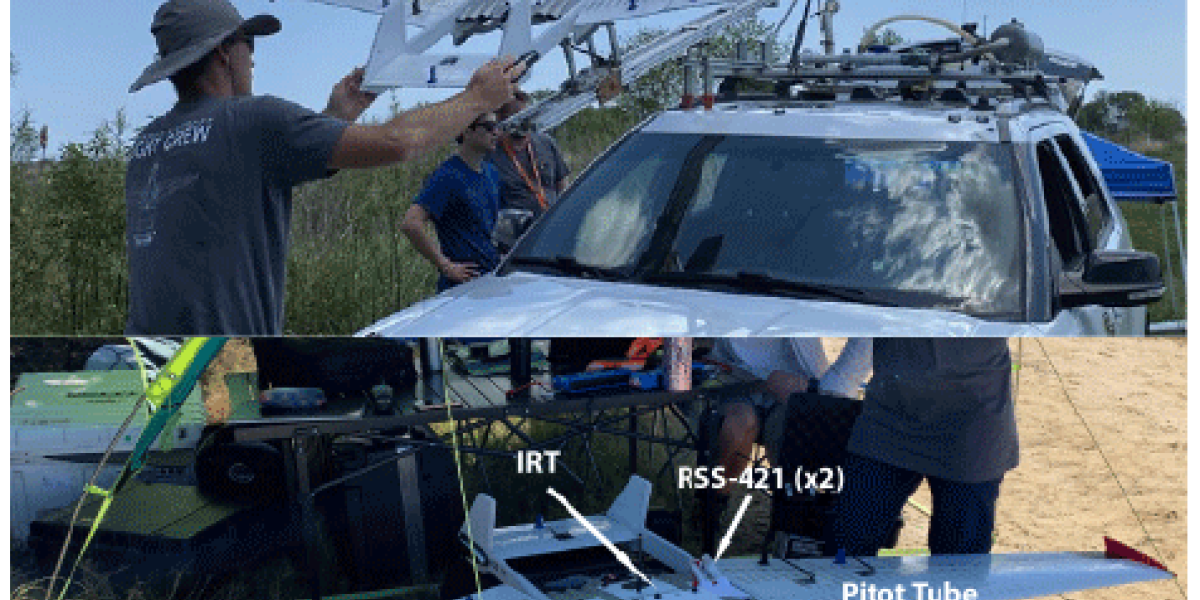
The ground and air vehicles that make up the MUSAS instrumentation fleet have been used in many previous field deployments in the past decade. Below are several of the NSF-funded field campaigns on which we have collaborated. We have also participated in projects funded by NASA, the Department of Energy, the Office of Naval Research, and NOAA, among others.


Previous NSF-funded Research

In-situ Collaborative Experiment for the Collection of Hail In the Plains (ICECHIP)

Sponsor: National Science Foundation, Award AGS 2410914

Period of Performance: 09/01/2024 - 08/31/2028 

Principal Investigator: Dr. Rebecca Adams-Selin, Atmospheric and Environmental Research, Inc.

This two-year field campaign was designed to close critical observational knowledge gaps in hail research by exploiting an almost entirely mobile observational fleet to ensure opportunistic sampling of convection wherever it occurs.This two-year field campaign was designed to close critical observational knowledge gaps in hail research by exploiting an almost entirely mobile observational fleet to ensure opportunistic sampling of convection wherever it occurs.

Maritime to Inland Transitions Towards ENvironments for Convection Initiation (MITTEN CI)

Sponsor: National Science Foundation, Award AGS 2349937

Period of Performance: 04/01/2024 - 03/31/2027

Principal Investigator: Dr. Jason Keeler, Central Michigan University

This  campaign was designed to develop the most thorough understanding to date of warm season boundary layer thermodynamic and kinematic structure due to inland advection of the marine atmospheric boundary layer in the Great Lakes coastal environment.

Supercell Left Flank Boundaries and Coherent Structures‐‐Targeted Observations by Radars and UAS of Supercells Left‐flank‐Intensive Experiment (TORUS‐LItE)

Sponsor: National Science Foundation, Award AGS 2312996

Period of Performance: 05/01/2023 - 04/30/2026

Principal Investigator: Dr. Adam Houston, University of Nebraska - Lincoln

TORUS-LItE provided a focused, single-field-season follow-on to TORUS that targets data collection using a subset of TORUS assets focused on the supercell left-flank.  

Lake Breeze Influence on Ozone Transport as Captured by an Unmanned Aircraft System

Sponsor: National Science Foundation, Award AGS 1918850

Period of Performance: 07/01/2019 - 06/30/2023

Principal Investigator: Dr. Patricia A. Cleary, University of Wisconsin - Eau Claire

Ths "Wisconsin's Dynamic Influence on Shoreline Circulations on Ozone" (WiscoDISCO) campaign targeted poor air quality days impacted by lake breeze circulations. CU Boulder's RAAVEN teamed up with a DJI Quadcopter crewed by Purdue University to make observations of a shoreline environment impacted by a shallow marine layer, where vertical mixing and pollutant transport are key to understanding pollution events at the surface.

Targeted Observation and Radars and UAS of Supercells (TORUS)

Sponsor: National Science Foundation, Award AGS 1824609

Period of Performance: 09/01/2018 - 02/28/2023

Principal Investigator: Dr. Adam Houston, University of Nebraska - Lincoln

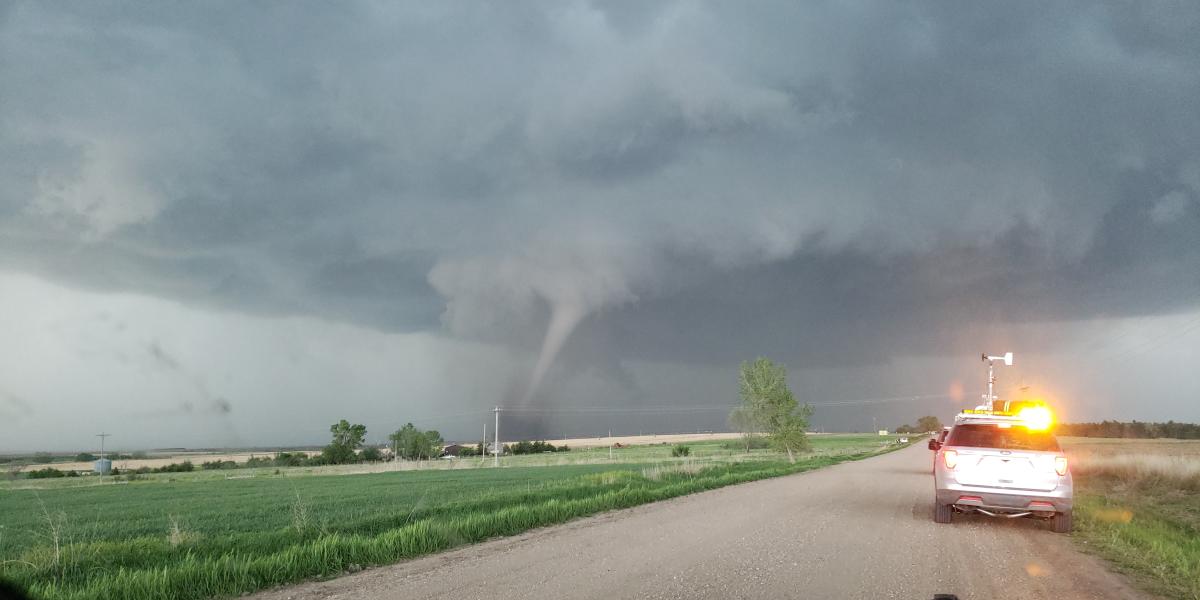
TORUS was a collaborative research project funded by the NSF and NOAA to advance understanding of supercells. TORUS involved more than 200 scientists and engineers who led data collection on 46 supercell thunderstorms across three field seasons.

Previous Funded Research (Other Sponsors)

Volcanic Emission iNvestigation Utilizing Single-particle In-situ Automated Nephelometry (VENUSIAN)

Sponsor: National Aeronautics & Space Administration, 80NSSC24K1260

Period of Performance: 07/01/2024 - 06/30/2026

Principal Investigator: Dr. Christopher Carr, Georgia Institute of Technology

In this collaboration, the RAAVEN is equipped with an autofluorescence nephelometer (AFN) built by Droplet Measurement Technologies. The sensor, designed to measure the size and composition of the aerosols in Venus's atmosphere, is tested by flying it through the volcanic fog of Kilauea volcano, located in Hawaii Volcanoes National Park.

Measurements of TRACER Pre-Convective Conditions and Mesoscale Circulations Using Small Unmanned Aircraft Systems (sUAS)

Sponsor: Department of Energy Atmospheric System Research (ASR) program (DE-SC0021381)

Period of Performance: 09/15/2020 - 09/14/2025

Principal Investigator: Dr. Gijs de Boer, CU Boulder. TRACER PI, Dr. Michael Jensen.

To better understand the drivers of convective storms in the greater Houston (Texas, USA) area, the US Department of Energy and research partners conducted the Tracking Aerosol Convection Interactions Experiment (TRACER) project during 2021-2022. As part of this supporting effort, the CU RAAVEN was equipped to make measurements of atmospheric thermodynamic state, winds and turbulence, and aerosol size distribution.

Atlantic Tradewind Ocean–Atmosphere Mesoscale Interaction Campaign (ATOMIC)

Sponsor: NOAA Physical Sciences Laboratory

Period of Performance: 01/01/2020 - 03/31/2020

Principal Investigator: Dr. Gijs de Boer, CU Boulder

ATOMIC was the U.S. complement to the European field campaign called EUREC4A. This collaborative effort involved a unique combination of ships, piloted and remotely-controlled aircraft, and remotely-controlled ocean vehicles to characterize ocean and atmospheric properties. The IRISS team deployed the RAAVEN to gather nearly 80 hours of data at elevations up to 1km to sample the near-shore environment upwind of Barbados.