

BME undergraduate student helps build artificial blood vessels that can heal
Cardiovascular diseases are the leading cause of death worldwide, claiming nearly 20 million lives every year.
For many patients, tiny tubes called vascular grafts can be an effective, short-term solution. When arteries and veins are damaged or blocked, these artificial “blood vessels” can be used to create new pathways for blood to flow throughout the body.
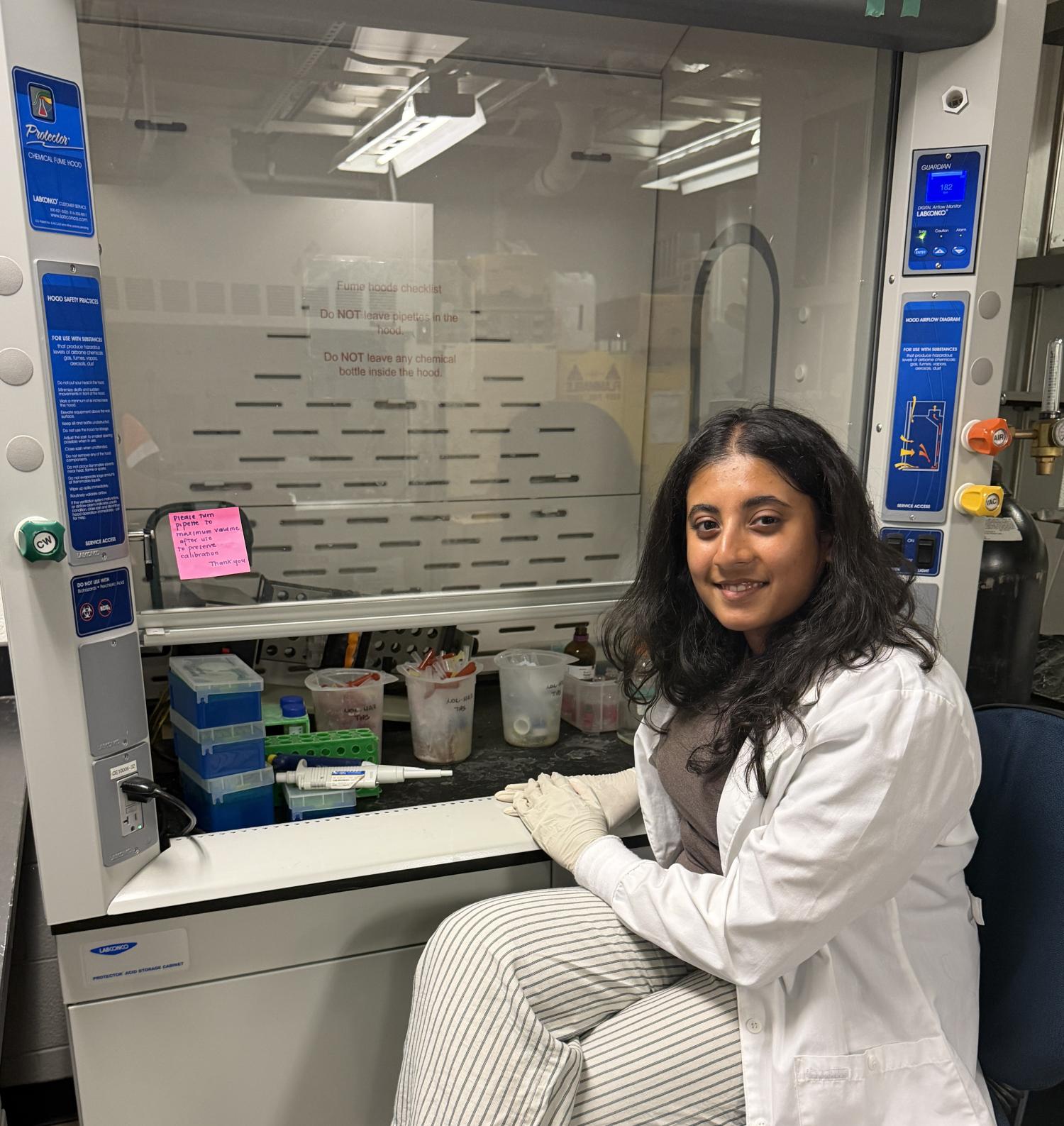
Undergraduate student Anagha Varada in the lab during her time in the Summer Program for Undergraduate Research (SPUR).
However, the synthetic implants also come with problems of their own that make them inadequate for long-term use.
Anagha Varada, an undergraduate student in the Biomedical Engineering Program (BME) at CU Boulder, spent her summer trying to change that by helping develop a new, multilayered vascular graft that mimics the structure of natural blood vessels, allowing them to regenerate.
She says the reinforced graft has shown strong results during testing on rats and could one day be used to improve implant longevity and patient safety over time.
The project, led by Associate Professor Wei Tan and graduate mentor Aurora Battistella in the Tan Research Group, is part of CU Engineering’s Summer Program for Undergraduate Research (SPUR). The program pairs nearly 125 engineering students from across the college in research labs with faculty members and graduate mentors.
For 10 weeks, students foster unique, hands-on research experiences and develop crucial skills that serve them well beyond their undergraduate education. But for Varada, the project was just the latest installment of an exciting journey that has her eager for more research in the future.
“I started in Dr. Tan’s lab during my sophomore year as part of the Fundamentals of Undergraduate Research Program (FUTURE),” Varada said. “It’s been such an amazing experience and I will definitely be looking at research as a future career possibility.”
One layer at a time
The problem with vascular grafts revolves around an idea that Varada and Tan like to call “inertness.”
Current graft technology is made primarily out of synthetic polymer materials such as teflon or plastic. These materials are strong and can help replace a damaged blood vessel, but they can’t actually behave like one.
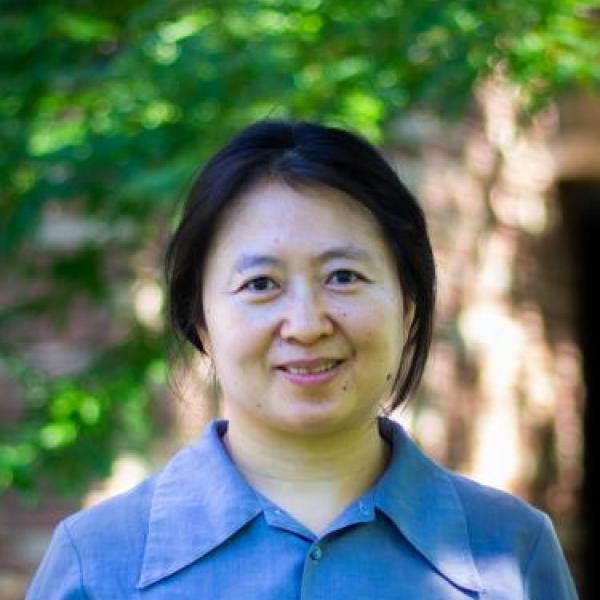
Associate Professor Wei Tan.
Natural blood vessels are living, multilayered networks of tissues and fibers that can interact with the body, respond to injuries and heal. Artificial grafts on the other hand are more static and lifeless.
Over time, this can cause blood clotting and tissue overgrowth, narrowing the vessel and significantly limiting the lifespan of the implant. In fact, Tan states that nearly 50% of synthetic grafts fail after just one year, and have been linked to other cardiovascular conditions such as thrombosis or hyperplasia.
She also says the issue gets even larger when treating patients undergoing hemodialysis, a treatment that uses a machine to filter waste and excess fluid from the blood when the kidneys can no longer do so.
“Oftentimes, we see grafts in hemodialysis patients performing the worst because they need to be poked with a needle three or four times a week to extract blood,” said Tan, who is also affiliated with the Paul M. Rady Department of Mechanical Engineering. “That’s three or four damages to the implant that can’t be healed, which is why the graft lifespan is so short.”
To combat this, Tan and her team are creating regenerative vascular grafts using an electrospinning procedure to weave two different types of polymers into tough nanofibers. The result is a multilayered graft designed to mimic the different layers of a natural blood vessel.

Varada presenting her research during the SPUR presentation.
The first layer is called the endothelial layer—a thin coating of cells that lines the inside of a graft and allows blood to flow smoothly without clotting.
The second layer sits outside of the artery and is made of mostly smooth muscle cells. Tan says this layer is crucial, providing an “active” scaffold where new tissue can grow without restricting blood flow.
“When a graft is damaged, there is scar tissue that will build up in and around the tubing that can narrow its diameter and cause blockages,” Tan said. “The extra layer prevents that from happening and supports healthy tissue regeneration.”
Over the summer, Varada helped fabricate the grafts and analyze how well they performed after being implanted in rats.
The results are preliminary, but Varada says early trends are very promising.
“I can confidently say that our graft design has certainly increased longevity compared to current grafts on the market,” Varaga said. “It’s a relatively small sample size and there’s still a long road of testing ahead. However, success rates have looked really good thus far.”
Varada plans to continue her work as an undergraduate researcher in Tan’s group this school year. She believes the experience has helped her learn valuable lessons that she can take with her well beyond college.
“Reserch has taught me that it’s okay to learn as you go,” said Varada. “You aren’t always going to know everything or have full confidence in what you’re doing. But you will figure it out and gain that confidence through practice.”