


Lisa Marshall
 Three years after the freak Dec. 30 blaze destroyed more than 1,000 homes in Boulder County, two new studies offer insight into what happens to air quality and health in the aftermath of urban wildfires.
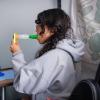 Scientists at CU Boulder are using a mobile laboratory to collect 1,200 breath samples from cannabis users. The collaboration with the National Institutes of Technology could help lead to a reliable cannabis breathalyzer.
 Researchers have discovered a protein variant that serves as a knob for regulating the body’s innate immune response. The findings could lead to new therapies for Long COVID, autoimmune disorders and more.
 Being awake when your body thinks you should be sleeping can make you more susceptible to viruses, make your wounds heal more slowly and promote weight gain. And don't even think about driving the day after an all-nighter.
 Females sleep less, wake up more often and get less restorative sleep than males, according to a new study. The findings could have broad implications for biomedical sleep research, which for decades has focused primarily on males.
 CU’s Digital Legacy Clinic helps people take steps to preserve their own legacy or manage the virtual heirlooms of loved ones who have died.
 Young adults sit 60-plus hours per week, boosting their heart disease risk and accelerating signs of aging, according to new research. Vigorous exercise works best to counteract it, but sitting less is ideal.
 Psychologist Angela Bryan, like many other avid runners, is no stranger to what many call the “runner’s high.” The scientist breaks down what happens in the body to make you feel so good during a long jog.
 CU Boulder researchers have developed a new sound-based, handheld device that can swiftly and accurately detect signs of disease in a pin-prick of blood. Their findings are published in the journal Science Advances.
 From his home garden, CU Boulder’s Chris Lowry explains why humans get so much enjoyment out of sinking their hands into dirt—it may have something to do with the friendly microbes that live in the soil.