


Lisa Marshall
 CU Boulder and the National Institute of Standards and Technology are teaming up to help adapt a 90-year-old system for detecting alcohol for a new age of cannabis legalization. A new study suggests it won’t be easy.
 A new, sweeping CU Boulder analysis suggests birds of a feather are indeed more likely to flock together, confirming what individual studies have hinted at for decades.
 Hormone-blocking drugs can be life-saving for breast cancer survivors, reducing risk of recurrence by as much as 50%. Yet many patients stop taking them early or don’t take them as directed. A new CU Boulder study explores why, and what can be done about it.
 Federal regulators approved the first over-the-counter oral contraceptive. CU Boulder’s Amanda Stevenson says the impacts could be sweeping. But she cautions that real threats to contraceptive access in the U.S. still exist.
 At least 25 U.S. airports now use facial recognition software to determine you are who you say you are, but some fear the artificial intelligence systems will exacerbate discrimination. Morgan Klaus Scheuerman, an AI ethicist, explains why people are concerned.
 With the Fourth of July approaching and a thick green carpet of fuel covering much of the West after a rainy spring, CU Boulder fire ecologist Jennifer Balch is calling on people to do their part to prevent the next megafire.
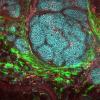 New research shows that cancer cells can adapt in as little as one to two hours to new drugs called CDK2 inhibitors. The good news: Adding a second, widely available drug disables this workaround, squelching tumor growth.
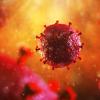 An ancient, virus-like protein best known for its essential role in placental development may, when over-expressed, fuel ALS—aka Lou Gehrig's disease—and other neurodegenerative diseases, according to new research. The discovery opens the door to a new class of potential treatments.
 Could technology like smart watches and mobile apps change how patients manage Type 1 diabetes? A $1.2 million grant is helping faculty explore ways to give patients a better quality of life.
 Advances in gene-editing have made it possible to banish hereditary diseases, eradicate pests and create new life forms, but should we go there? Jennifer Doudna along with two other Nobel laureates will join a panel of world leaders for a free public forum.