


Science & Technology
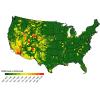 <p>Nearly one in 10 U.S. watersheds is “stressed,” with demand for water exceeding natural supply, according to a new analysis of surface water in the United States. What’s more, the lowest water flow seasons of recent years—times of great stress on rivers, streams, and sectors that use their waters—are likely to become typical as climates continue to warm.</p>
 <p>Nanoly Bioscience of Boulder and the University of Colorado recently entered into an option agreement that will enable the startup company to develop a technique for protecting vaccines during delivery to rural and less-developed areas of the world.</p>
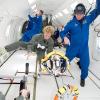 <p>A small beach ball-sized satellite designed and built by a team of University of Colorado Boulder students to better understand how atmospheric drag can affect satellite orbits is now slated for launch from Vandenberg Air Force Base in California on Sept. 15.</p>
 <p>The University of Colorado Boulder today announced the opening of an Office of Industry Collaboration and the naming of Caroline Himes as director.</p>
- <p>A person’s ability to delay gratification—forgoing a smaller reward now for a larger reward in the future—may depend on how trustworthy the person perceives the reward-giver to be, according to a new study by researchers at the University of Colorado Boulder.</p>
- <p>A white-rumped bumblebee that has been in steep decline across its native range in the western United States and Canada appears to be making a comeback on the Colorado Front Range.</p>
<p>A survey of bumblebee populations carried out largely by University of Colorado Boulder undergraduates in undisturbed patches of prairieland and in mountain meadows above campus has turned up more than 20 rare western bumblebees, known scientifically as <em>Bombus occidentalis. </em></p> - <p>Scientists have uncovered strong evidence that soot, or black carbon, sent into the air by a rapidly industrializing Europe, likely caused the abrupt retreat of mountain glaciers in the European Alps.</p>
- <p>A $6 million University of Colorado Boulder instrument designed to study the behavior of lunar dust will be riding on a NASA mission to the moon now slated for launch on Friday, Sept. 6, from the agency’s Wallops Flight Facility in Virginia.</p>
- <p>University of Colorado Boulder Provost Russell L. Moore today announced the formation of a search committee to lead a national search for a new dean of the College of Music. John Stevenson, dean of the Graduate School, will chair the committee.</p>
- <p>If the distance and difficulty of Colorado’s many organized bicycling events is any indication, a flat, 100-mile bicycle ride is not, for many riders, quite tough enough.</p>
<p>That’s one reason the 11th annual Buffalo Bicycle Classic’s longest route will go farther and climb higher than any of the event’s courses so far. The “Buff Epic” will span 110 miles and ascend a total of 6,250 feet. It retraces much of the most mountainous section of Stage 6 of the 2012 USA Pro Cycling Challenge.</p>