


Science & Technology
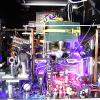 <p>Heralding a new age of terrific timekeeping, a research group at JILA—a joint institute of the University of Colorado Boulder and the National Institute of Standards and Technology—has unveiled an experimental strontium atomic clock that has set new world records for both precision and stability.</p>
 <p>If you were a shrew snuffling around a North American forest, you would be 27 times less likely to respond to climate change than if you were a moose grazing nearby.</p>
<p>That is just one of the findings of a new University of Colorado Boulder assessment led by Assistant Professor Christy McCain that looked at more than 1,000 different scientific studies on North American mammal responses to human-caused climate change.</p> <p>Computer software similar to that used by online retailers to recommend products to a shopper can help students remember the content they’ve studied, according to a new study by the University of Colorado Boulder.</p>
<p>The software, created by computer scientists at CU-Boulder’s Institute for Cognitive Science, works by tapping a database of past student performance to suggest what material an individual student most needs to review.</p>- <p>Two University of Colorado Boulder researchers were among the 15 honored this week by the National Academy of Sciences for their extraordinary scientific achievements.</p>
<p>Marvin Caruthers, distinguished professor of chemistry and biochemistry, is the recipient of the NAS Award in Chemical Sciences, and Deborah Jin, an adjoint professor of physics, is the recipient of the Comstock Prize in Physics.</p>
<p>Caruthers is being honored for his groundbreaking work on the chemical synthesis of DNA and RNA that made it possible to decode and encode genes and genomes.</p>  <p>University of Colorado Boulder Professor Peter Molnar has been awarded the prestigious 2014 Crafoord Prize in Geosciences by the Royal Swedish Academy of Sciences for his groundbreaking research in geophysics and geological sciences.</p>
 <p>Being first in line has its advantages, even for wind turbines, which are propelled by comparatively smooth wind flow that helps them produce near-optimal power at varying wind speeds.</p>
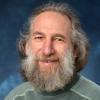 <p>The University of Colorado Boulder has named Mark D. Gross as the director of the campus Alliance for Technology, Learning and Society, or the ATLAS Institute. </p>
<p>Gross taught at CU-Boulder from 1990 to 1999 as an assistant and associate professor of architecture, planning and design. He returns to CU-Boulder for the ATLAS post from Carnegie Mellon University where he has been a professor of computational design since 2004. From 1999 to 2004, Gross was a professor of architecture at the University of Washington in Seattle.</p> <p>On Jan. 10, the U.S. Department of Justice and the U.S. Department of Commerce’s National Institute of Standards and Technology (NIST) announced appointments to a newly created National Commission on Forensic Science.</p>
<div>
University of Colorado Boulder Distinguished Professor and Nobel laureate Tom Cech is one of 32 commissioners chosen from a pool of more than 300 candidates.</div>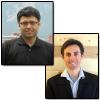 <p>Two faculty members in the University of Colorado Boulder’s College of Engineering and Applied Science have been honored with the National Science Foundation’s prestigious CAREER award.</p>
<p>The NSF Faculty Early Career Development, or CAREER, award supports junior faculty members who demonstrate excellence in research and who effectively integrate their research with education. CU-Boulder’s recent recipients are Prashant Nagpal, an assistant professor of chemical and biological engineering, and Franck Vernerey, an assistant professor of civil, environmental and architectural engineering.</p>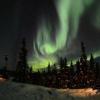 <p>University of Colorado Boulder space weather experts say a powerful solar storm may cause the aurora borealis to light up as far south as Colorado and New Mexico in the coming nights.</p>