


Science & Technology
- <p>Doctors’ unconscious biases favor whites but do not affect high blood pressure treatment for their minority patients, according to a University of Colorado Boulder study, even though a previous study by the same research group found that doctors’ biases are reflected in lower ratings by African-American patients.</p>
<p>The new research, led by Irene Blair, an associate professor in CU-Boulder’s Department of Psychology and Neuroscience, is published in the <em>Journal of General Internal Medicine.</em></p> - <p>CU System news release</p>
<p>DENVER – Five members of the University of Colorado community are recipients of the 2014 Thomas Jefferson Award, among the highest honors given at CU, the state’s flagship university. </p> - <p>Exposing leafy vegetables grown during spaceflight to a few bright pulses of light daily could increase the amount of eye-protecting nutrients produced by the plants, according to a new study by researchers at the University of Colorado Boulder.</p>
<p>One of the concerns for astronauts during future extended spaceflights will be the onslaught of eye-damaging radiation they’ll be exposed to. But astronauts should be able to mitigate radiation-induced harm to their eyes by eating plants that contain carotenoids, especially zeaxanthin, which is known to promote eye health.</p>  <p>The Mazal Holocaust Collection, considered the world’s largest privately owned Holocaust archive and the most significant U.S. collection outside of the Holocaust Memorial Museum in Washington, D.C., has been donated to the University of Colorado Boulder.</p>
 <p><span>The University of Colorado Boulder has pledged to double the number of CU-Boulder students who participate in an international educational experience by 2020. </span><span>The commitment, which will be implemented by CU-Boulder’s </span><a href="http://studyabroad.colorado.edu/">Study Abroad Programs</a><span> office, is part of the Generation Study Abroad pledge launched today by the Institute of International Education (IIE). </span></p>
 <p>A new study led by the University of Colorado Boulder bolsters the theory that the first Americans, who are believed to have come over from northeast Asia during the last ice age, may have been isolated on the Bering Land Bridge for thousands of years before spreading throughout the Americas.</p>
- <p>The University of Colorado Boulder’s Real Estate Council will hold its 17th annual forum Wednesday, March 5, from 7 a.m. to 5:30 p.m. at the Denver Marriott City Center.</p>
 <p>NIST news release</p>
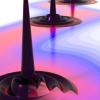
<p>JILA physicists used an ultrafast laser and help from German theorists to discover a new semiconductor quasiparticle—a handful of smaller particles that briefly condense into a liquid-like droplet.</p>
<p>JILA is a joint institute of CU-Boulder and the National Institute of Standards and Technology (NIST).</p>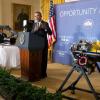 <p>The University of Colorado Boulder and the Colorado Office of Economic Development and International Trade will be part of the new Digital Manufacturing and Design Innovation Institute announced today by President Barack Obama.</p>
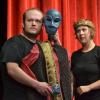 <p>Following on the heels of its nationally recognized anti-violence school tours based on “The Tempest” and “Twelfth Night,” the <a href="http://www.coloradoshakes.org/">Colorado Shakespeare Festival</a> has hit the road with a new production of “Much Ado About Nothing.”</p>